
Can You Freeze Bilona Ghee: Yes, for Up to a Year
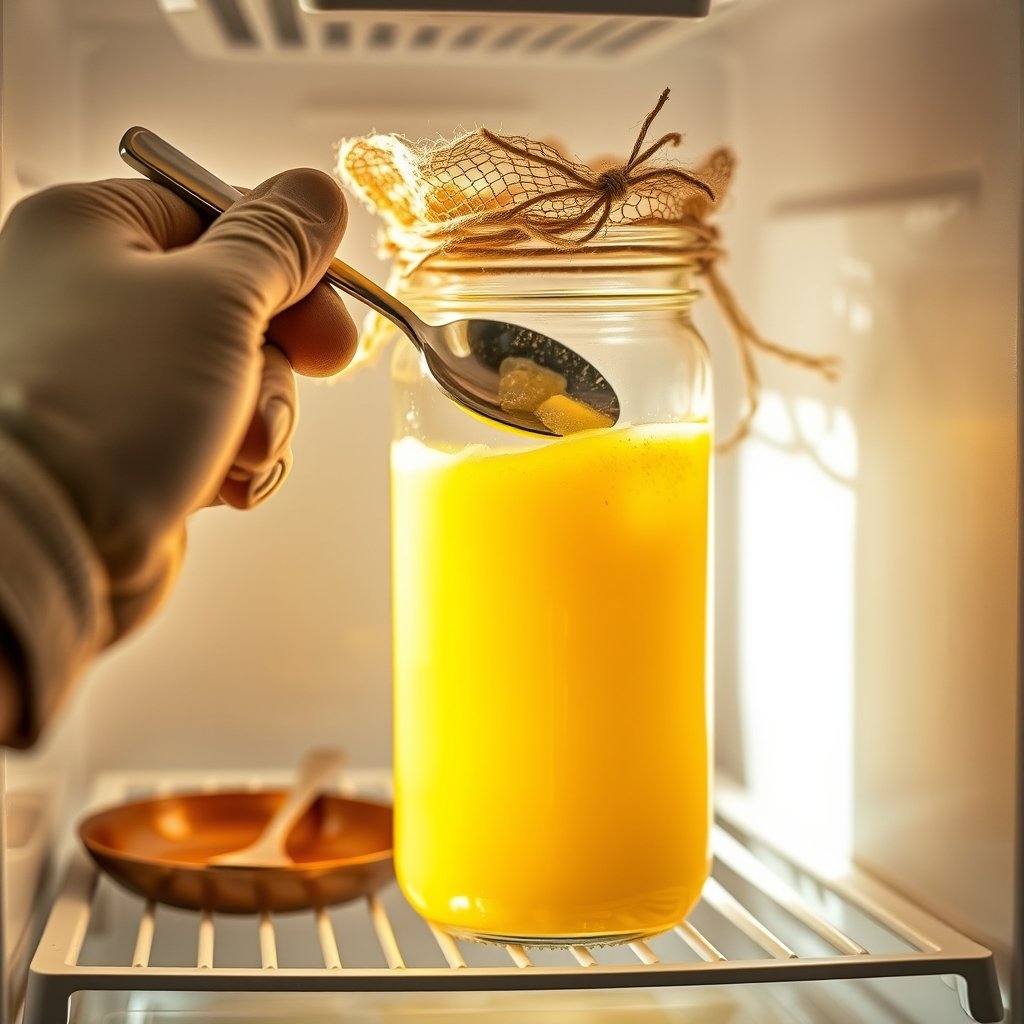
Can you safely freeze bilona ghee?
Yes, you can safely freeze bilona ghee for up to one year without compromising its safety or food quality. Traditional ghee made by churning cultured curd and simmering the resulting makkhan contains almost zero water and no active milk solids. Because bacteria and mould require moisture to survive, the absence of water makes pure clarified butter exceptionally stable. When placed in an airtight container inside a freezer at zero degrees Fahrenheit, the fat simply solidifies completely and stops reacting with surrounding air.
Freezing does not harm the fatty acid profile of A2 Gir cow ghee. The stable saturated and monounsaturated fats handle sub-zero temperatures without separating into water and oil phases, because there is no emulsion left to break. For households that order seasonal ghee in larger tins to last through several months, keeping reserve jars in the freezer is a practical way to prevent slow oxidation caused by fluctuating kitchen temperatures.
Does freezing change the grain and aroma of ghee?
Freezing preserves the aromatic qualities of bilona ghee, but it temporarily changes its texture from a granular, danedaar consistency to a smooth, dense block. The prized granular texture of traditional ghee forms when melted butterfat cools slowly at room temperature over several hours. During that unhurried cooling, different fatty acid fractions solidify at different rates, gathering into tiny crystal clusters that feel pleasantly grainy on the tongue.
When placed directly into a freezer, the fat chills too rapidly for those delicate crystals to form independently. Instead, the lipid chains lock together quickly, creating a uniform, firm surface similar to chilled block butter. However, this textural shift does not harm the flavour. The delicate nutty aroma and gentle sweetness characteristic of grass-fed Gir cow bilona ghee remain trapped within the fat, releasing fully the moment a spoonful touches warm dal or steaming rice.
Our cows are not use and throw
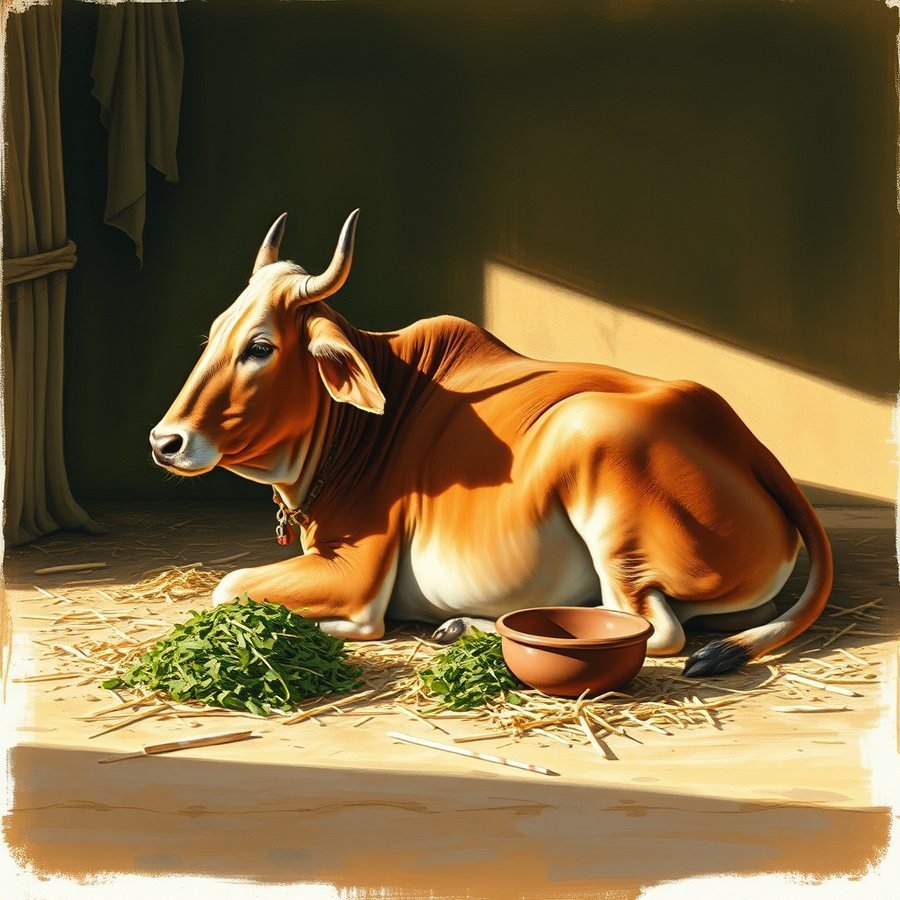
A cow that stops giving milk is still our cow. She stays on the farm, with the same feed, the same shed and the same medical care she had when she was milking. We do not sell her on and we do not let her go. That is the whole basis of the ghee we make — you cannot ask an animal for her milk and then abandon her for it.
Our mission goes further than our own herd. There are cows on the street who are injured every day, who eat plastic, who cry through the night with nobody coming. We want to take them in. The plan is a chain of Organic Farmz gaushalas in several places, so that help is not one shed in one city but something a hurt animal can actually reach.
This takes more than we can carry alone — land, fodder, vets, hands. Come and join our initiative. Anything you give goes to feed, treat and shelter these cows.

Scan with any UPI app
Bank transfer
- Account name Organic Farmz
- Bank Indian Bank
- Account number 8133177322
- IFSC code IDIB000K555
- UPI ID organicfarmz@ptaxis
On a phone, the button above opens your UPI app directly — a QR on the screen you are reading cannot be scanned by that same screen. On a laptop, scan the code with your phone instead.
What is the right way to freeze and thaw ghee?
The right way to freeze bilona ghee is to divide it into small, clean glass jars or food-grade containers and leave about half an inch of headspace at the top. While ghee contains minimal moisture and does not expand significantly like water when frozen, leaving a slight gap prevents stress on the jar lid and seal. Make sure the container is completely dry before filling, as even a stray drop of rinse water trapped in the jar can create ice crystals and invite spoilage upon thawing.
Thawing requires a slow, gentle transition rather than sudden heat. Transfer the frozen jar to your refrigerator overnight, then set it on the kitchen counter at room temperature the following morning until the fat softens naturally. Avoid placing a frozen jar into a microwave or boiling water bath. Rapid, uneven heating can scorch the subtle milk aromatics and encourage condensation inside the rim, which introduces dangerous surface moisture to the warm fat.
When does freezing make sense for an Indian kitchen?
Freezing makes sense when you buy handcrafted bilona ghee in bulk quantities or live in a region with long, sweltering monsoon seasons. Because genuine bilona ghee is prepared in small batches from whole curd, many families prefer purchasing larger quantities during the winter months when cows yield richer milk. Storing extra litres in the freezer shields that reserve from humid air, warm cupboards, and repeated contact with spoons.
It also benefits homes where ghee is used sparingly rather than daily. If a one-litre jar takes your household four or five months to finish, transferring half of it into the freezer keeps that portion as fresh as the day it was churned. You can keep your active daily portion in a small brass or steel ghee dani on the counter, refreshing it from the cold reserve only when the counter jar runs empty.
Why do Ayurvedic traditions prefer room temperature storage?
Ayurvedic traditions prefer storing ghee at mild room temperature in dark, breathable spaces because extreme cold is believed to dampen the fat's natural energetic quality. Classical texts view well-clarified ghruta as an anupana that supports Agni, the digestive fire. Serving food at ambient warmth or gently heated aligns with this principle, whereas ingredients pulled straight from heavy refrigeration are traditionally regarded as harder for the stomach to welcome.
Historically, Indian kitchens had no need for freezers because properly prepared bilona ghee keeps happily in a cool pantry for eight to twelve months on its own. Freezing is simply a modern convenience for storing backstock, not an essential requirement for keeping real ghee edible. For everyday cooking, keeping a well-sealed glass jar in a shaded kitchen cupboard remains the most practical and authentic way to enjoy its aroma, grain, and warmth.
Taste the difference
Small-batch A2 Gir cow ghee, hand-churned to order and delivered across India. Read how we make it if you want the detail first.
Order a jarKeep reading
-
 Can You Freeze Ghee? Yes, and It Keeps Over a Year
Yes, you can freeze ghee safely for up to a year or longer, though traditional bilona ghee keeps remarkably…
-
 How to Store Ghee Properly
Authentic bilona ghee is naturally shelf-stable, but external moisture is its silent enemy. Learn how simple…
-
 How Long Does Ghee Last Once Opened?
Once opened, pure A2 Gir cow bilona ghee lasts 6 to 9 months in a pantry and over a year in the fridge.…
