
Why Good Ghee is Danedaar: The Story Behind Those Tiny Golden Grains

The Glistening Jar on the Kitchen Shelf
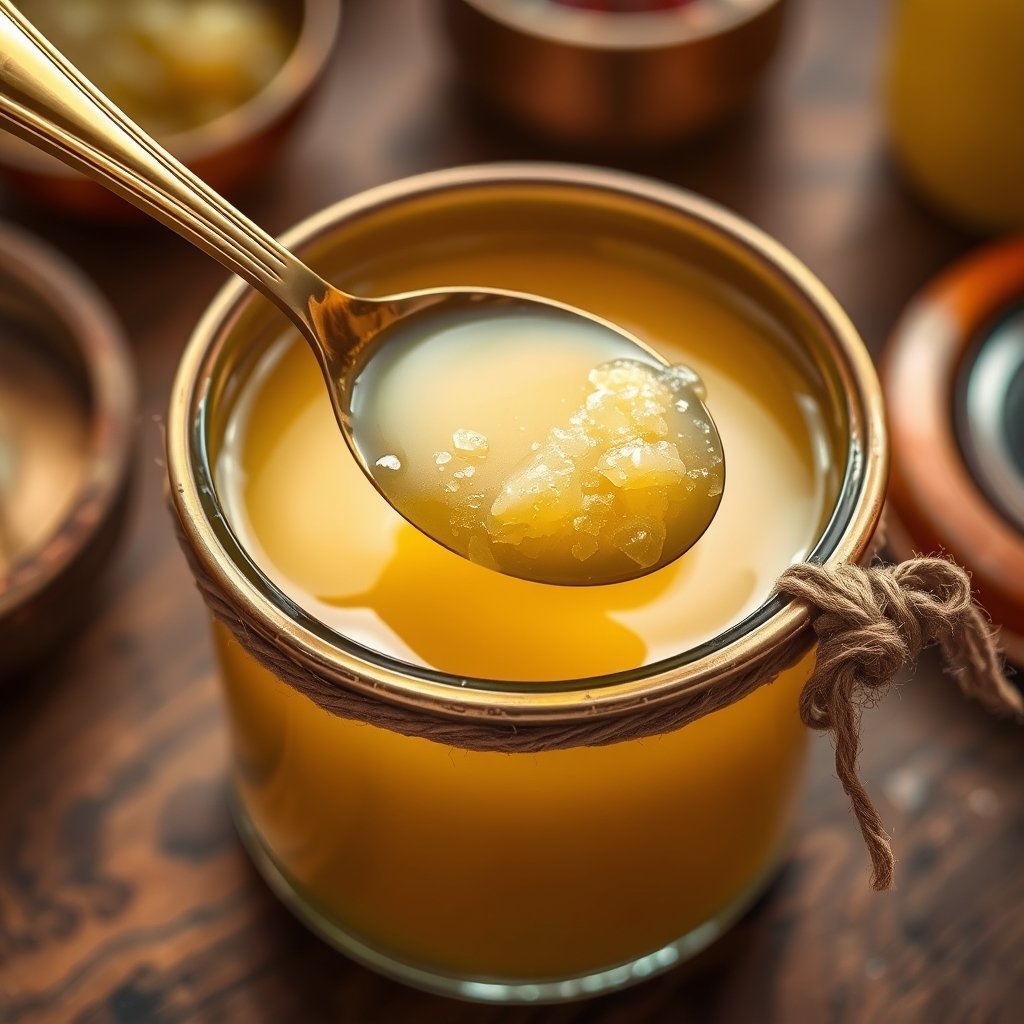
There is a quiet joy in opening a fresh jar of traditional A2 Gir cow ghee. Before you even catch the warm, toasted aroma, your eyes find the texture. It is not flat, smooth, or pasty like ordinary butter. Instead, it looks like a collection of tiny, golden wet-sand crystals resting in a pool of clear liquid. In Indian kitchens, this prized texture is known as danedaar.
For generations, grandmothers have held jars up to the light, judging the quality of the fat by the size and abundance of these tiny grains. If the ghee is smooth like cream or completely solid like wax, it raises questions. But when it is beautifully grainy, it is recognized as a sign of patient, traditional preparation. Understanding why this texture forms takes us back to the simple science of fats and the traditional rhythms of the bilona method.
The Kitchen Science of the Grain
To understand why ghee becomes grainy, we have to look at how milk fat is composed. Ghee is not a single, uniform substance; it is a blend of different fatty acids, each with its own melting point. Some of these fats solidify at room temperature, while others remain liquid. When hot, freshly clarified ghee is allowed to cool down, these different fats begin to behave differently.
As the temperature slowly drops, the hard saturated fats begin to settle and bind together, forming tiny solid nuclei. The liquid fats surround these solid points, creating a semi-solid suspension. This natural separation is what we see as grains or danas. If you melt the ghee completely, the grains disappear into a clear, uniform golden liquid. As it cools down again, the grains slowly reform, provided the conditions are right.
Why the Bilona Method is Essential for Danas
The traditional bilona method plays a vital role in creating this texture. It begins with churning whole milk curd into butter (makhan), which is then washed and melted. This process retains the natural structure of the fats. When we clarify this butter, we do so over a slow, gentle flame.
In modern industrial production, ghee is often made by heating cream directly at very high temperatures in massive steel vats, followed by rapid cooling using industrial chillers. This sudden shock forces the fats to solidify all at once, resulting in a smooth, uniform, pasty texture without any grain definition. In contrast, the bilona method relies on slow heating, which allows the water to evaporate gently without scorched proteins or damaged fat molecules. This gentle treatment keeps the fatty acid chains intact, preparing them to crystallize naturally as they cool.
The Crucial Step of Slow, Natural Cooling
The secret to large, beautiful grains lies in what happens after the ghee is strained. Once the golden liquid is separated from the caramelized milk solids, it must be poured into containers and left completely undisturbed in a warm room. It cannot be rushed into a refrigerator or exposed to a cold draft.
This slow descent in temperature gives the crystals time to grow. When ghee cools gradually over several hours, the fat molecules have the freedom to find each other and pack together into organized, grainy structures. If the room is too cold, the ghee solidifies too quickly, resulting in smaller, tighter grains. If the room is warm, the grains grow larger and more distinct. This is why the texture of your ghee might change slightly between the hot summer months and the cool winter days—it is a living reflection of your kitchen's environment.
Why Danedaar Ghee Elevates Indian Home Cooking
In Indian culinary tradition, the physical texture of ghee is deeply tied to how it performs in food. When you place a dollop of danedaar ghee onto a steaming bowl of dal or a hot, freshly rolled roti, the grains do not melt instantly. They linger for a moment, releasing their aroma gradually as they dissolve under the heat of the dish.
This slow release enhances the sensory experience of a meal. The tiny grains carry the rich, nutty notes of caramelized milk solids directly to your palate, providing a depth of flavor that smooth, industrially processed fats cannot replicate. Whether folded into warm khichdi or rubbed into flour for parathas, the texture of real bilona ghee ensures that the fat is distributed beautifully, carrying the warmth of the hearth to every bite.
Caring for Your Ghee's Texture at Home
Because bilona ghee is a natural, hand-crafted product, its texture is sensitive to how it is stored in your pantry. To keep your ghee beautifully grainy, it is best to store it at room temperature in a dry, dark cupboard. Avoid placing it in the refrigerator, as the rapid cooling will turn it into a solid, hard block, destroying the delicate grain structure.
Always use a clean, completely dry wooden or steel spoon when scooping ghee from the jar. Introducing even a single drop of moisture can trigger spoilage or alter the crystallization process. If your ghee ever melts completely during a hot summer day, do not worry—simply let it cool down naturally in a quiet corner of your kitchen, and you will watch the beautiful golden grains return, just as nature intended.
Taste the difference
Small-batch A2 Gir cow ghee, hand-churned to order and delivered across India. Read how we make it if you want the detail first.
Order a jarKeep reading
-
 Does Grainy Ghee Mean It Is Pure?
A grainy texture in ghee indicates how the fats crystallized during cooling, but texture alone is not…
Does Grainy Ghee Mean It Is Pure?
A grainy texture in ghee indicates how the fats crystallized during cooling, but texture alone is not…
-
 The Story of Takra: How Traditional Buttermilk and Bilona Ghee Are Born Together
Discover the ancient connection between buttermilk (takra) and authentic bilona ghee, and how this…
The Story of Takra: How Traditional Buttermilk and Bilona Ghee Are Born Together
Discover the ancient connection between buttermilk (takra) and authentic bilona ghee, and how this…
-
 Millets and Bilona Ghee: Why Ancient Grains Need Traditional Fats
Explore why traditional Bilona ghee is the essential companion to ancient Indian millets like Bajra, Jowar…
Millets and Bilona Ghee: Why Ancient Grains Need Traditional Fats
Explore why traditional Bilona ghee is the essential companion to ancient Indian millets like Bajra, Jowar…