
The Stove-Side Ghee Dani: Caring for Your Everyday Jar near the Hearth

The Heart of the Indian Countertop
In the rhythm of an Indian kitchen, there is a quiet choreography to how ingredients are handled. While spices sit in their circular boxes and grains are stacked in tall jars, the most precious fat in the house has a dual existence. Go into any home that values traditional cooking, and you will find two containers of ghee. The large, heavy ceramic jar or glass bottle—often containing a fresh liter of handcrafted A2 Gir cow bilona ghee—rests safely in the cool, dark depths of the pantry. But right next to the stove, within arm's reach of the cook, sits a smaller, humble vessel. This is the ghee dani, also known as the ghee patra.
This small container is more than just a convenience; it represents a beautiful intersection of traditional food preservation, Ayurvedic wisdom, and daily kitchen efficiency. Understanding how to manage your daily ghee dani not only protects the quality of your bilona ghee but also deepens your connection to the slow, mindful art of Indian cooking.
Why We Divide Our Ghee
The primary reason for maintaining a separate, smaller container for daily use is protection. Handcrafted bilona ghee is a shelf-stable fat, but its greatest enemies are moisture and foreign food particles. Every time a jar is opened, it is exposed to the air, ambient humidity, and the occasional stray crumb from a busy cook’s hands.
By transferring a small portion—perhaps enough for three to five days—into a ghee dani, you ensure that the bulk of your premium A2 ghee remains undisturbed in its main jar. This practice dramatically reduces the risk of spoilage. Even if a drop of water or a crumb accidentally finds its way into the small daily container, the loss is minimal, and your main pantry supply remains pristine, aromatic, and perfectly preserved.
Choosing the Right Vessel for Daily Use
Traditionally, the choice of material for the ghee dani was guided by what was available and what preserved the fat best. Brass and bronze vessels were highly favored in ancient households. In Ayurvedic thought, keeping daily fats in copper-alloy containers like brass was believed to offer subtle purifying benefits, provided the vessel was kept clean and dry.
In modern kitchens, high-quality stainless steel, heavy glass, or small glazed ceramic jars are excellent choices. Stainless steel is incredibly durable, easy to clean, and non-reactive, making it a highly practical choice for a busy stove-side. Glass and ceramic allow you to see the beautiful, golden, granular texture of your cultured bilona ghee, though they require a bit more care to prevent accidental drops on hard kitchen tiles.
The Magic of Ambient Warmth
Have you ever noticed how the consistency of your ghee changes throughout the day? Real A2 Gir cow ghee, churned using the traditional bilona method, is highly sensitive to temperature. In the cold morning hours, it may settle into a firm, beautifully granular solid. As the kitchen warms up during lunch preparation, it softens into a smooth, pourable liquid.
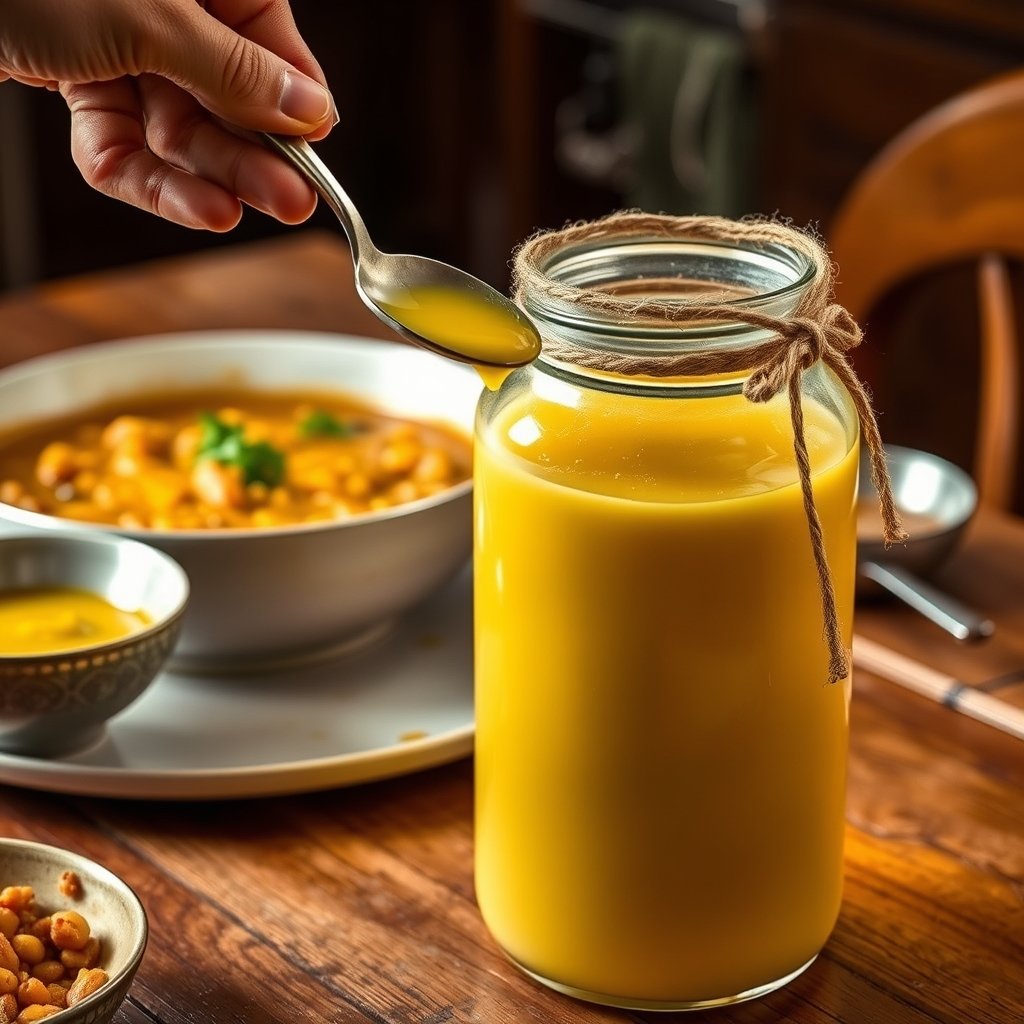
Keeping your ghee dani near the stove allows it to catch the ambient warmth of the burners. This gentle heat keeps the ghee at a soft, semi-liquid consistency that is ideal for daily tasks. Whether you need to quickly brush a warm roti, add a glossy finish to a bowl of hot dal, or stir a spoonful into a plate of fresh khichdi, the stove-side warmth ensures your ghee is always ready to use without needing to be forcefully scooped or aggressively melted.
Best Practices for Your Stove-Side Ghee Dani
To get the most out of your daily ghee and honor the effort that goes into producing handcrafted bilona ghee, a few simple hygiene habits should be followed. First, always dedicate a single, dry spoon to your ghee dani. Never use a spoon that has touched salt, spices, or water. Moisture is the catalyst for mold, and even a tiny droplet can ruin the flavor of your daily portion.
Second, position the container wisely. While you want it close enough to the stove to benefit from mild warmth, avoid placing it directly next to high-heat burners or vents. Extreme, repetitive overheating can degrade the delicate aroma of the ghee over time. Find a comfortable middle ground on your countertop where the temperature remains gentle and stable.
Finally, establish a cleaning routine. Every time your ghee dani runs empty, resist the urge to simply pour fresh ghee over the remnants. Instead, take a moment to wash the container thoroughly with warm water and a mild soap. Let it dry completely under the sun or wipe it with a pristine, dry cloth before refilling it from your main storage jar. This simple cycle keeps your daily ghee tasting sweet, fresh, and deeply aromatic.
A Mindful Connection to Your Food
There is a quiet joy in the daily ritual of opening the ghee dani. As the lid is lifted, the warm, buttery, slightly nutty aroma of A2 Gir cow ghee rises, signaling that a nourishing meal is about to be served. It forces us to slow down, to scoop with intention, and to appreciate the labor of the farmers and the gentle Gir cows that made the meal possible. By caring for this small stove-side vessel, you preserve not just an ingredient, but a beautiful culinary tradition that has warmed Indian homes for generations.
Taste the difference
Small-batch A2 Gir cow ghee, hand-churned to order and delivered across India. Read how we make it if you want the detail first.
Order a jarKeep reading
-
 How Much Ghee a Day Is Reasonable
Discover how much ghee per day fits comfortably into a balanced home-cooked Indian diet, how physical…
How Much Ghee a Day Is Reasonable
Discover how much ghee per day fits comfortably into a balanced home-cooked Indian diet, how physical…
-
 How to Use the Last Bit of Ghee in the Jar
Learn how to reclaim every drop of A2 Gir cow ghee clinging to the sides of your jar using simple…
How to Use the Last Bit of Ghee in the Jar
Learn how to reclaim every drop of A2 Gir cow ghee clinging to the sides of your jar using simple…
-
 Moisture Control in the Pantry: Practical Storage Rules to Prevent Ghee Spoilage
Authentic bilona ghee is naturally shelf-stable, but external moisture is its silent enemy. Learn how simple…
Moisture Control in the Pantry: Practical Storage Rules to Prevent Ghee Spoilage
Authentic bilona ghee is naturally shelf-stable, but external moisture is its silent enemy. Learn how simple…