
How Long Does Ghee Last Once Opened?
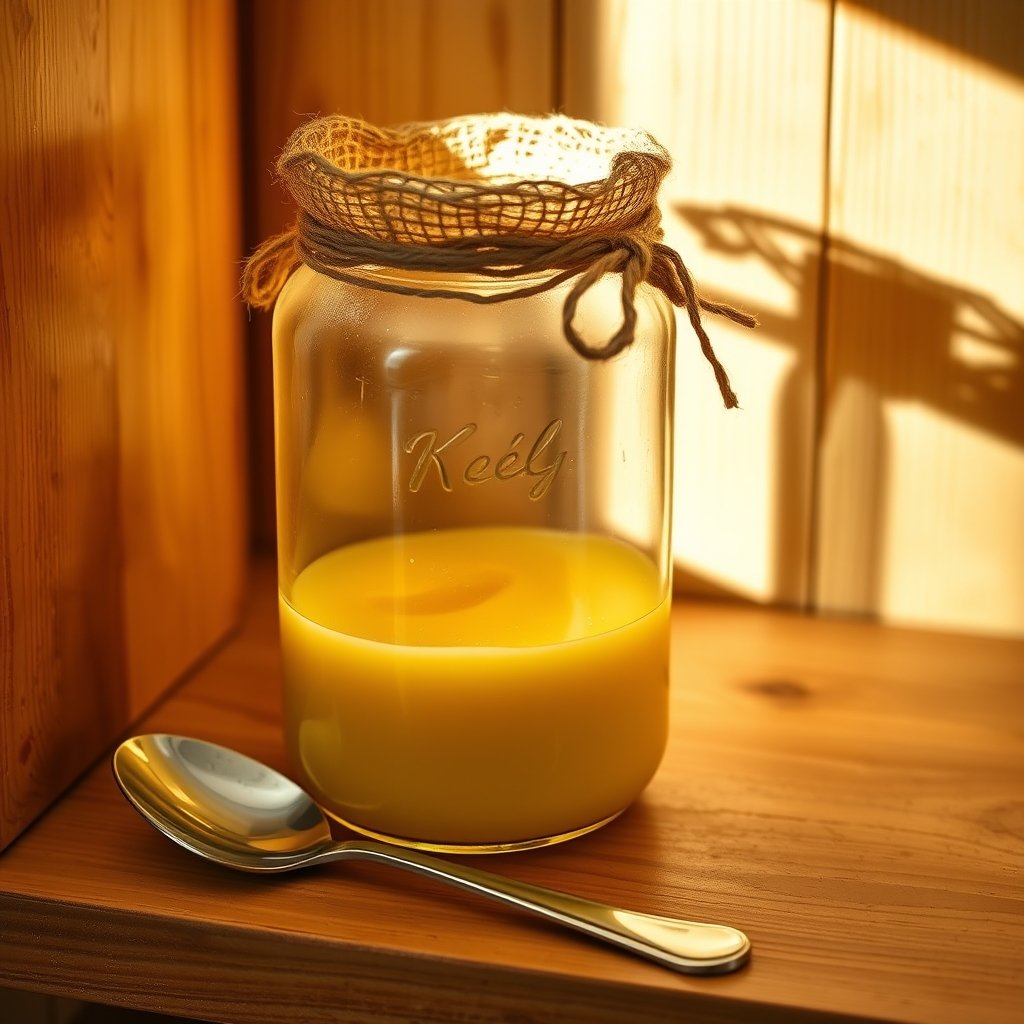
Once opened, a jar of pure A2 Gir cow ghee typically lasts between six to nine months at room temperature in a cool, dark cupboard, and twelve to eighteen months if kept in the refrigerator. Because authentic ghee has its water and milk solids removed during the slow clarifying process, it is naturally shelf-stable and does not spoil as quickly as fresh butter or culinary oils.
Why Does Pure Bilona Ghee Last So Long Without Refrigeration?
The secret to the longevity of ghee lies in the traditional preparation method. When making traditional bilona ghee from A2 Gir cow milk, the milk is first cultured into whole curd and churned with a wooden bilona to separate the makkhan (white butter). This butter is then simmered gently in an open vessel. During this slow simmer, all the residual water content evaporates completely, and the milk solids (lactose and casein) brown, caramelize, and sink to the bottom before being filtered out.
Microorganisms such as bacteria and mold require moisture to grow. Because properly prepared bilona ghee contains virtually zero moisture and consists almost entirely of pure clarified butterfat, microbes cannot readily thrive in it. This natural absence of water allows an opened jar to sit comfortably on your kitchen shelf for months without spoiling, just as Indian households have preserved it for generations.
What Happens to Ghee After You Break the Seal?
When you break the airtight seal of a new jar, two natural elements begin to interact with the ghee: ambient air and ambient light. Atmospheric oxygen gradually causes fat to oxidize over time. Exposure to bright sunlight and stove heat accelerates this oxidation, which can slowly degrade the delicate aroma and freshness of the fat.
You may also notice textural changes as the weeks pass. Depending on the weather in your city, the ghee may shift between a golden liquid state in hot summer months and a firm, grainy (daanedar) semi-solid in winter. These physical changes are entirely natural reactions of pure milk fats to ambient temperatures and do not mean the ghee has begun to deteriorate.
Should You Keep Opened Ghee on the Counter or in the Fridge?
Deciding where to store your opened jar comes down to how fast your household finishes a jar and the climate of your kitchen. Storing ghee on the counter or in a dry pantry keeps it spoonable, aromatic, and ready for a hot phulka or a tadka pan. Refrigeration extends shelf life, but it hardens the fat into a solid block, making it harder to scoop without scraping or gentle warming.
| Storage Factor | Kitchen Pantry or Counter | Refrigerator |
|---|---|---|
| Shelf Life After Opening | 6 to 9 months | 12 to 18 months |
| Consistency | Soft, grainy, easily spreadable | Hard, solid block |
| Aroma Profile | Rich, nutty, immediately fragrant | Muted until gently warmed |
| Primary Moisture Risk | Humid steam from nearby cooking pots | Condensation forming inside the jar rim |
| Best Used For | Daily cooking, tadka, tabletop dabs | Long-term backup jars, hot humid climates |
What Does Ayurveda Say About the Age of Ghee?
In classical Ayurvedic traditions, ghee occupies a unique place among dietary fats because it does not become toxic simply by sitting on a shelf. In fact, Ayurvedic texts refer to aged ghee—known as Purana Ghrita, which has been aged in controlled conditions for over a year, and sometimes even for decades. While ancient practitioners reserved ten-year-old or century-old ghee for specific external remedies, cooling applications, and topical massage, they viewed fresh ghee (under one year old) as the gold standard for daily digestion, cooking, and culinary vitality (ojas).
For everyday meals—swirling over steaming dal, kneading into paratha dough, or roasting spices—ghee within its first nine to twelve months provides the best sweet flavor, granular texture, and buttery aroma.
How Can You Tell If Opened Ghee Has Gone Bad?
While genuine bilona ghee rarely rots, it can turn rancid if neglected or contaminated. Recognizing the difference helps you avoid tossing a perfectly good jar simply because the season changed.
The first telltale indicator is aroma. Pure A2 Gir cow ghee carries a warm, slightly nutty, sweet caramel note. When ghee oxidizes heavily, it develops a sharp, metallic, or sour smell reminiscent of old cardboard or stale paint. If the scent makes you wrinkle your nose, the fat has oxidized.
The second indicator is visual spoilage from moisture contamination. If someone dips a wet spoon into the jar, the trapped water droplet allows mold spores to germinate. If you see any gray, green, black, or fuzzy white specks clinging to the surface or along the glass wall, moisture has entered, and the contents should be discarded.
What Daily Habits Help Your Ghee Stay Fresh Longer?
Preserving your opened ghee requires only a few mindful habits that protect the butterfat from its two true enemies: water and crumbs.
First, always practice the clean-spoon rule. Never dip a wet spoon, a spoon damp with steam, or an utensil that has already touched dal, rice, or spices back into the mother jar. Food crumbs introduce organic matter and moisture that trigger fungal growth.
Second, keep the jar away from the stove and window. Place it inside an enclosed dark cupboard away from the steam of boiling water and direct sun rays. Finally, consider dividing your supply: keep a small glass container on your counter for everyday cooking, and keep the main jar sealed in your pantry, opening it only once every few weeks to refill the smaller dish.