
Why Is My Ghee White and Hard? It Is Seasonal Fat

Your ghee is hard and white because ambient kitchen temperatures have dropped below 20°C, causing the saturated fats to solidify, while seasonal shifts in cow fodder have reduced the yellow beta-carotene pigment in the milk fat.
Why does ghee turn white and solid in cold weather?
Ghee solidifies in cold weather because milk fat is made of various fatty acids that freeze at typical room temperatures. Pure A2 Gir cow ghee contains approximately 60 to 65 percent saturated fatty acids, which naturally turn firm when the ambient air cools during late autumn and winter. Unlike highly processed vegetable oils that stay liquid year-round, unrefined butterfat reacts directly to climate changes in your kitchen pantry. When the jar sits in a room below 20°C, the golden liquid fat gradually crystallizes into a solid mass. Depending on how evenly the batch cools, this crystallization creates a smooth, firm, or coarse granular texture that softens as soon as you heat it in a brass pan or ladle.
Does cow breed change the colour and hardness of ghee?
Cow breed directly influences the fat particle size and base shade of the ghee, though season plays an even larger role. Indigenous Gir cows convert carotene from green fodder into vitamin A, which gives fresh summer ghee its characteristic soft yellow hue. However, Gir cow butterfat contains a balanced ratio of short, medium, and long-chain fatty acids. When these fat molecules set in cold temperatures, they align tightly, giving the jar a firm structure. Buffalo milk naturally contains no carotene and higher saturated fat density, creating a bright chalk-white, rigid fat block. While Gir cow ghee can turn pale cream or off-white in dry months, it retains a distinct granular yield rather than a dense, candle-like finish.
How does seasonal fodder affect the texture and shade of ghee?
Seasonal changes in cattle feed alter both the pigment and melting profile of cow milk fat throughout the agricultural year. During the monsoon and post-monsoon months, free-roaming Gir cows feed on lush, pasture-green grass rich in natural beta-carotene. This organic compound passes into the milk fat, creating a vibrant golden ghee that stays semi-soft at room temperature. In late winter and summer, green pasture declines, and farmers feed cattle dry sorghum straw, wheat bran, and harvested stalks. Dry fodder contains significantly less beta-carotene, resulting in milk fat that yields a much lighter, cream-white colour. Furthermore, winter feed increases the proportion of hard saturated stearic fat in milk, causing the finished bilona ghee to set firmly in the jar.
How does traditional bilona churning influence ghee texture?
The traditional bilona method creates a natural granular structure that sets differently from machine-processed dairy fat. In the bilona process, whole A2 Gir cow milk is fermented into fresh curd, which is then slow-churned bi-directionally with a wooden paddle to separate whole makhan. When this fermented butter is clarified over a low flame, the fat crystals remain intact and unhomogenized. As this melted fat cools undisturbed in small glass jars, large fat grains form suspended within liquid oil. During colder months, these natural crystals pack closely together, making the entire jar solid and off-white. Industrial ghee made by separating cream with high-speed centrifuges lacks this traditional curd fermentation and crystal structure, often setting into a slick, uniform paste.
Our cows are not use and throw

A cow that stops giving milk is still our cow. She stays on the farm, with the same feed, the same shed and the same medical care she had when she was milking. We do not sell her on and we do not let her go. That is the whole basis of the ghee we make — you cannot ask an animal for her milk and then abandon her for it.
Our mission goes further than our own herd. There are cows on the street who are injured every day, who eat plastic, who cry through the night with nobody coming. We want to take them in. The plan is a chain of Organic Farmz gaushalas in several places, so that help is not one shed in one city but something a hurt animal can actually reach.
This takes more than we can carry alone — land, fodder, vets, hands. Come and join our initiative. Anything you give goes to feed, treat and shelter these cows.

Scan with any UPI app
Bank transfer
- Account name Organic Farmz
- Bank Indian Bank
- Account number 8133177322
- IFSC code IDIB000K555
- UPI ID organicfarmz@ptaxis
On a phone, the button above opens your UPI app directly — a QR on the screen you are reading cannot be scanned by that same screen. On a laptop, scan the code with your phone instead.
What is the difference between normal winter ghee and bad fat?
Normal winter ghee melts instantly on your tongue or warm rotis, whereas spoiled fat or vanaspati leaves a heavy, unctuous coating. Understanding these physical differences helps you distinguish between pure seasonal milk fat and compromised jars.
| Fat Characteristic | Natural Winter Bilona Ghee | Hydrogenated Vanaspati or Spoiled Fat |
|---|---|---|
| Melting Behaviour | Melts rapidly at human body temperature (37°C) without rubbing | Requires high heat to melt; leaves a waxy residue on tongue |
| Aroma and Flavor | Sweet, nutty, toasted curd aroma with clean dairy flavor | Chemical, soapy, greasy, stale, or completely odorless |
| Heat Test | Turns clear golden liquid instantly upon gentle heating | Smokes quickly, darkens unnaturally, or sputters residual moisture |
| Pantry Consistency | Firm, granular off-white mass that yields easily to a spoon | Dense, chalky, smooth solid block with no natural grain |
When is white, hard ghee actually a quality problem?
White, hard ghee is a quality problem only if it smells sour, soapy, or chemical, or if it refuses to melt smoothly in warm food. Pure A2 bilona ghee naturally turns firm and off-white in winter, but it must always yield a comforting, nutty aroma when opened. If a white block of fat remains solid when rubbed between your palms or leaves a candle-wax coating inside your mouth, it may contain hydrogenated vegetable oils or palm fat. Similarly, if you notice dark speckles, liquid water pooling at the bottom, or a sharp metallic scent, the ghee has oxidized or suffered moisture contamination. If the jar smells fresh and melts into clear liquid gold on warm dal or parathas, the pale colour and hard texture are simply natural reflections of winter temperatures and dry fodder.
How should you store and soften firm bilona ghee at home?
To soften firm ghee naturally without degrading its quality, store the glass jar in a warm corner of your kitchen away from direct draughts. Never microwave the entire glass jar or place it on a direct flame, as intense heat degrades the subtle nutty compounds formed during traditional clarification. Instead, use a clean, dry stainless steel spoon to scoop out the exact quantity you need for cooking or finishing dishes. If you prefer liquid ghee for pouring over khichdi, kadhi, or halwa, spoon a portion into a small brass or steel bowl and warm it gently over a low flame for a few seconds. Keep the main jar tightly sealed in a dry pantry cupboard to shield it from ambient kitchen moisture and cooking steam.
Taste the difference
Small-batch A2 Gir cow ghee, hand-churned to order and delivered across India. Read how we make it if you want the detail first.
Order a jarKeep reading
-
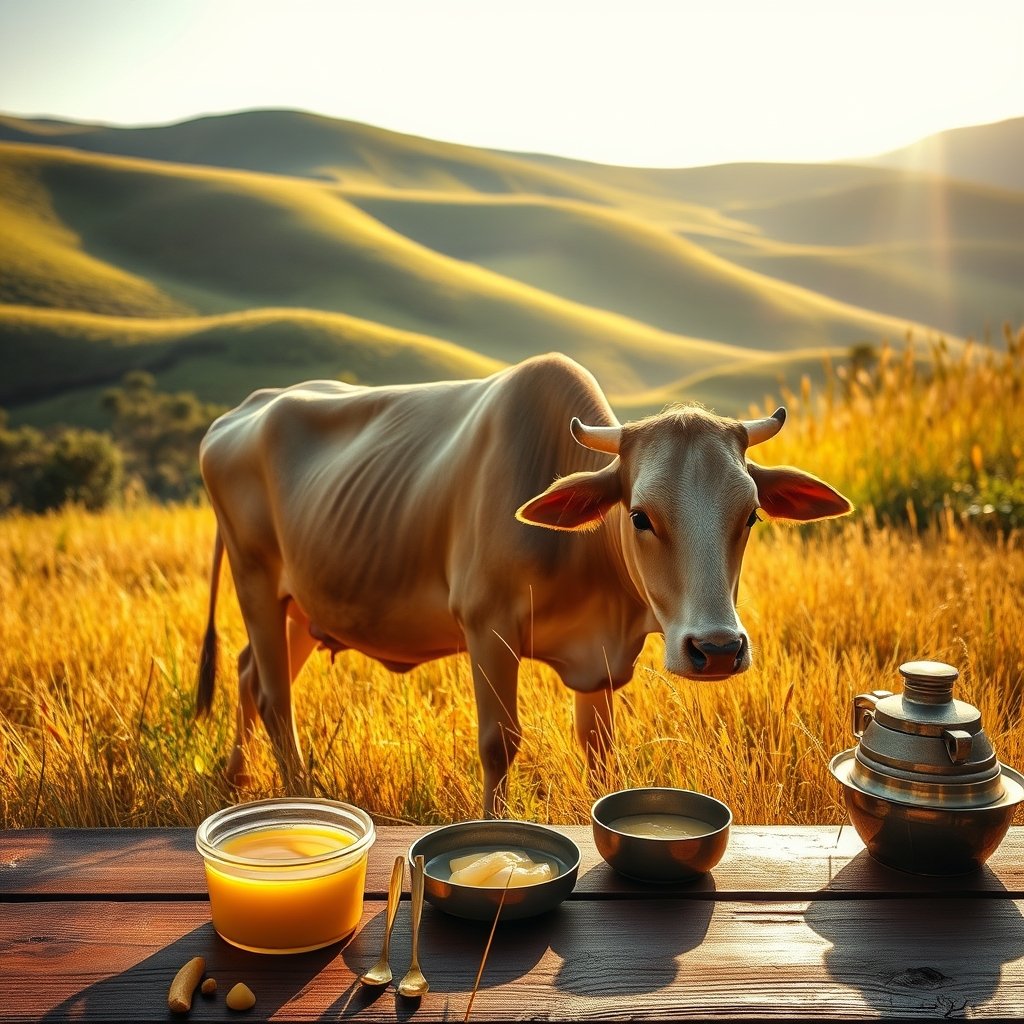 How Seasons Change the Milk, and the Ghee
Milk quality, fat profile, and the resulting ghee shift throughout the year as an indigenous cow's forage…
-
Writing Quality Terms Into a Ghee Supply Contract: Sensory, Retention, and Rejection Clauses
A ghee supply agreement quality clause must define enforceable sensory checks, batch retention rules…
-
 Making Own Ghee vs Contracting: An Honest Comparison
Making your own ghee gives full control but takes heavy capital, while contract manufacturing speeds launch…
