
Making Own Ghee vs Contracting: An Honest Comparison
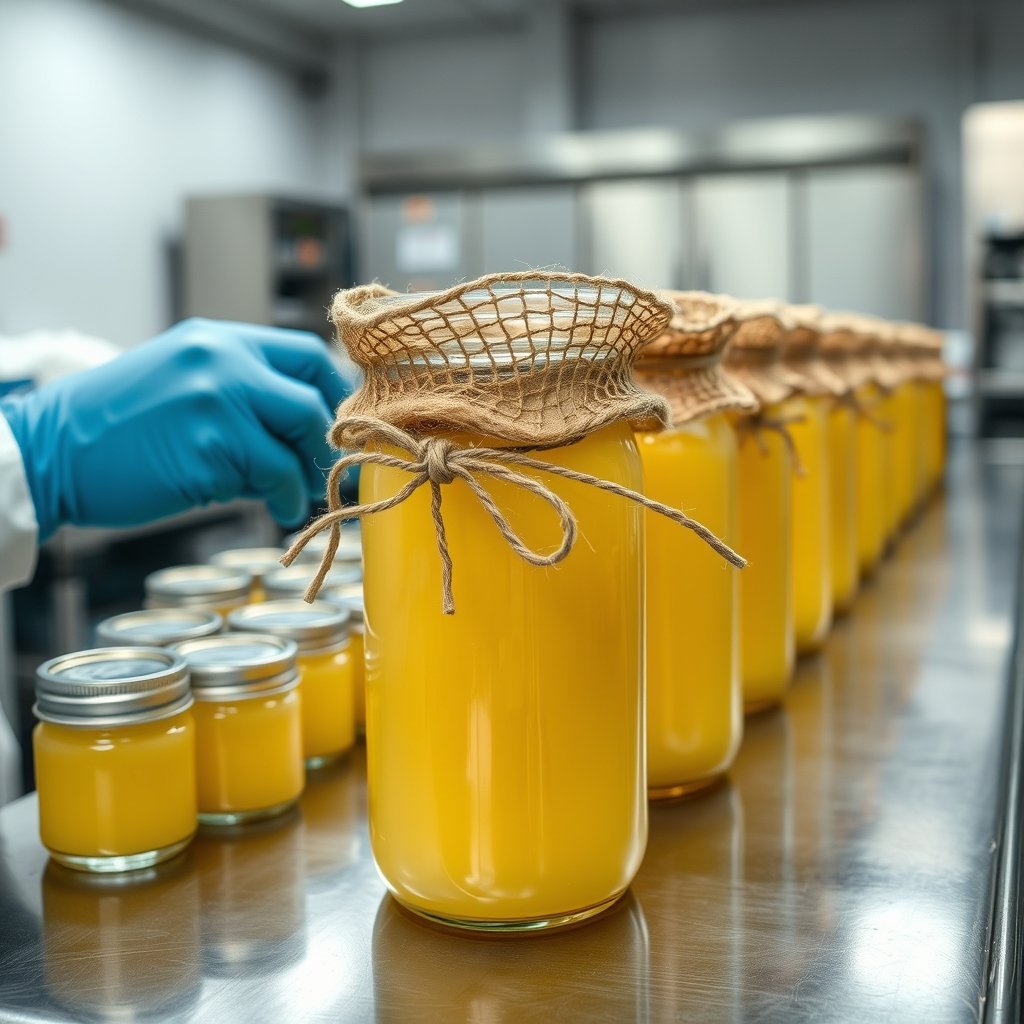
Choosing between setting up your own ghee manufacturing unit and working with a contract manufacturer depends primarily on whether your business prioritises direct operational control or lower upfront capital investment. Making your own ghee allows complete authority over raw milk sourcing, daily bilona churn operations, and facility management, but it demands substantial land, equipment, and dedicated staffing before selling a single jar. Contract manufacturing allows a brand to launch rapidly using an established maker's existing infrastructure, transferring routine facility maintenance and production labor off your payroll while keeping your team focused on distribution and sales.
Is owning your ghee manufacturing facility better than contract manufacturing?
Owning your manufacturing facility is better for brands with large capital reserves who want absolute supervision over every stage of processing, whereas contract manufacturing suits founders seeking lean operations and faster market entry. Setting up a dedicated unit means leasing or building a hygienic production space, sourcing bilona churns, setting up heating apparatus, securing independent food safety licences, and hiring trained dairy artisans. When you manage production yourself, every adjustment to batch size, cooling cycles, or curd fermentation remains under your immediate oversight. However, building this capacity requires significant capital expenditure and ongoing operational overhead regardless of your current sales velocity. Contract manufacturing shifts this burden to a specialized partner who already operates compliant facilities and experienced personnel. For early-stage or growth-focused brands, outsourcing production transforms fixed infrastructure investments into variable inventory costs that scale directly with order volume.
What are the main differences between own and contract ghee production?
The main differences between self-manufacturing and contract manufacturing centre on capital commitment, setup timeline, operational risk, and daily execution responsibilities. A direct comparison shows how these factors balance across both models for an A2 bilona ghee brand.
| Comparison Factor | Own Manufacturing | Contract Manufacturing |
|---|---|---|
| Capital Investment | High upfront cost for machinery, real estate, and utility infrastructure. | Low initial investment focused primarily on finished batch inventory. |
| Time to Market | Slower setup due to facility construction, licensing, and testing. | Faster launch by leveraging existing operational facilities. |
| Quality Control | Direct personal supervision over raw milk handling and bilona churning. | Managed through agreed parameters and formal supply contracts. |
| Operational Focus | Divided between dairy management, labor, packaging, and marketing. | Concentrated on sales, brand development, and distribution. |
| Facility Flexibility | Fixed physical capacity bound to owned equipment and space. | Batch sizes adjust through mutual agreement with the maker. |
Our cows are not use and throw

A cow that stops giving milk is still our cow. She stays on the farm, with the same feed, the same shed and the same medical care she had when she was milking. We do not sell her on and we do not let her go. That is the whole basis of the ghee we make — you cannot ask an animal for her milk and then abandon her for it.
Our mission goes further than our own herd. There are cows on the street who are injured every day, who eat plastic, who cry through the night with nobody coming. We want to take them in. The plan is a chain of Organic Farmz gaushalas in several places, so that help is not one shed in one city but something a hurt animal can actually reach.
This takes more than we can carry alone — land, fodder, vets, hands. Come and join our initiative. Anything you give goes to feed, treat and shelter these cows.

Scan with any UPI app
Bank transfer
- Account name Organic Farmz
- Bank Indian Bank
- Account number 8133177322
- IFSC code IDIB000K555
- UPI ID organicfarmz@ptaxis
On a phone, the button above opens your UPI app directly — a QR on the screen you are reading cannot be scanned by that same screen. On a laptop, scan the code with your phone instead.
What are the risks of contract manufacturing for A2 bilona ghee?
The primary risks of contract manufacturing involve relying on an external facility's quality standards and losing direct day-to-day oversight of raw material sourcing. Traditional bilona ghee requires specific steps: boiling whole A2 Gir cow milk, setting curd, hand-churning the curd into white butter (makhan), and gently heating the butter in small batches until golden fat separates. If a contract manufacturer alters fermenting times or uses high-heat shortcuts to speed up output, the distinct grainy texture and aroma of authentic bilona ghee can change. To mitigate this risk, brands must work with contract partners who maintain open communication, clarify batch handling in written contracts, and provide sample tasting before commercial production begins.
How does the white-label bilona ghee process work at Organic Farmz?
The white-label A2 Gir cow ghee process at Organic Farmz follows a structured, transparent sequence designed to ensure complete clarity before any production starts near Delhi. The arrangement begins when your formal enquiry arrives via email or WhatsApp stating your brand name, preferred jar size, approximate monthly volume, and desired timeline for the initial delivery. Before signing agreements, a sample batch is agreed upon and tasted so you can verify the grain, aroma, and mouthfeel firsthand. Once approved, the specific supply rate, order volume, glass jar style, artwork custody, and clear batch resolution terms are formalized in a written agreement. Your team provides print-ready label artwork displaying your own FSSAI licence number and required legal declarations. Organic Farmz then hand-crafts the ghee to order using traditional bilona churns, delivering fully packed, sealed, code-stamped glass jars that are ready for immediate shipping, meaning your business never needs to repack loose butter or handle raw fat. The exact minimum order, per-jar rate, and delivery schedule are determined during the sample review stage rather than published as fixed figures. If you are ready to evaluate a contract partner for authentic A2 bilona ghee, visit our white-label partnership page to submit your batch details and start the sample review.
Taste the difference
Small-batch A2 Gir cow ghee, hand-churned to order and delivered across India. Read how we make it if you want the detail first.
Order a jarKeep reading
-
 Start Your Own Ghee Brand in India: The 5 Steps
Starting a ghee brand in India requires choosing your buyer, tasting producer samples, securing FSSAI…
-
 Ghee Contract Manufacturing: Who Does What in Production
Ghee contract manufacturing divides duties between cooking and branding: the maker handles milk, churning…
-
 White-Label Ghee Agreement: 7 Essential Clauses
A white-label ghee agreement must define rates, batch volume, artwork rights, glass jar specs, quality…
