
Ghee Contract Manufacturing: Who Does What in Production
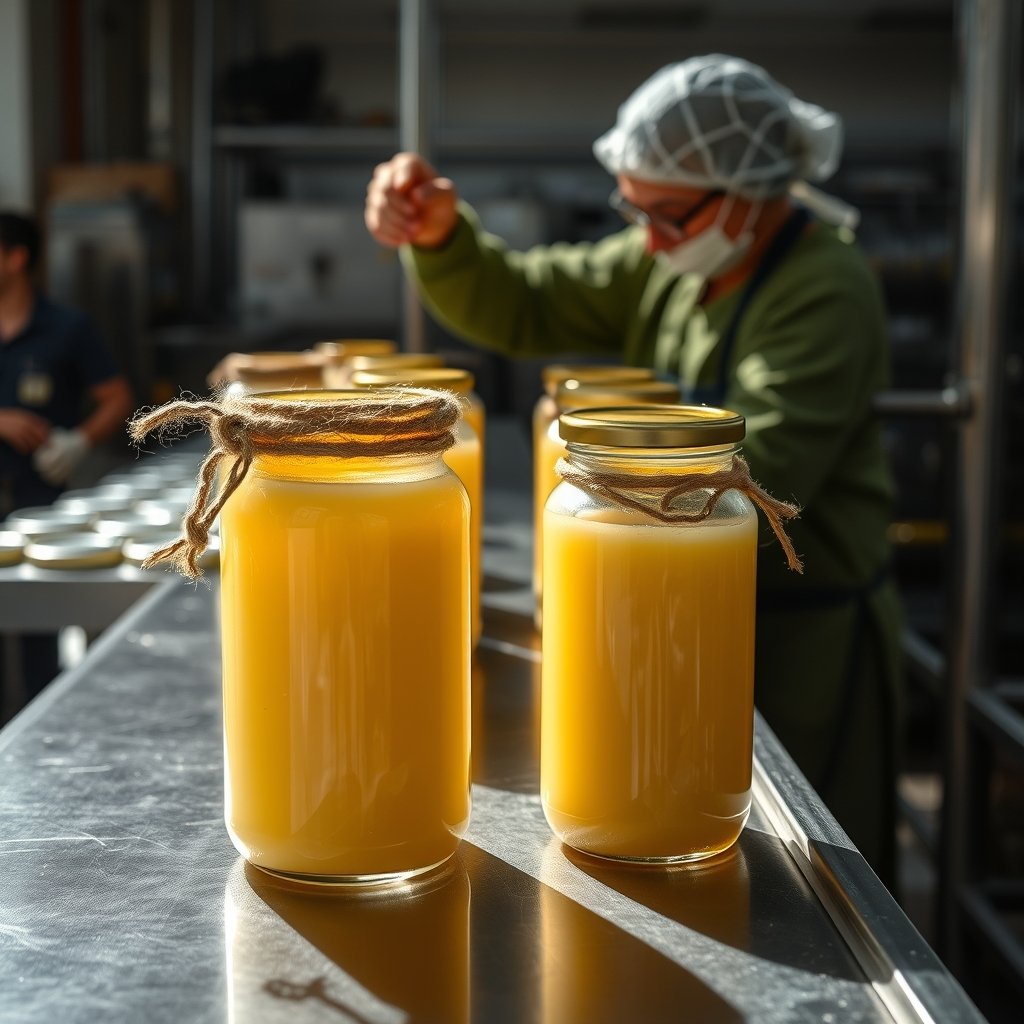
Ghee contract manufacturing divides operational duties directly between the production facility and the client brand: the contract manufacturer manages milk collection, culturing, traditional bilona churning, slow simmering, jar filling, and tamper sealing, while the brand owns label design, statutory licensing, marketing, pricing, and retail customer service.
How do the manufacturer and brand divide their core duties?
The core split in any ghee contract manufacturing arrangement places physical production and facility sanitation on the maker, while market positioning and legal ownership of the finished retail item remain with the brand. Disagreements in contract manufacturing usually arise when boundaries between quality control and packaging responsibilities are blurred, which makes a clear operational division essential before milk is ever set for curdling.
| Operational Area | Manufacturer Responsibility | Brand Responsibility |
|---|---|---|
| Raw Milk and Processing | Procuring milk, culturing curd, churning makkhan, and heating ghee. | Approving sensory sample profiles, target aroma, and grain texture. |
| Quality and Batch Testing | Maintaining batch consistency, moisture reduction, and facility hygiene. | Auditing final batch acceptance against agreed sensory standards. |
| Packaging and Sealing | Supplying specified glass jars, airtight lug lids, filling, and batch coding. | Providing print-ready label artwork and carton branding requirements. |
| Regulatory and Labelling | Factory premises compliance and manufacturing declarations. | Brand FSSAI license, marketer declarations, and retail pricing details. |
| Liability and Support | Replacing production defects or unsealed jars prior to dispatch. | Managing consumer queries, transit claims, marketing, and retail returns. |
Who controls the milk sourcing and the bilona churning process?
The manufacturing partner maintains total operational control over raw milk intake, curd culturing, bilona churning, and clarifying temperatures. In an authentic A2 Gir cow ghee setup, the producer manages the natural lactation cycles of indigenous cattle, sets whole milk with previous-day cultures, churns the curd using bidirectional wooden bilona churns to separate makkhan, and melts that butter slowly over a gentle flame. Because the brand is not running the dairy floor, it relies on the maker's discipline to ensure the water content is thoroughly boiled off without scorching the milk solids. The brand's role during processing is confined to approving sensory benchmarks such as color, grain formation, and nutty aroma rather than directing daily barn or kitchen tasks.
Our cows are not use and throw

A cow that stops giving milk is still our cow. She stays on the farm, with the same feed, the same shed and the same medical care she had when she was milking. We do not sell her on and we do not let her go. That is the whole basis of the ghee we make — you cannot ask an animal for her milk and then abandon her for it.
Our mission goes further than our own herd. There are cows on the street who are injured every day, who eat plastic, who cry through the night with nobody coming. We want to take them in. The plan is a chain of Organic Farmz gaushalas in several places, so that help is not one shed in one city but something a hurt animal can actually reach.
This takes more than we can carry alone — land, fodder, vets, hands. Come and join our initiative. Anything you give goes to feed, treat and shelter these cows.

Scan with any UPI app
Bank transfer
- Account name Organic Farmz
- Bank Indian Bank
- Account number 8133177322
- IFSC code IDIB000K555
- UPI ID organicfarmz@ptaxis
On a phone, the button above opens your UPI app directly — a QR on the screen you are reading cannot be scanned by that same screen. On a laptop, scan the code with your phone instead.
Who is responsible for packaging, labelling, and FSSAI compliance?
Legal compliance and consumer packaging declarations are split by function: the brand supplies the regulatory text and visual artwork, while the manufacturer physically applies the labels and seals the containers. Under Indian packaging regulations, a food jar must state both the manufacturer's operational details and the marketer's commercial identity. The brand must secure its own Food Safety and Standards Authority of India licence as a marketer, ensure all ingredients and nutritional statements follow current food standards, and provide ready-to-print digital label layouts. The manufacturer receives these specifications, prepares the clean glass jars, fills the warm ghee to allow natural settling, fastens lug caps securely, prints batch numbers and manufacturing dates on the glass or label, and packs the finished units into corrugated master cartons.
What happens when a batch fails quality checks or customer expectations?
Liability is allocated based on where an error occurs in the supply chain: the manufacturer answers for intrinsic batch defects, while the brand handles commercial logistics, storage wear, and end-customer claims. If a batch exhibits unevaporated moisture, charred undertones, loose lids, or unsealed jars at delivery, the manufacturer must rectify or replace the affected goods under the terms of the production agreement. Conversely, once the consignment arrives safely at the brand's distribution hub, the brand bears the liability for retail transit breakage, shelf-life depletion due to warm warehousing, marketing messaging, and consumer dissatisfaction. Establishing clear batch sign-off criteria before shipping prevents friction over subjective tastes or natural seasonal shifts in color.
How does the contract manufacturing process work at Organic Farmz?
Our contract manufacturing workflow follows five deliberate steps to protect product authenticity and provide the brand with finished, shelf-ready jars. The process begins when an enquiry arrives on WhatsApp or by email outlining your brand name, preferred glass jar size, estimated monthly volume, and desired delivery timeframe. Next, a sample batch from our workshop near Delhi is agreed upon and tasted so you can assess the aroma, curd-churned flavor, and grainy texture of our A2 Gir cow bilona ghee firsthand before committing resources.
Once the sample is approved, both parties sign a written agreement that defines the agreed unit rate, supply volume, jar style, label custody, and exact protocols for handling any batch either side finds unsatisfactory. Because our dairy production depends on cow availability, natural seasonal yields, and order sizes, minimum order quantities, final unit rates, and production lead times are settled individually during this sample stage and are not published as fixed numbers. The client brand then supplies print-ready label files bearing their own valid FSSAI registration and mandatory consumer declarations. We churn to order, pouring the warm clarified butter into heavy glass jars, sealing each lug cap, and stamping batch details so the finished stock arrives completely labelled and ready to ship to your retail customers. To begin reviewing your project specifications and sampling our craft batches, visit our white-label partnership page and send your brand details directly to our workshop team.
Taste the difference
Small-batch A2 Gir cow ghee, hand-churned to order and delivered across India. Read how we make it if you want the detail first.
Order a jarKeep reading
-
 White-Label Ghee Agreement: 7 Essential Clauses
A white-label ghee agreement must define rates, batch volume, artwork rights, glass jar specs, quality…
-
 Private Label Ghee: Both FSSAI Numbers Required
A private label ghee jar must show both the brand owner's FSSAI license number and the manufacturer's FSSAI…
-
 Start Your Own Ghee Brand in India: The 5 Steps
Starting a ghee brand in India requires choosing your buyer, tasting producer samples, securing FSSAI…
