
Private Label Ghee: Both FSSAI Numbers Required
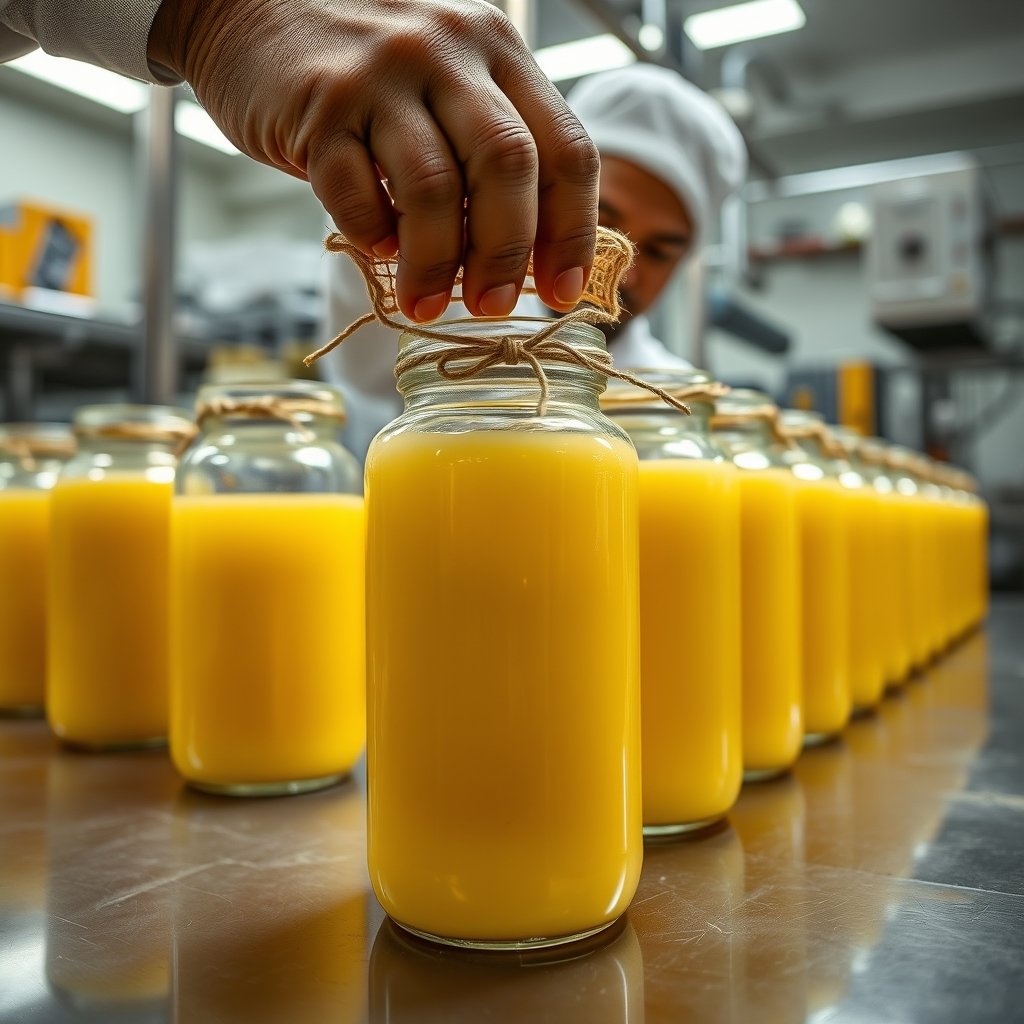
A private label ghee jar must display both the brand owner's FSSAI license number and the manufacturer's FSSAI license details under Indian food safety regulations.
Whose FSSAI Number Belongs on a Private Label Ghee Jar?
When selling ghee under your own brand name that is produced by an external contract manufacturer, Indian food packaging regulations require that both entity details appear clearly on the glass jar. The label must list your company name, physical address, and FSSAI registration or license number under the statement 'Marketed By'. At the same time, the manufacturing facility where the raw milk is cultured, churned, and clarified must be identified under 'Manufactured By' along with its own FSSAI license number and unit address. This dual listing establishes full regulatory transparency and consumer accountability across both production and commercial distribution channels.
What Is the Difference Between Manufacturer and Brand Owner FSSAI Responsibilities?
The brand owner and the contract manufacturer hold distinct legal and operational responsibilities under their respective FSSAI licenses. The brand owner manages marketing, retail compliance, and consumer inquiries, while the manufacturer maintains food safety, raw material quality, and hygienic batch processing at the facility level.
| Responsibility Area | Brand Owner (Marketer) | Manufacturer (Producer) |
|---|---|---|
| FSSAI License Type | Trade / Wholesale / Retailer Registration | Food Manufacturing / Processing Unit License |
| Label Declaration | Listed under 'Marketed By' with address | Listed under 'Manufactured By' with facility address |
| Primary Compliance | Consumer marketing, artwork, retail distribution | Batch hygiene, bilona processing, safety testing |
Our cows are not use and throw

A cow that stops giving milk is still our cow. She stays on the farm, with the same feed, the same shed and the same medical care she had when she was milking. We do not sell her on and we do not let her go. That is the whole basis of the ghee we make — you cannot ask an animal for her milk and then abandon her for it.
Our mission goes further than our own herd. There are cows on the street who are injured every day, who eat plastic, who cry through the night with nobody coming. We want to take them in. The plan is a chain of Organic Farmz gaushalas in several places, so that help is not one shed in one city but something a hurt animal can actually reach.
This takes more than we can carry alone — land, fodder, vets, hands. Come and join our initiative. Anything you give goes to feed, treat and shelter these cows.

Scan with any UPI app
Bank transfer
- Account name Organic Farmz
- Bank Indian Bank
- Account number 8133177322
- IFSC code IDIB000K555
- UPI ID organicfarmz@ptaxis
On a phone, the button above opens your UPI app directly — a QR on the screen you are reading cannot be scanned by that same screen. On a laptop, scan the code with your phone instead.
What Packaging Declarations Must Be Included on the Label?
In addition to displaying both FSSAI license numbers, a private label ghee container must carry specific statutory declarations before it can enter retail channels. The label artwork provided by the brand owner must include the standardized food name ('A2 Gir Cow Ghee'), net quantity by volume or weight, ingredient list, nutritional facts panel, batch or lot identification code, date of packaging, best-before timeframe, storage guidelines, and customer care contact details. Providing print-ready artwork that incorporates these mandatory elements ensures that the final printed labels meet regulatory guidelines without requiring last-minute design corrections.
How Does the Private Label Process Work Step by Step?
The contract manufacturing journey follows a clear sequence designed to keep batch quality consistent from sample to final delivery. The process begins when an enquiry is submitted via WhatsApp or email detailing the proposed brand name, chosen jar capacity, target launch timeframe, and estimated monthly volume requirements. Next, a sample batch of A2 Gir cow ghee—crafted using cultured curd and hand-driven wooden bilona churns near Delhi—is sent for evaluation and tasting. Once the sample meets expectations, both parties sign a formal written agreement that covers commercial supply rates, minimum monthly volumes, jar specifications, artwork design ownership, and defined standards for batch acceptance. After artwork approval, the ghee is churned to order, filled into glass jars, sealed, stamped with batch codes, and shipped ready for direct sale without requiring any repacking or secondary handling.
How Are Minimum Orders, Rates, and Timelines Determined?
Commercial terms such as minimum order quantities, supply rates, and production lead times are settled individually during the initial sample phase rather than published as fixed standard rates. Because authentic bilona ghee relies on traditional culturing techniques and natural milk production cycles, schedule flexibility and batch sizing are tailored to each brand owner's actual distribution plan. What decides the final unit cost and delivery timeline is the mutual agreement reached after sample evaluation. To discuss your brand concept, request a sample batch, and review private label production terms, visit our white-label partnership page.
Taste the difference
Small-batch A2 Gir cow ghee, hand-churned to order and delivered across India. Read how we make it if you want the detail first.
Order a jarKeep reading
-
 Start Your Own Ghee Brand in India: The 5 Steps
Starting a ghee brand in India requires choosing your buyer, tasting producer samples, securing FSSAI…
-
 White-Label Ghee Agreement: 7 Essential Clauses
A white-label ghee agreement must define rates, batch volume, artwork rights, glass jar specs, quality…
-
 Ghee Contract Manufacturing: Who Does What in Production
Ghee contract manufacturing divides duties between cooking and branding: the maker handles milk, churning…
