
Why Ghee Fails Quality Tests: Milk Fat Explained

Ghee fails official food quality tests when its physical or chemical properties deviate from standard dairy fat benchmarks, usually because foreign fats were introduced or moisture was left behind during boiling. Food safety inspections and laboratory test results have been in the news recently, leaving many home cooks wondering what terms like substandard actually mean when applied to everyday cooking fats. In laboratory terms, a batch is marked substandard when its natural fatty acid composition fails specific analytical thresholds established for pure milk fat.
What does substandard ghee mean in a laboratory test?
Substandard ghee is any sample that does not meet the legal analytical baseline for pure milk fat, even if the product contains no hazardous chemical additives. Testing laboratories assess ghee against strict physical and chemical parameters, including moisture percentage, free fatty acid levels, and fat solubility constants known as the Reichert-Meissl and Polenske values. When commercial batches contain leftover buttermilk moisture from rushed boiling, or when the milk fat has been diluted with foreign vegetable oils or animal tallows, these chemical ratios shift outside acceptable limits. A failed test simply informs the consumer that what is inside the container is not wholly genuine milk fat.
Why do commercial ghee samples fail fat purity standards?
Commercial samples fail testing primarily due to cost cutting through industrial blending or improper thermal processing. Milk fat is among the most valuable agricultural fats, creating an incentive for unscrupulous processors to stretch batches by blending in cheaper refined vegetable oils, hydrogenated fats, or starches. Beyond deliberate adulteration, high-speed industrial creameries often bypass proper clarification to maximize yield. When industrial butter is boiled too quickly at imprecise temperatures, residual water remains suspended in the fat, raising the moisture level beyond permissible thresholds and causing the ghee to turn rancid over shelf storage.
How does the traditional bilona method protect milk fat?
The traditional bilona method protects milk fat by fermenting whole milk into cultured curd before churning, which naturally separates pure butterfat without synthetic stabilizers or high-heat fractionation. In this classical process, milk from native cows, such as the Gir breed, is boiled slowly over a mild flame, allowed to cool, and cultured with curd overnight. Once set, the curd is churned two ways using a wooden bilona churn to gather fresh makkhan, or cultured butter. The makkhan is then transferred to an open pan and clarified over a steady low fire. This gradual, patient simmering allows all water to evaporate completely and curd solids to caramelize and settle, leaving behind an exceptionally stable, dry fat that naturally satisfies chemical purity standards.
Our cows are not use and throw

A cow that stops giving milk is still our cow. She stays on the farm, with the same feed, the same shed and the same medical care she had when she was milking. We do not sell her on and we do not let her go. That is the whole basis of the ghee we make — you cannot ask an animal for her milk and then abandon her for it.
Our mission goes further than our own herd. There are cows on the street who are injured every day, who eat plastic, who cry through the night with nobody coming. We want to take them in. The plan is a chain of Organic Farmz gaushalas in several places, so that help is not one shed in one city but something a hurt animal can actually reach.
This takes more than we can carry alone — land, fodder, vets, hands. Come and join our initiative. Anything you give goes to feed, treat and shelter these cows.

Scan with any UPI app
Bank transfer
- Account name Organic Farmz
- Bank Indian Bank
- Account number 8133177322
- IFSC code IDIB000K555
- UPI ID organicfarmz@ptaxis
On a phone, the button above opens your UPI app directly — a QR on the screen you are reading cannot be scanned by that same screen. On a laptop, scan the code with your phone instead.
Why does Ayurveda emphasize cultured bilona cow ghee?
Ayurveda emphasizes cultured bilona cow ghee because classical culinary traditions view the multi-step curd fermentation and slow clarification as essential to transforming heavy milk into an easily assimilable kitchen fat. Classical dietary texts distinguish sharply between fat skimmed raw from sweet cream and fat gathered from slowly churned cultured dahi. In traditional Indian kitchens, pure cow ghee serves as a carrying medium for aromatic spices, blooming ground seeds and whole aromatics so their volatile flavors disperse evenly through warm lentils and grains. Because bilona clarification drives out all free water, the fat maintains an unctuous, granular consistency that stays stable without synthetic preservatives.
How can you tell pure bilona ghee while cooking at home?
You can identify pure bilona ghee in your kitchen by its aroma upon melting, its granular texture at room temperature, and its clean behavior in a hot pan. Authentic cow ghee made from cultured curd melts at body temperature, melting almost instantly when rubbed between warm fingertips without leaving a sticky or greasy residue. When heated in a pan for tempering cumin or mustard seeds, genuine bilona fat melts cleanly into a golden liquid that releases an aroma reminiscent of roasted nuts and toasted mawa. If you want to check for strange physical behaviors using basic kitchen methods, you can read our guide on testing ghee at home to observe how real milk fat separates and cools.
How should you store pure cow ghee to prevent spoilage?
You should store pure cow ghee in a dry, airtight glass or stainless steel container kept away from direct sunlight and ambient cooking steam. Because traditionally made ghee has virtually no moisture content, it does not require refrigeration and remains stable in a dark pantry cupboard for many months. Always use a clean, thoroughly dry spoon whenever scooping fat from the jar, as introducing external moisture is the single quickest way to encourage mold growth around the jar rim. Keeping the jar sealed tightly preserves the characteristic nutty bouquet and granular crumb from oxidation.
Taste the difference
Small-batch A2 Gir cow ghee, hand-churned to order and delivered across India. Read how we make it if you want the detail first.
Order a jarKeep reading
-
 How Much Ghee to Buy First: Order the Smallest Jar
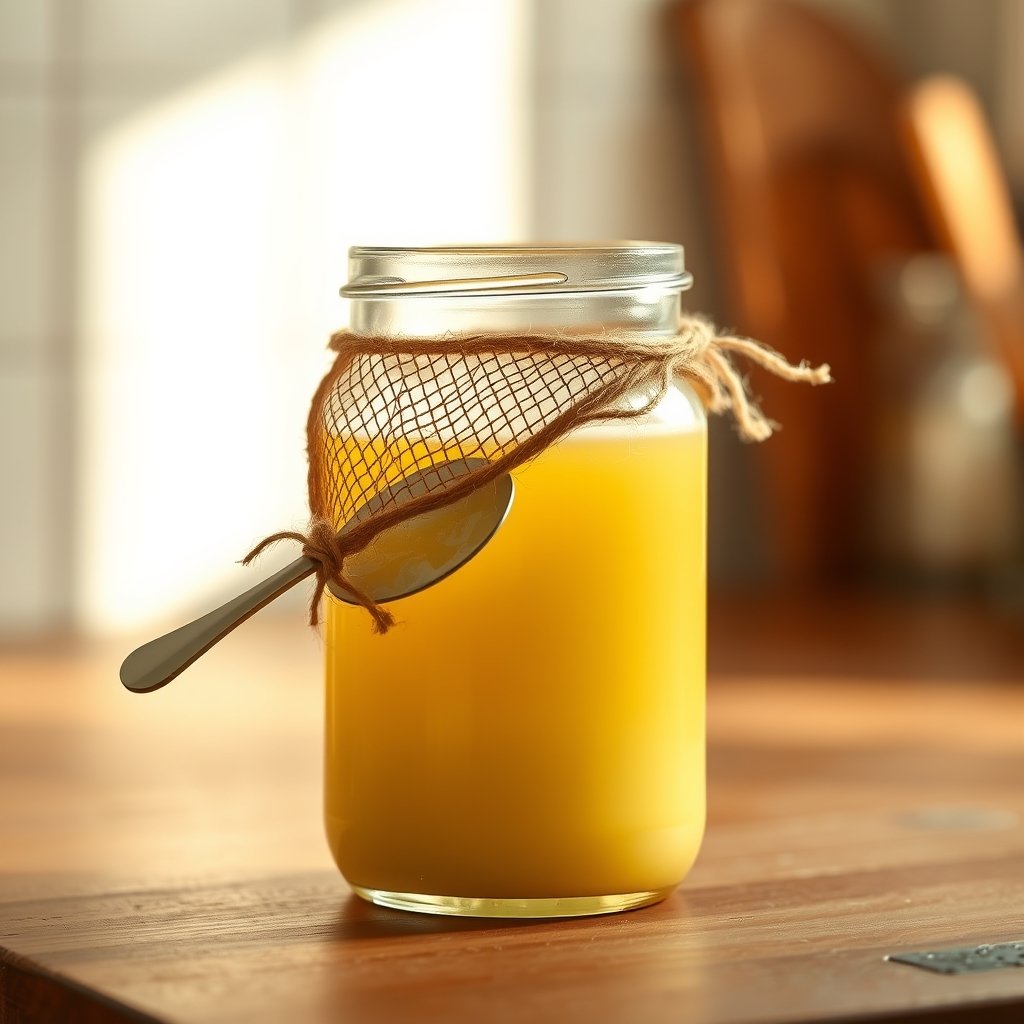
Order the single smallest jar available when trying a new ghee brand, allowing you to test its aroma, grain…
-
 How Seasons Change the Milk, and the Ghee
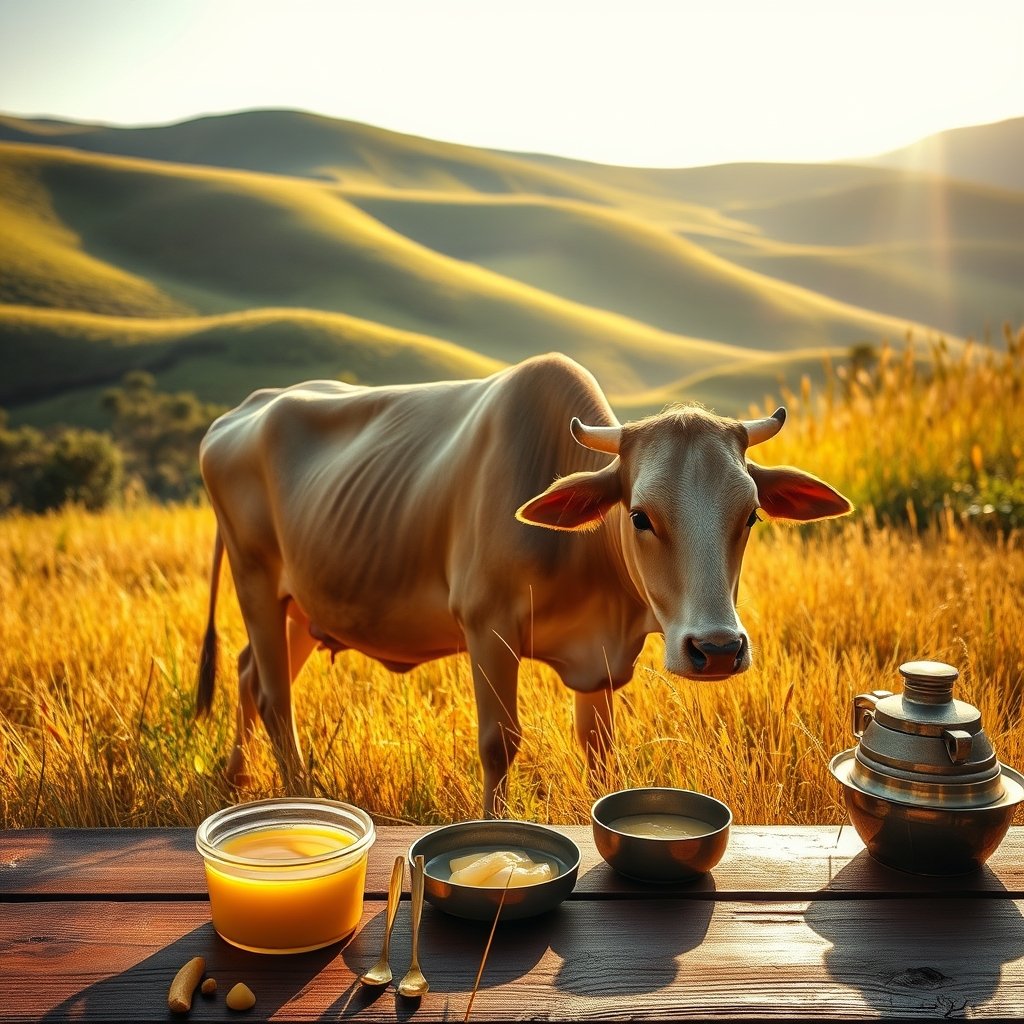
Milk quality, fat profile, and the resulting ghee shift throughout the year as an indigenous cow's forage…
-
 What Adulterated Ghee Looks, Smells and Tastes Like
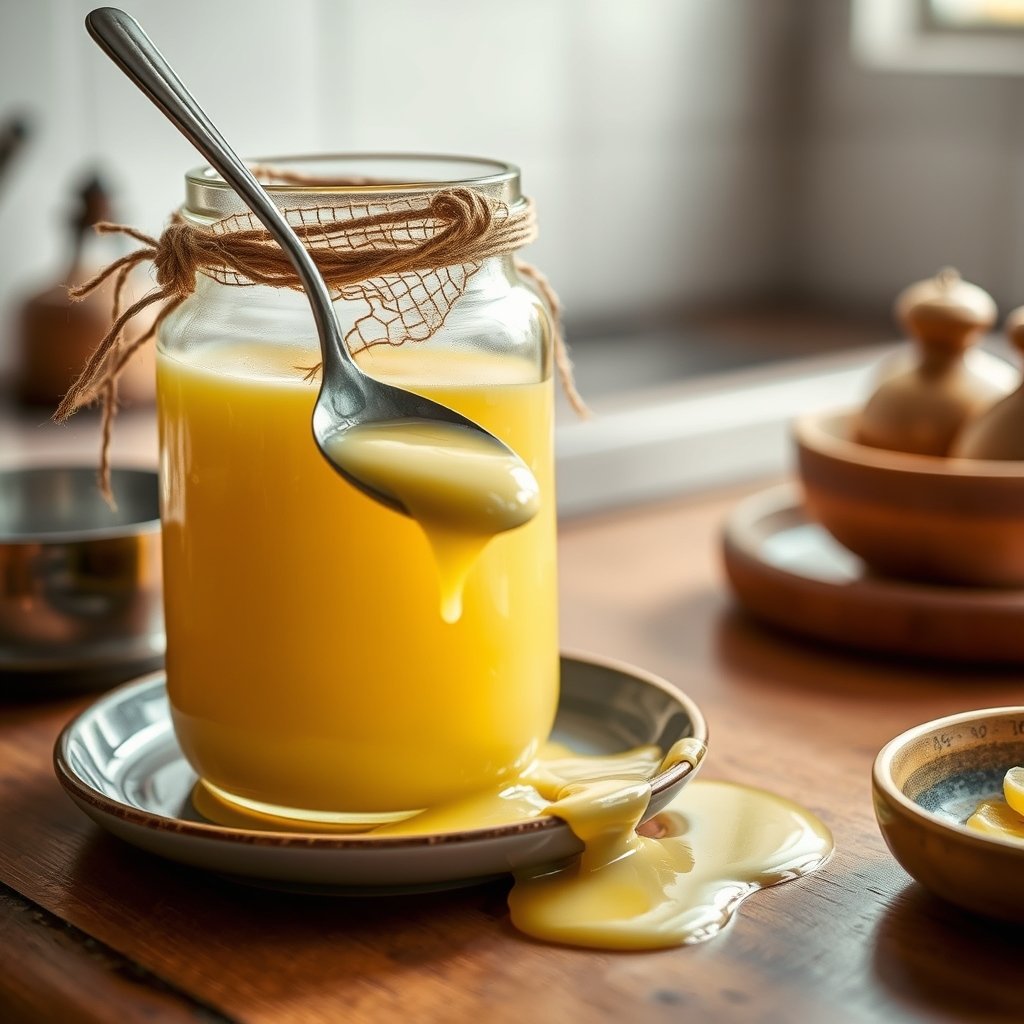
Adulterated ghee is smooth and waxy or oddly greasy, with none of the irregular danedar grain of real bilona…
