
What Adulterated Ghee Looks, Smells and Tastes Like
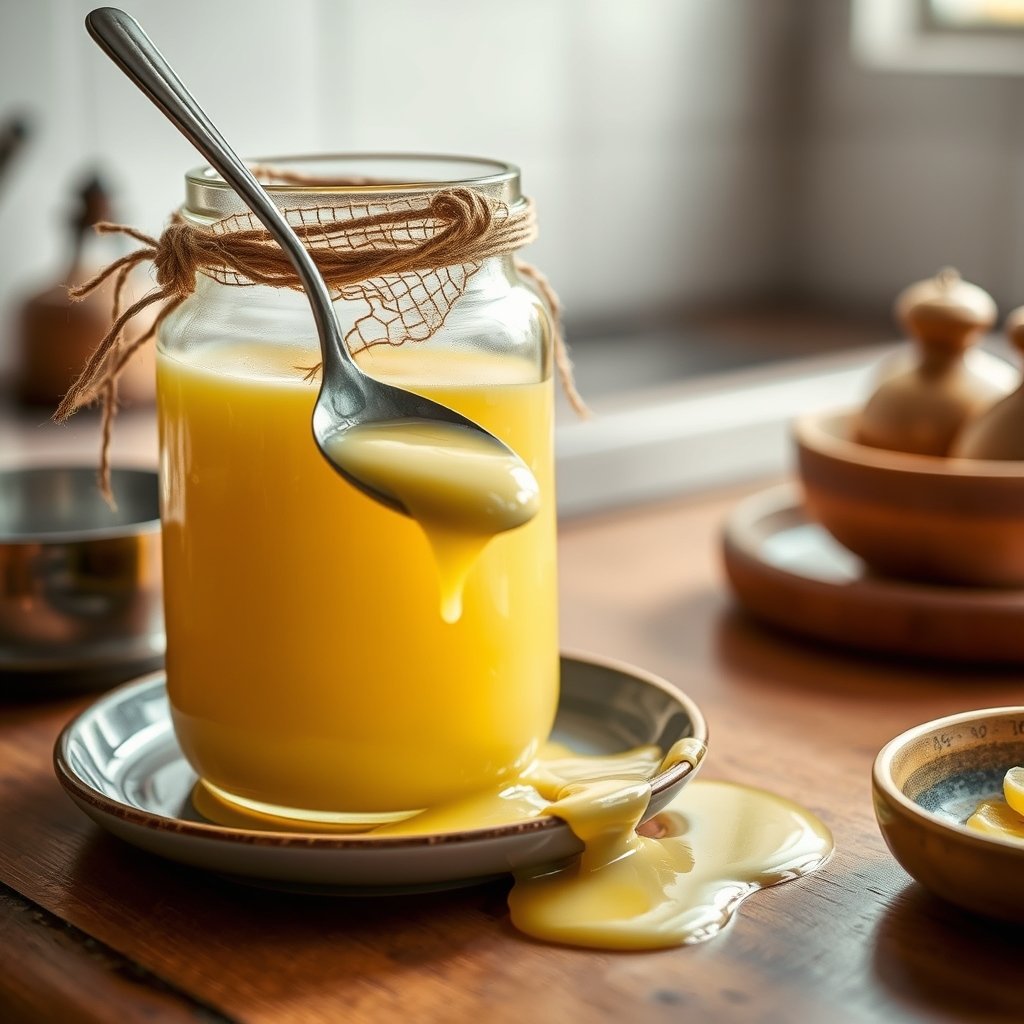
What does adulterated ghee look like?
Adulterated ghee typically appears either overly smooth and waxy or unnaturally greasy, often lacking the distinct, irregular graininess found in traditionally made bilona ghee. When you open a jar of genuine A2 Gir cow ghee, you should see a 'danedar' or granulated texture. These grains are formed naturally as the healthy fats cool slowly. In contrast, ghee that has been mixed with hydrogenated vegetable oils (vanaspati) or animal fats often looks uniform, like a block of cold lard or plastic. If the ghee looks perfectly smooth and shiny even at room temperature in a cool climate, it may contain additives that prevent natural crystallization. Furthermore, if the color is an aggressive, fluorescent yellow, it might be the result of added coloring agents rather than the natural beta-carotene found in the A2 milk of Gir cows.
How does the aroma of adulterated ghee differ from the real thing?
The aroma of adulterated ghee is usually faint, sour, or reminds one of soap or chemicals, whereas traditional bilona ghee carries a rich, nutty, and toasted scent that fills the room. This fragrance is a result of the slow-cooking process where curd-extracted butter is clarified over a gentle flame. Adulterated versions often use 'ghee essences'—artificial flavorings—to mimic this scent, but these aromas usually vanish the moment the ghee is heated in a pan. If you put a spoonful of ghee in a hot ladle and the smell becomes pungent or develops a burnt-plastic note, it is a strong indicator of adulteration. In Ayurveda, the 'gandha' or smell of ghee is considered a mark of its vitality; if the scent is flat or metallic, the soul of the fat is missing.
What is the taste and mouthfeel of adulterated ghee?
Adulterated ghee leaves a sticky, heavy film on the roof of the mouth and the back of the throat, while pure A2 bilona ghee melts almost instantly at body temperature, leaving a clean, slightly sweet finish. This is perhaps the most concrete way to identify a compromise in quality. When you taste a small amount of pure ghee, it should dissolve on your tongue without leaving a greasy residue. If you find yourself needing to scrape a coating off your palate after eating a paratha or a spoonful of dal, the ghee likely contains palm oil or other vegetable fats with higher melting points. These fats do not integrate with the food in the same way, often making the meal feel 'heavy' rather than nourishing.
How does it behave during Indian home cooking?
In a traditional Indian kitchen, ghee is the foundation of the 'tadka' or tempering. When you add a spoonful of pure bilona ghee to a hot pan, it should melt quickly and clearly. Adulterated ghee may froth excessively or produce a thick, dark smoke at lower temperatures if it contains starch or high amounts of moisture. When used in sweets like halwa or laddoos, adulterated ghee fails to provide that signature 'shortness' or crumbly texture. Instead, the sweets may become soggy or develop a rancid taste within a few days. Because bilona ghee is made from curd, it has a complex flavor profile that enhances spices like cumin and asafoetida, whereas adulterated ghee often masks these flavors with a bland, oily heaviness.
A Comparison of Sensory Qualities
To help you distinguish between the two, here is a breakdown of what to look for when evaluating the ghee in your pantry.
| Feature | Traditional Bilona A2 Ghee | Adulterated or Mass-Produced Ghee |
|---|---|---|
| Visual Texture | Distinctly grainy and 'danedar' | Smooth, waxy, or separated into oil and sludge |
| Melting Point | Melts at body temperature (on the palm) | Requires higher heat; stays solid on the tongue |
| Aroma | Deep, nutty, and lingering | Faint, artificial, or smells like vegetable oil |
| Aftertaste | Clean, sweet, and nutty | Greasy film or metallic residue on the palate |
Why does the bilona method prevent these issues?
The traditional bilona method involves turning A2 milk into curd, churning that curd to get butter (makkhan), and then boiling that butter to get ghee. This labor-intensive process ensures that the fat structure remains intact and the moisture is completely removed. Adulteration often happens in large-scale factory settings where cream is separated by machines and chemicals are used to speed up the process or increase the volume. By sticking to the slow, curd-based method used in Indian households for centuries, the integrity of the Gir cow's A2 milk is preserved. This results in a product that not only passes the 'look, smell, and taste' test but also honors the principles of Ayurvedic cooking, where the purity of the medium is as important as the ingredients themselves.
What should you do if you suspect your ghee is adulterated?
If your ghee fails the sensory tests—meaning it doesn't smell right, tastes greasy, or looks like a solid block of wax—it is best to stop using it for direct consumption. While we often look for lab results, our own senses are highly tuned to recognize what is natural. In many Indian homes, the 'palm test' or the 'heat test' are passed down through generations precisely because adulteration is not a new problem. Choosing a source that follows the bilona method and uses A2 milk from specific breeds like the Gir cow reduces the likelihood of encountering these fillers. Always trust the grain, the scent, and how the ghee feels in your mouth; these are the honest markers of a tradition that has been kept alive for thousands of years.