
What Happens to Milk Solids When You Make Ghee
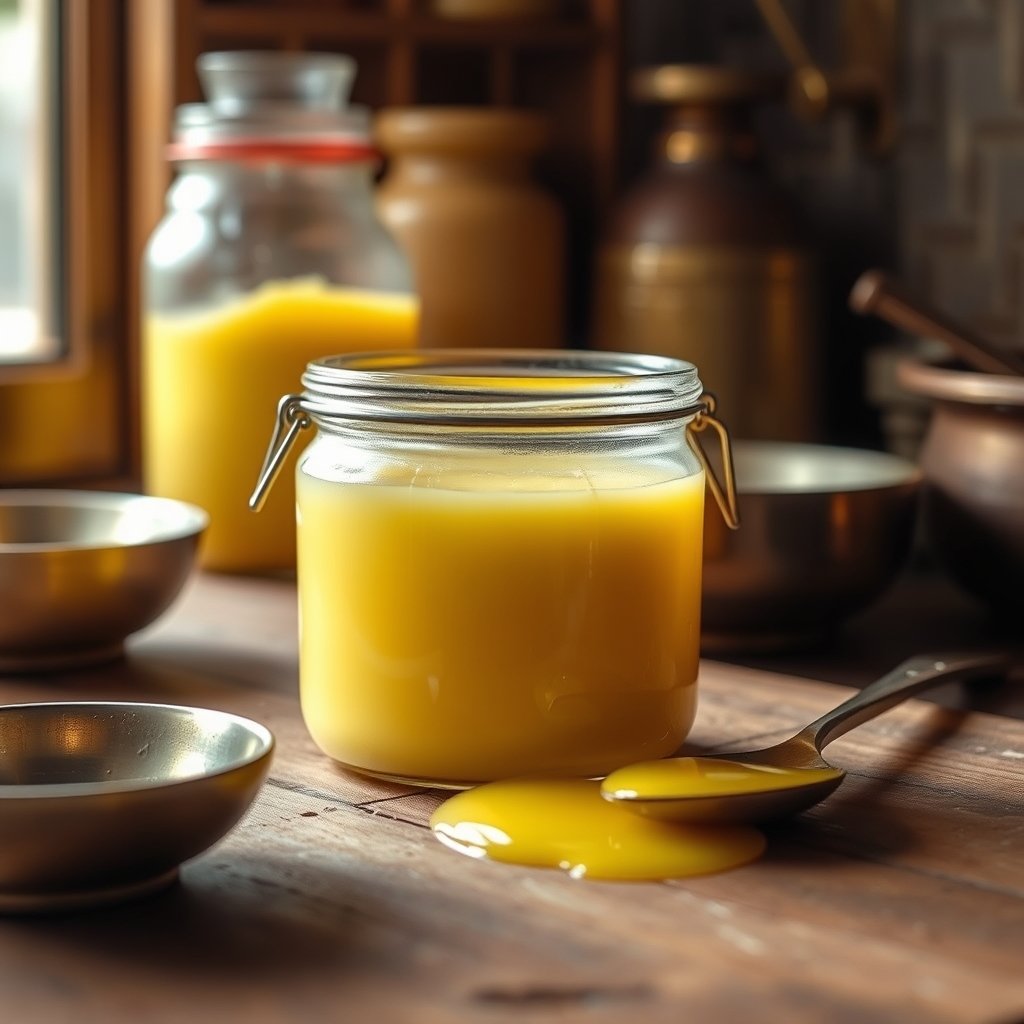
When making ghee, heat separates water from butterfat, causing milk solids like whey proteins and lactose to precipitate, brown at the bottom of the pot, and separate completely from the clear liquid fat.
What Are Milk Solids in Butter?
Butter extracted from churned curd contains three main components: roughly 80–82% butterfat, 16–18% water, and 1–2% milk solids non-fat (MSNF). These milk solids consist primarily of casein, whey proteins, lactose (milk sugar), and small trace minerals. During the clarification process, heat drives off water steam and alters the physical state of these solids.
How Do Milk Solids Change Stage by Stage During Heating?
As butter melts in a heavy-bottomed brass or iron vessel over low flame, milk solids undergo a visible, four-phase transformation:
1. Foaming Phase: As butter melts and approaches the boiling point of water (100°C), water trapped inside begins to boil off. Water steam rises through the fat layer, creating a thick white foam on the surface. Milk solids remain suspended in this foaming liquid.
2. Separation Phase: As water content diminishes, the milk solids coalesce into white, curd-like clusters. Deprived of water to stay dissolved in, these dense protein solids begin sinking to the bottom of the pan while liquid butterfat becomes translucent yellow above them.
3. Browning (Maillard Reaction) Phase: With moisture evaporated, the heat of the pan increases past 110°C. The amino acids in casein proteins react with lactose sugars in a natural chemical process called the Maillard reaction. The milk solids change color from white to pale yellow, then to light golden brown, releasing a distinctive roasted, nutty aroma into the air.
4. Sedimentation Phase: The browned milk solids (locally referred to as khurchan or beran) settle firmly at the bottom of the vessel. The liquid oil above turns crystal clear and golden amber, signaling that clarification is complete and the heat must be stopped.
Our cows are not use and throw
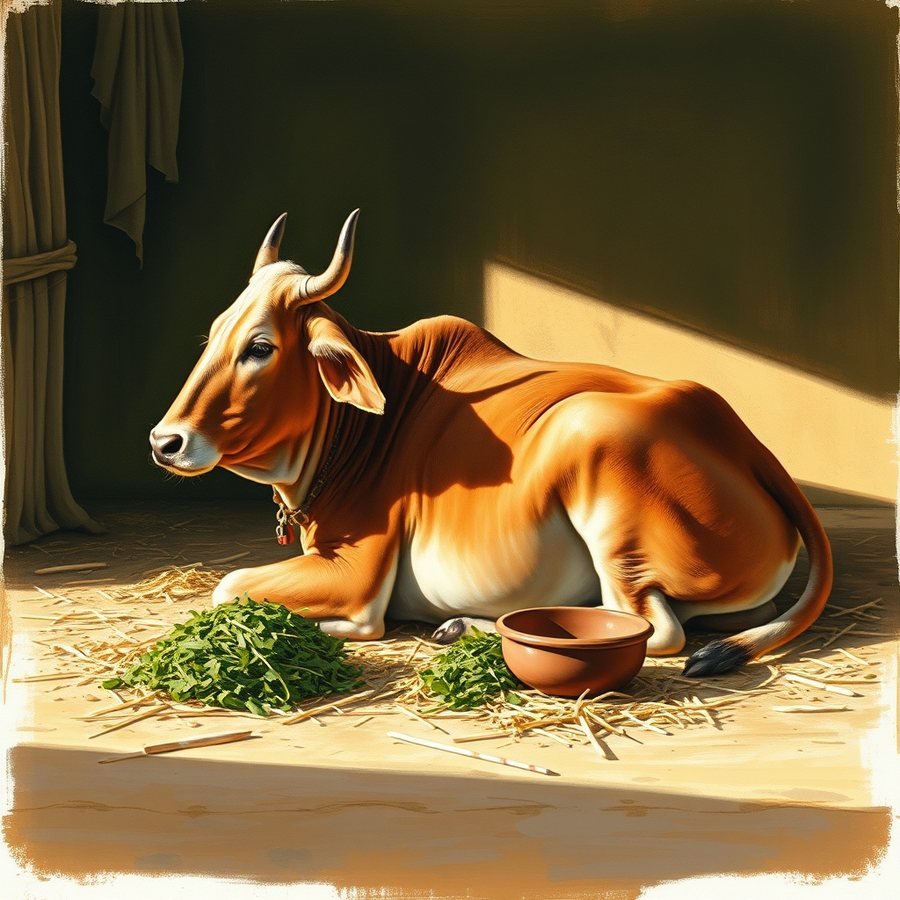
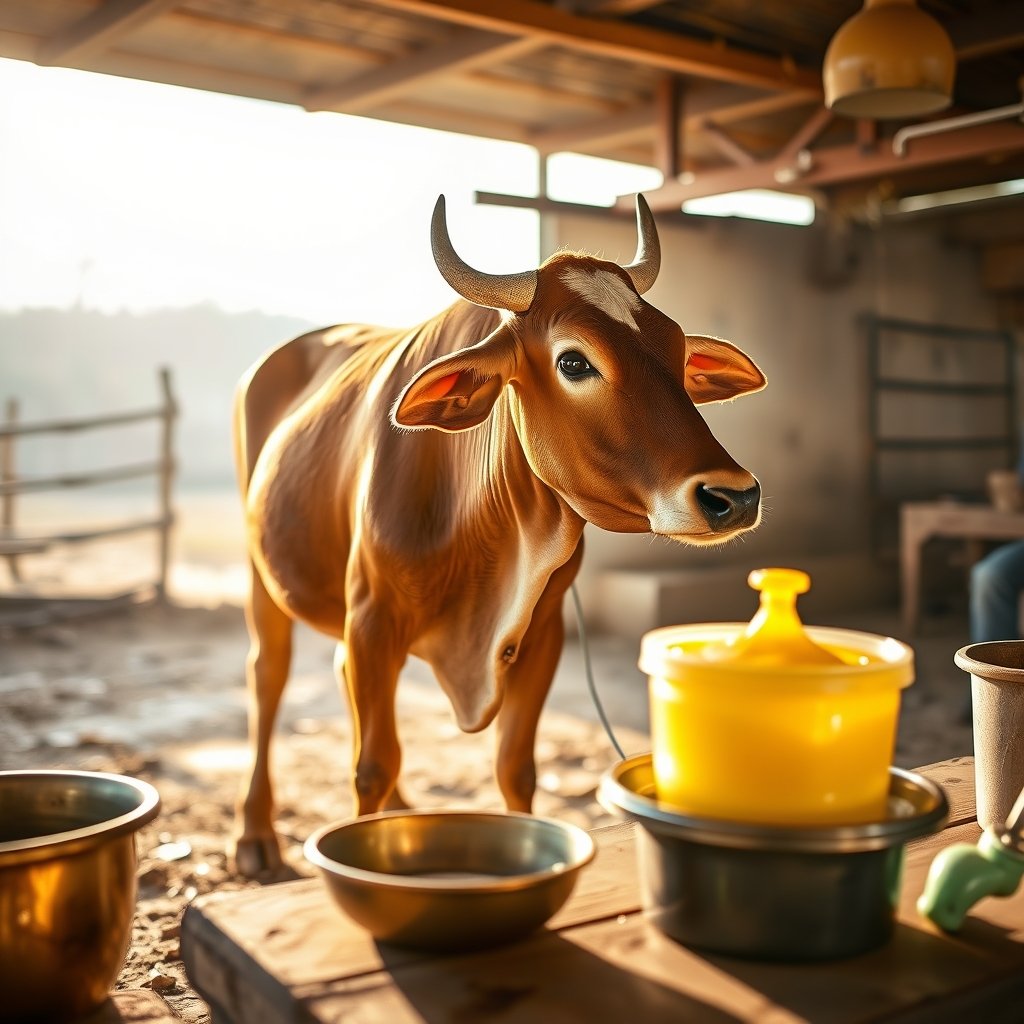
A cow that stops giving milk is still our cow. She stays on the farm, with the same feed, the same shed and the same medical care she had when she was milking. We do not sell her on and we do not let her go. That is the whole basis of the ghee we make — you cannot ask an animal for her milk and then abandon her for it.
Our mission goes further than our own herd. There are cows on the street who are injured every day, who eat plastic, who cry through the night with nobody coming. We want to take them in. The plan is a chain of Organic Farmz gaushalas in several places, so that help is not one shed in one city but something a hurt animal can actually reach.
This takes more than we can carry alone — land, fodder, vets, hands. Come and join our initiative. Anything you give goes to feed, treat and shelter these cows.

Scan with any UPI app
Bank transfer
- Account name Organic Farmz
- Bank Indian Bank
- Account number 8133177322
- IFSC code IDIB000K555
- UPI ID organicfarmz@ptaxis
On a phone, the button above opens your UPI app directly — a QR on the screen you are reading cannot be scanned by that same screen. On a laptop, scan the code with your phone instead.
How Do Components of Churned Butter Separate During Ghee Making?
The clarification process divides whole cultured butter into distinct fractions based on heat exposure.
| Fraction | Physical State During Simmering | Outcome in Final Ghee Batch |
|---|---|---|
| Butterfat (Lipids) | Melts into clear liquid gold oil | Main liquid ghee product (poured off) |
| Water Content | Converts to steam vapor | Evaporates completely during boiling |
| Milk Proteins & Sugars | Coagulate, sink, and brown at bottom | Filtered out as brown solid residue (khurchan) |
Why Straining Milk Solids Is Essential for Shelf Life
Removing browned milk solids by filtering the hot ghee through cotton cloth or a fine metal sieve is crucial. Milk solids contain residual sugars and proteins that retain moisture and can spoil over time if left suspended in fat. By completely separating the clear golden oil from browned solids, bilona ghee becomes virtually moisture-free, allowing it to remain stable at room temperature in Indian kitchens without requiring refrigeration.
Taste the difference
Small-batch A2 Gir cow ghee, hand-churned to order and delivered across India. Read how we make it if you want the detail first.
Order a jarKeep reading
-
 Is All Ghee Lactose Free? What Actually Remains
Discover how much lactose actually remains in ghee, how the traditional bilona method separates milk solids…
Is All Ghee Lactose Free? What Actually Remains
Discover how much lactose actually remains in ghee, how the traditional bilona method separates milk solids…
-
 What 25 Litres of Milk Looks Like Next to One Litre of Ghee
Ever wondered about the real milk to ghee ratio? Discover why it takes 25 litres of fresh A2 Gir cow milk to…
What 25 Litres of Milk Looks Like Next to One Litre of Ghee
Ever wondered about the real milk to ghee ratio? Discover why it takes 25 litres of fresh A2 Gir cow milk to…
-
 What Makes Gir Cows Different From Crossbred Dairy Cattle
Explore the anatomical, genetic, and milk profile differences between Gir cows and crossbred cattle, and why…
What Makes Gir Cows Different From Crossbred Dairy Cattle
Explore the anatomical, genetic, and milk profile differences between Gir cows and crossbred cattle, and why…
