
What 25 Litres of Milk Looks Like Next to One Litre of Ghee

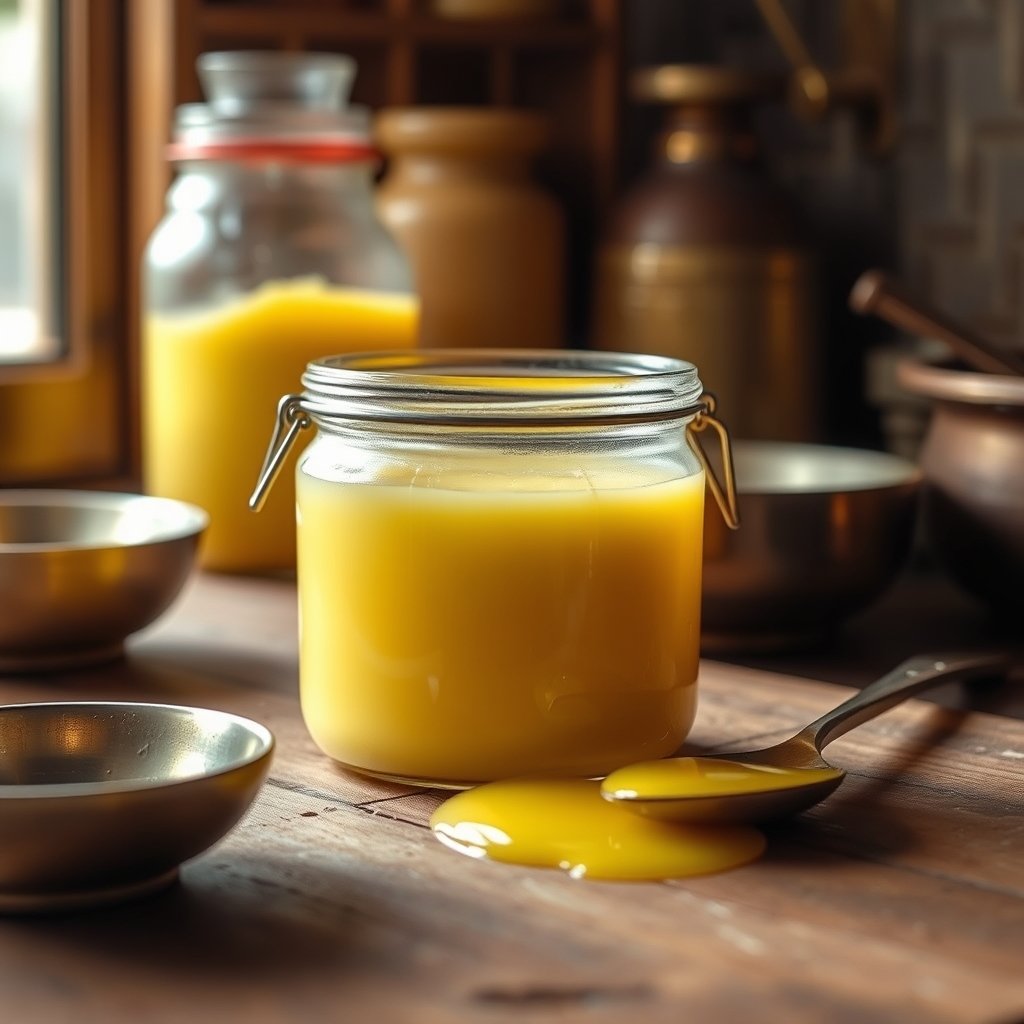
To make one litre of pure A2 Gir cow bilona ghee, you need approximately 25 to 30 litres of whole milk. When you picture this in your kitchen, it is a striking contrast: a massive row of twenty-five one-litre steel milk cans standing next to a single, modest glass jar of golden ghee. This dramatic reduction is not a loss of value, but rather a process of absolute concentration, capturing the very essence of the milk.
Why does it take so much milk to produce a single litre of ghee?
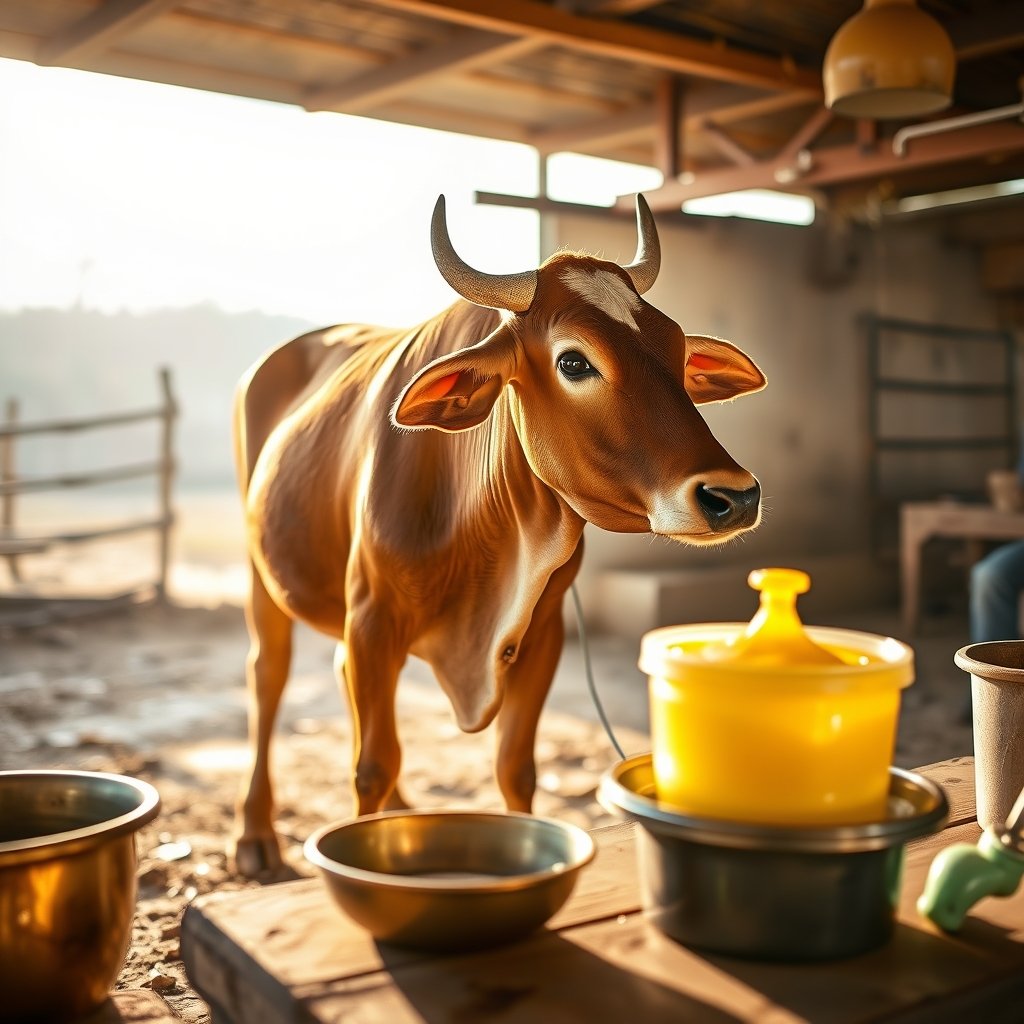
The primary reason for this high milk to ghee ratio lies in the natural composition of fresh cow milk. Whole milk from Indian Gir cows contains roughly 87 percent water. The remaining portion consists of milk solids, proteins like casein, milk sugar or lactose, and natural butterfat. Gir cows, known for their distinct humps and gentle temperament, produce milk with a moderate fat content, usually hovering around 4 to 4.5 percent.
To make ghee, every drop of water must be gently evaporated, and all the non-fat solids must be separated. When you remove the water and the proteins, you are left only with the pure, clarified butterfat. This is why such a vast volume of milk shrinks down to a relatively small amount of golden fat. It is a natural physical limitation; you cannot get more ghee out of the milk than the fat nature originally put into it.
What is the step-by-step bilona journey from milk to ghee?
In the traditional bilona method, we do not use industrial cream separators to spin the fat out of cold milk. Instead, the milk undergoes a complete transformation that respects ancient kitchen wisdom. First, the fresh A2 milk is boiled in large clay or steel vessels, then allowed to cool and inoculated with a natural curd culture. Overnight, the entire 25 litres of milk turns into thick, setting curd.
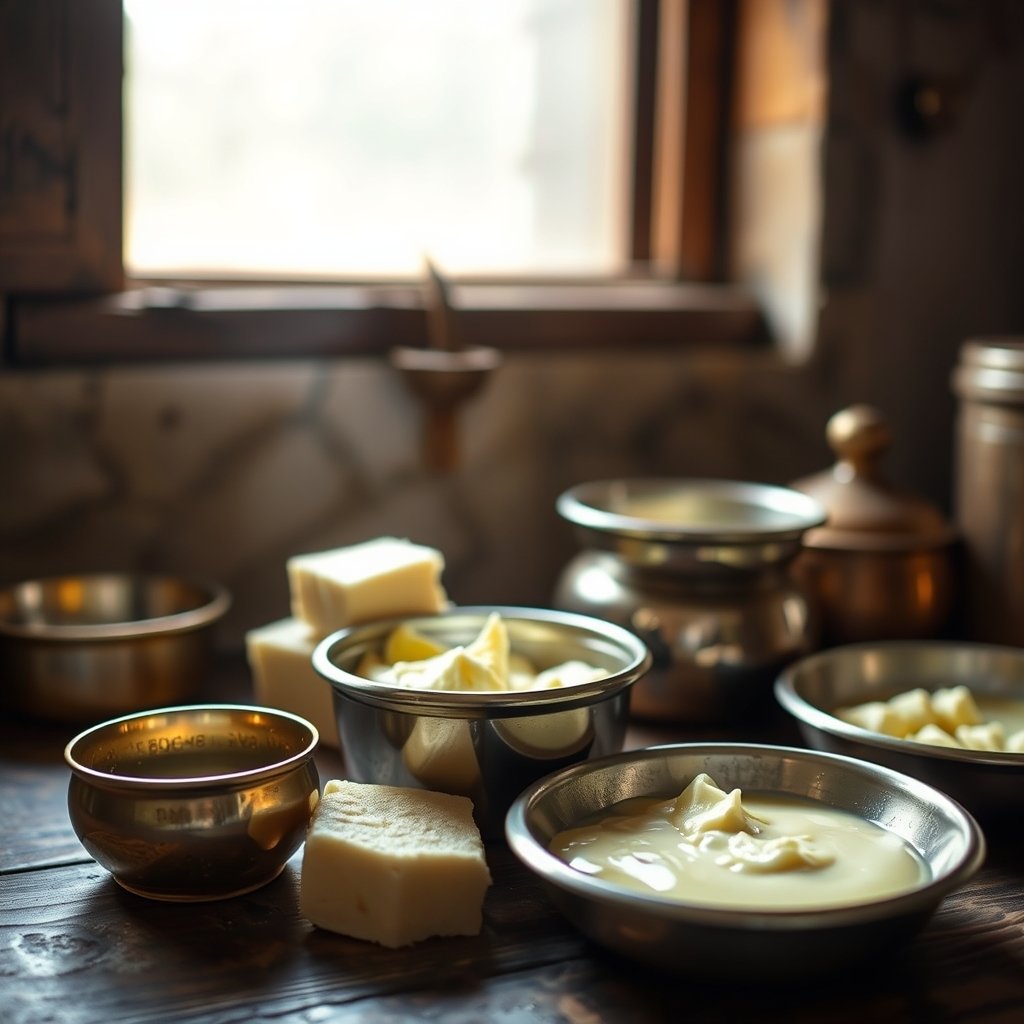
The next morning, this curd is churned slowly using a wooden churner, or bilona, moving in bi-directional motions. This churning coaxes the fat globules to cluster together, eventually forming fresh butter, traditionally called makkhan. The makkhan is separated from the liquid buttermilk, washed, and then placed over a slow fire. As the butter melts, the remaining water slowly boils away, and the milk proteins caramelize and settle at the bottom. What is skimmed off and strained is the clear, aromatic oil we call ghee.
How do raw milk and finished bilona ghee compare?
To understand what happens during this long kitchen process, it helps to compare the raw material with the finished, concentrated fat that ends up on your roti.
| Characteristic | 25 Litres of A2 Gir Cow Milk | 1 Litre of A2 Bilona Ghee |
|---|---|---|
| Physical State | Thin, perishable liquid | Granular, shelf-stable semi-solid |
| Moisture Content | Approximately 87% water | Less than 0.5% water |
| Primary Components | Water, lactose, casein, fat, whey | Pure milk fat, fat-soluble nutrients |
| Storage Need | Requires boiling and immediate refrigeration | Stores at room temperature in a dry pantry |
Why does the milk-to-ghee ratio determine the value of real ghee?
When you look at the cost of authentic bilona ghee, the math becomes very simple once you understand this ratio. To make just one jar, a kitchen must first procure 25 litres of genuine, high-quality milk from grass-fed Gir cows. In Indian home cooking, we value ingredients that are whole and unadulterated, and this traditional ratio is the ultimate benchmark of purity.
Many mass-produced commercial ghees are made by stripping cream from milk using high-speed mechanical separators, then boiling that cream directly. This shortcut bypasses the curd-making and churning stages, yielding a different texture and aroma. The slow, traditional bilona process requires patience, physical effort, and a massive volume of milk, which is why a single jar represents the collective yield of many days of care at the dairy.
How does Ayurveda view this concentrated essence?
In Ayurvedic traditions, ghee is considered a premium substance because it is the refined essence of milk, which is itself considered a nourishing fluid. Because the water, lactose, and casein are completely removed during the slow boiling of the butter, the ghee becomes highly stable and easy on the digestive system. It is often described in traditional texts as a carrying agent, or anupana, that helps the body absorb the nutrients from the spices and herbs used in everyday Indian meals.
When you drizzle a teaspoon of warm ghee over a bowl of khichdi or rub it onto a hot paratha, you are using a fat that has been boiled, curdled, churned, and clarified. That single teaspoon carries the character of several glasses of milk, brought down to its purest form by fire and time.
Taste the difference
Small-batch A2 Gir cow ghee, hand-churned to order and delivered across India. Read how we make it if you want the detail first.
Order a jarKeep reading
-
 What Makes Gir Cows Different From Crossbred Dairy Cattle
Explore the anatomical, genetic, and milk profile differences between Gir cows and crossbred cattle, and why…
What Makes Gir Cows Different From Crossbred Dairy Cattle
Explore the anatomical, genetic, and milk profile differences between Gir cows and crossbred cattle, and why…
-
 Why the Curd Stage Cannot Be Skipped
Discover why converting milk to curd is the crucial intermediate step in making true bilona ghee, and how it…
Why the Curd Stage Cannot Be Skipped
Discover why converting milk to curd is the crucial intermediate step in making true bilona ghee, and how it…
-
 What Happens to Milk Solids When You Make Ghee
Understand the chemical and physical transformation of milk solids during ghee clarification, from butter…
What Happens to Milk Solids When You Make Ghee
Understand the chemical and physical transformation of milk solids during ghee clarification, from butter…