
How to Tell When Bilona Ghee is Ready
The Acoustic Symphony of the Indian Kitchen
Traditional Indian kitchens have always been guided by a rich tapestry of sounds rather than digital timers or probe thermometers. A seasoned home cook can navigate an entire meal simply by listening. There is the sharp, energetic pop of mustard seeds signaling a hot pan ready for tempering; the soft, rhythmic scrape of a wooden rolling pin against a board; and the deep, comforting whistle of a pressure cooker. But perhaps the most subtle and rewarding acoustic guide is the one that tells us when a fresh batch of cultured butter is transforming into pure, golden A2 Gir cow ghee.
In the traditional bilona method, we start by boiling whole A2 Gir cow milk, setting it to curd, and then churning that curd with a wooden bi-directional whisk to separate the fresh butter, or makkhan. Clarifying this makkhan into shelf-stable ghee is the final, most delicate step of the journey. It is a process that demands your full attention, particularly your sense of hearing. The butter passes through three distinct acoustic phases, each telling a story of chemical transformation and traditional culinary wisdom.
Stage One: The Wet Rumble of the Melting Butter
When the pale-yellow mounds of fresh makkhan are placed into a heavy-bottomed brass or iron kadhai, the heat begins to break down the emulsion. Because traditional bilona butter is gathered directly from churned buttermilk, it naturally contains a small amount of trapped moisture. As this moisture meets the rising temperature of the pan, the first acoustic stage begins.
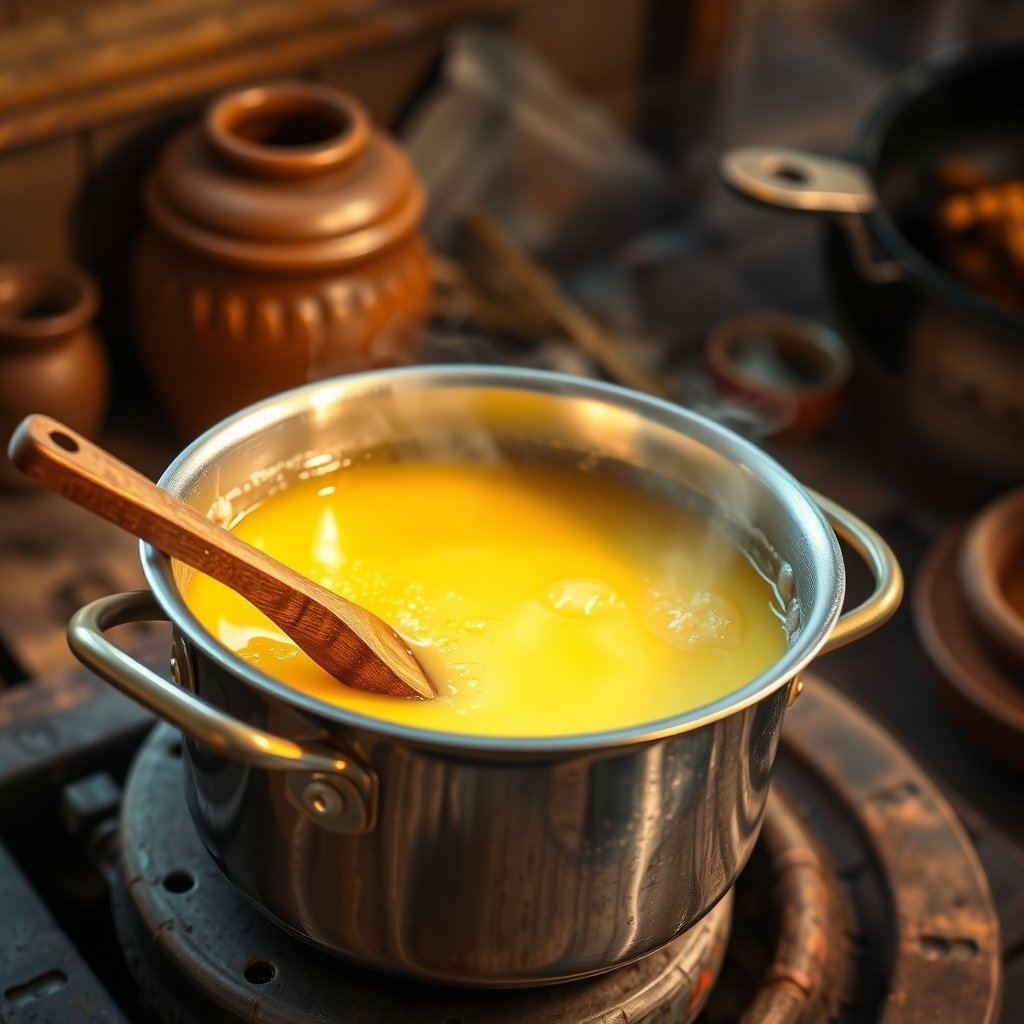
This is the wet rumble. The sound is loud, heavy, and chaotic. A thick, white, pillowy foam rises to the surface of the melting butter, bubbling vigorously. At this stage, the water within the butter is beginning to boil. There is no clarity to the liquid yet; it looks like a thick, milky soup. The loud bubbling tells you that the moisture is still very high, and the ghee is far from ready. During this phase, you can maintain a moderate flame, but you must stay close to ensure the foam does not spill over the edges of the vessel.
Stage Two: The Crackling Chitter of Separation
As the minutes pass, the nature of the sound changes. The heavy, wet rumbles slowly dissolve, giving way to a rapid, sharp crackling. This sound is lighter and faster, reminiscent of dry leaves underfoot or small pine twigs catching fire in a gentle hearth.
This is the sound of steam rapidly escaping from the fat. If you look closely at the kadhai, you will notice the thick white foam beginning to break apart, parting to reveal a clearing liquid beneath. The milk solids (proteins and sugars) are beginning to separate from the butterfat, slowly drifting down to settle at the bottom of the pot. The crackling tells you that the water content is dropping quickly, and the heat is now concentrated on cooking the milk solids. This is the time to lower the heat to a gentle simmer, as the butter is at its most vulnerable to scorching.
Our cows are not use and throw

A cow that stops giving milk is still our cow. She stays on the farm, with the same feed, the same shed and the same medical care she had when she was milking. We do not sell her on and we do not let her go. That is the whole basis of the ghee we make — you cannot ask an animal for her milk and then abandon her for it.
Our mission goes further than our own herd. There are cows on the street who are injured every day, who eat plastic, who cry through the night with nobody coming. We want to take them in. The plan is a chain of Organic Farmz gaushalas in several places, so that help is not one shed in one city but something a hurt animal can actually reach.
This takes more than we can carry alone — land, fodder, vets, hands. Come and join our initiative. Anything you give goes to feed, treat and shelter these cows.

Scan with any UPI app
Bank transfer
- Account name Organic Farmz
- Bank Indian Bank
- Account number 8133177322
- IFSC code IDIB000K555
- UPI ID organicfarmz@ptaxis
On a phone, the button above opens your UPI app directly — a QR on the screen you are reading cannot be scanned by that same screen. On a laptop, scan the code with your phone instead.
Stage Three: The Sudden, Golden Silence
After several minutes of steady crackling, the most beautiful moment of the entire process occurs: a sudden, profound silence falls over the pot. The crackling stops almost instantly. The surface of the liquid becomes perfectly calm, and the remaining white froth on top disappears, leaving only a few fine, lacy bubbles around the edges.
Through the clear, amber-colored liquid, you can now see the bottom of the kadhai. The milk solids have settled and turned a light, warm golden-brown. This sudden quiet is the absolute signal that every drop of moisture has evaporated from the fat. In traditional home cooking, this silence is the golden window. The heat must be turned off immediately. If you leave the pot on the flame for even thirty seconds past this silence, the settled milk solids will quickly turn from golden-brown to charred black, imparting a bitter, smoky taste to your ghee instead of the desired sweet, nutty, and caramelized aroma.
The Ayurvedic View on Sensory Cooking
In Ayurveda, cooking is not merely a mechanical task of assembling ingredients; it is considered a form of active mindfulness. The cook’s state of mind and their sensory engagement with the food are believed to influence its final qualities. Listening to the sound of the simmer is a practical application of this philosophy.
By relying on our ears and eyes rather than an arbitrary timer, we remain fully present with the food. This prevents the ghee from burning—which would introduce an agitated, bitter quality—and instead preserves the sweet, soothing, and balancing properties of the A2 Gir cow milk. This level of attention ensures that the final ghee is perfectly cooked, shelf-stable, and rich with the natural aroma that defines traditional kitchen crafts.
Preserving the Slow Way
This careful, sensory-led process is why authentic bilona ghee cannot be successfully replicated in massive, automated industrial factories. Large-scale production relies on steam jackets, closed steel tanks, and rapid centrifugal force, which bypass these delicate transitions. They lack the human touch, the heavy brass vessels, and the quiet kitchen moments where a cook waits for the silence to fall.
At Organic Farmz, we believe that the old ways are worth keeping. Our A2 Gir cow ghee is made in small batches, allowing our makers to listen to each pot, ensuring that every jar carries the perfect balance of golden color, grainy texture, and that unmistakable, hand-clarified aroma that only comes from knowing when to turn off the flame.
Taste the difference
Small-batch A2 Gir cow ghee, hand-churned to order and delivered across India. Read how we make it if you want the detail first.
Order a jarKeep reading
-
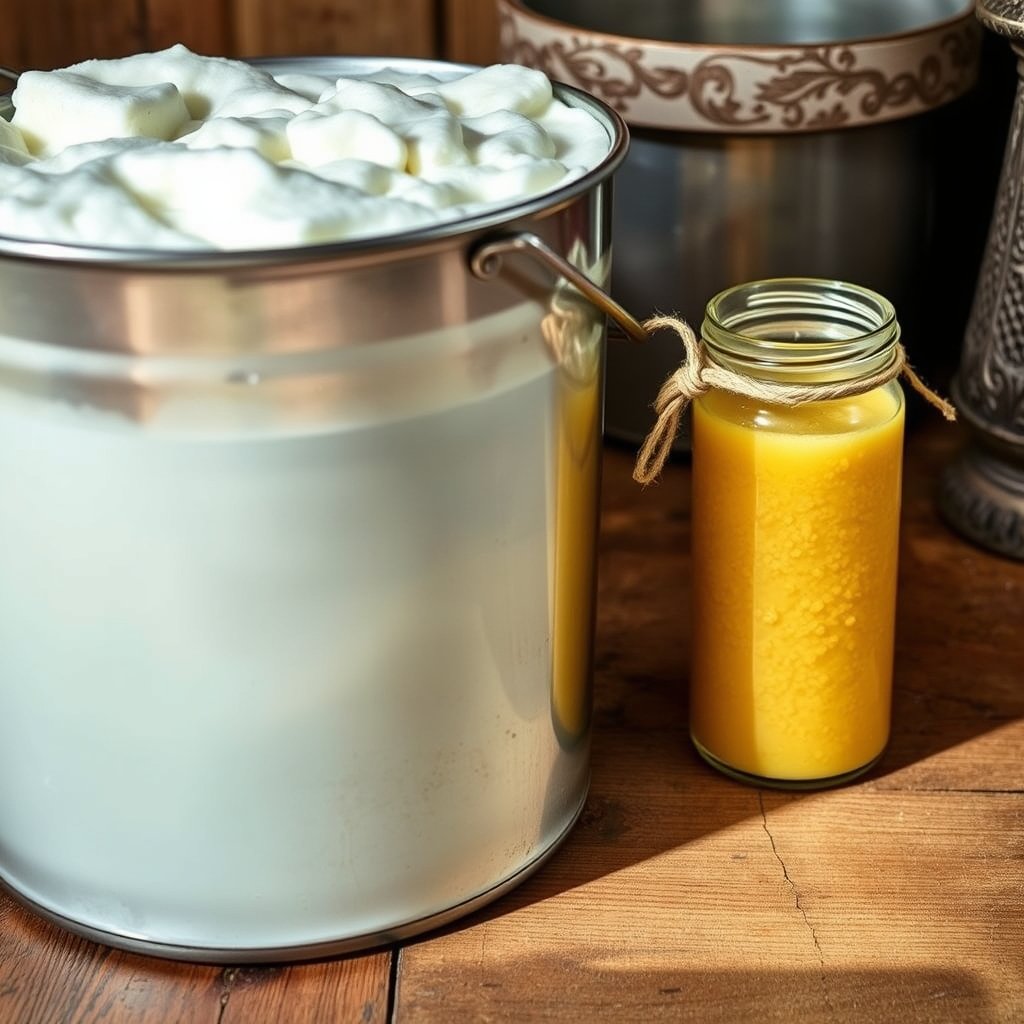 What 25 Litres of Milk Looks Like Next to One Litre of Ghee
Ever wondered about the real milk to ghee ratio? Discover why it takes 25 litres of fresh A2 Gir cow milk to…
-
 Smoke Point Explained: Choosing a Fat by Temperature
A fat's smoke point determines how hot your pan can get before the fat breaks down, and pure A2 bilona ghee…
-
 Gift for Someone Who Cooks Seriously: Choose Pure Fat
An exceptional cooking fat like bilona A2 cow ghee makes the ideal gift for a serious cook because skilled…
