
Smoke Point Explained: Choosing a Fat by Temperature
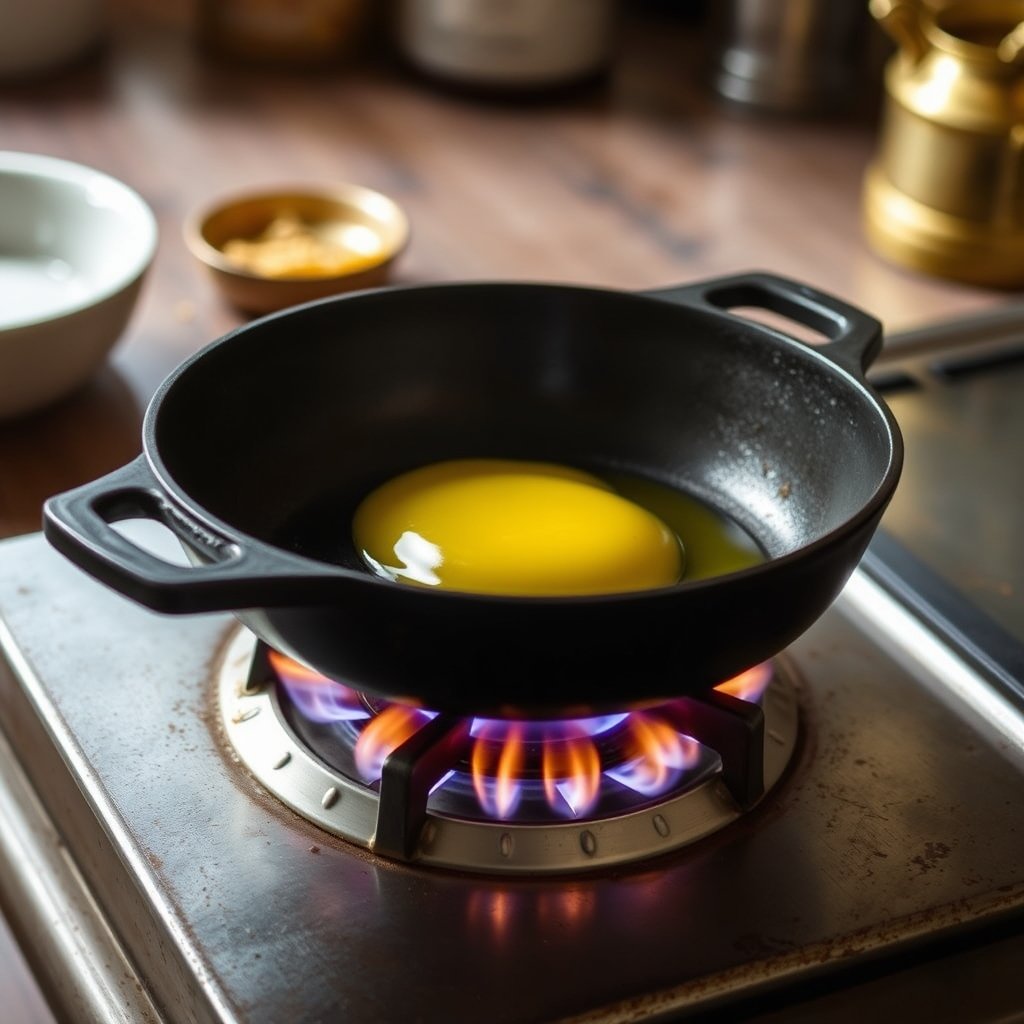
A cooking fat's smoke point is the exact temperature at which it stops shimmering and begins to smoke continuously, breaking down into acrid compounds, and traditional A2 Gir cow ghee has one of the highest smoke points in the kitchen at approximately 250°C (482°F).
When you heat any fat past its thermal limit, the chemical structure destabilises. The fat releases visible bluish smoke, free fatty acids degrade, and a bitter, burnt flavour permeates whatever is in the pan. Choosing the right fat for each cooking method is not merely a matter of taste; it is a practical decision based on the temperatures your stove reaches during simmering, sautéing, searing, or deep frying.
What Is a Fat's Smoke Point and Why Does It Matter?
Every fat is composed of fatty acids, but unrefined fats often carry additional components such as water, proteins, sugars, and plant or milk solids. When heat is applied, these non-fat components are the first to scorch. Butter, for instance, begins to smoke at a relatively low temperature because the whey and casein proteins suspended in its water content burn quickly over direct flame.
When a fat reaches its smoke point, it breaks down into glycerol and free fatty acids. The glycerol further degrades into acrolein, a compound responsible for the pungent, eye-stinging smoke in an overheated kitchen. Cooking below a fat's smoke point preserves both the structural integrity of the fat and the clean, intended flavour of your ingredients.
Why Does Traditional Bilona Ghee Handle High Heat So Well?
Traditional ghee withstands higher heat than ordinary butter because the clarification process completely separates the pure fat from moisture and milk solids. In the bilona method, whole milk from Gir cows is cultured into curd, churned slowly with a wooden bilona to yield makkhan, and then gently simmered in open vessels. As the water evaporates, the milk proteins precipitate out and brown lightly at the bottom of the vessel before being strained away.
What remains in the jar is pure, clarified butterfat with almost zero residual moisture and negligible milk proteins. Without sugars and proteins left to scorch, the fat molecules can endure intense stovetop temperatures without degrading, turning bitter, or releasing acrolein.
How Do Common Cooking Fats Compare by Temperature?
Understanding where different fats sit on the temperature scale helps you decide whether to reach for a jar of ghee, a bottle of cold-pressed oil, or a block of butter depending on what you are making.
| Cooking Fat | Approximate Smoke Point | Primary Characteristics | Best Kitchen Application |
|---|---|---|---|
| A2 Bilona Cow Ghee | 250°C (482°F) | Zero moisture, milk solids removed, stable saturated fats | High-heat tadka, searing, deep frying, roasting |
| Raw Butter | 150°C–175°C (300°F–350°F) | Contains ~16% water and intact milk proteins (casein/whey) | Gentle baking, melting over warm food, low-heat sauces |
| Cold-Pressed Mustard Oil | 240°C–250°C (464°F–482°F) | Pungent, unrefined, high stability under heat | Regional curries, fish fries, pungent tempering |
| Extra Virgin Olive Oil | 160°C–190°C (320°F–375°F) | Rich in fruit solids and unrefined volatile compounds | Drizzling, cold dressings, very low-heat pan tosses |
| Refined Sunflower Oil | 225°C–230°C (437°F–446°F) | Chemically neutralised and deodorised, neutral flavour | General high-heat commercial frying |
When Should You Choose Ghee Over Other Fats on the Stove?
In Indian home cooking, heat levels shift rapidly depending on the technique. Ghee is particularly well suited to high-heat moments where oils with lower smoke points would break down or impart a scorched taste.
The classic tempering or tadka is a prime example. Whole spices like mustard seeds, cumin, and dried chillies need a sudden burst of high heat—often exceeding 180°C—to crackle and release their essential oils into the fat within a few seconds. Ghee handles this sudden thermal spike without burning the spices or producing bitter undertones.
Similarly, when roasting whole wheat flour for panjiri or slowly browning semolina for halwa, the fat must remain stable over steady, continuous heat for thirty to forty minutes. Ghee coats each grain, transferring heat evenly without breaking down over extended cooking times.
What Does Ayurveda Say About Heating Cooking Fats?
Ayurvedic dietary principles place significant emphasis on how food interacts with digestive fire, or agni. Fats that retain stability under heat are considered supportive of digestion, while fats that scorch or burn are regarded as heavy and disruptive to the body's natural balance.
Ghee prepared from cultured cow curd has long been classified in classical texts as an ideal medium for carrying the medicinal properties of herbs and spices (a quality known as yogavahi). Because it does not smoke easily during heating, it safely extracts the fat-soluble compounds from spices such as turmeric, hing, and ginger without compromising the food's lightness or purity.
How Can You Tell If Your Cooking Fat Has Overheated?
You do not need a laser thermometer to gauge whether your pan is at the right temperature. Paying attention to visual and sensory cues helps keep your cooking well within safe thermal boundaries.
When ghee is at the correct working temperature, it shimmers lightly in the pan and spreads smoothly across the surface. If you drop a single cumin seed into it, the seed should sizzle immediately and float without turning black within seconds. If you see persistent wisps of white or blue smoke rising from the surface, remove the pan from the flame immediately to let the temperature settle before introducing delicate spices or aromatics.