
What Ayurveda Says About Ghee: A Plain Summary
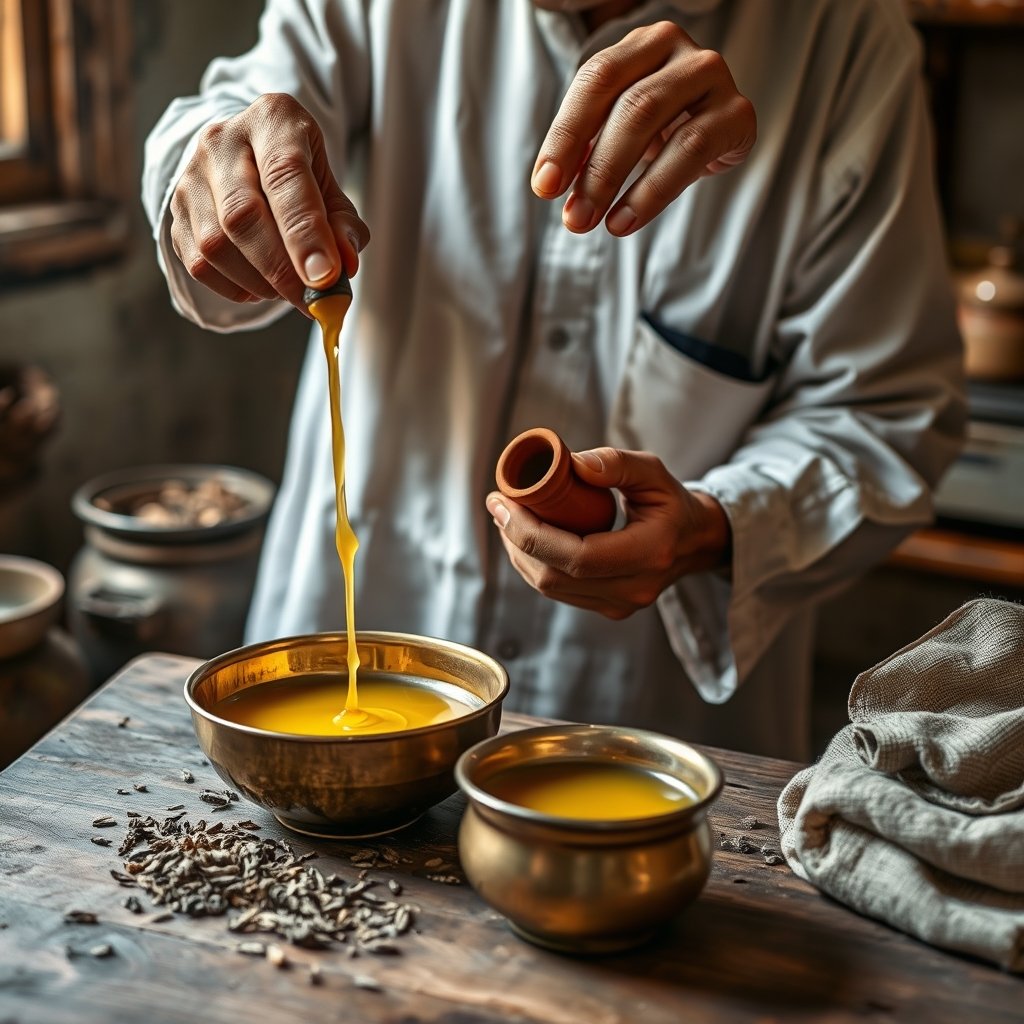
In Ayurveda, ghee (known as ghrita) is considered a primary nourishing fat that kindles the digestive fire (agni) without causing excess heat or congestion, acting as a natural carrier (anupana) for nutrients and spices in the daily diet.
Classical texts like the Charaka Samhita place cow's ghee at the top of all unctuous substances (snehana). Unlike heavy fats that can leave the digestive system feeling sluggish, ghee prepared traditionally is said to balance both Vata (dryness and airiness) and Pitta (heat and acidity). When used in sensible kitchen quantities, its unique characteristic is that it stokes the metabolic fire without creating harsh internal heat—a balance described in traditional terminology as pitta-hara (heat-pacifying) and agni-deepana (digestive-kindling).
How Does Ayurveda View Ghee Compared to Butter?
While both butter and ghee originate from cow's milk, classical Ayurvedic thought treats them as distinct ingredients with different physical properties and digestive impacts. Fresh cultured butter (navaneeta) contains moisture, milk solids, and a gentle lactic sourness from fermentation. It is cooling and rich, but somewhat heavy to digest. When that butter is gently clarified into golden ghee, the water evaporates completely and the milk solids drop out, transforming the fat into a lighter, far more stable kitchen staple.
| Property | Fresh Butter (Navaneeta) | Bilona Ghee (Ghrita) |
|---|---|---|
| Digestive Quality | Heavier (Guru), moist and soft | Lighter (Laghu), subtle warming clarification |
| Impact on Agni | Can damp a weak digestive fire if eaten raw in excess | Kindles Agni gently without triggering acidity |
| Moisture Content | High (roughly 16–20% water) | Trace (virtually zero moisture remaining) |
| Shelf Life | Spoils quickly without cooling | Shelf-stable at room temperature for months |
This structural difference explains why Indian home cooking relies on clarified ghee for high-heat spice tempering rather than plain butter. Ghee's stability allows spices to bloom cleanly without scorching or splattering excess moisture into the pan.
Why Does Ayurveda Prefer Bilona Cultured Ghee Over Direct Cream Ghee?
Method matters deeply in traditional food preparation. Ayurveda explicitly favours ghee made from whole cultured curd churned with a wooden bilona, rather than fat extracted directly by separating boiled milk cream in a centrifuge. This preference rests on the concept of samskara—the transformation of food through mindful processing.
When whole A2 Gir cow milk is boiled, cooled, and set with a starter overnight, beneficial lactic fermentation breaks down the milk sugars and proteins. Churning this cultured curd yields fresh makkhan, which is then slow-cooked in thick-bottomed brass or steel vessels over mild heat. The resulting bilona ghee retains a deep aroma, fine grainy texture, and balanced lightness that industrial cream-derived ghee rarely replicates.
What Role Does Ghee Play in Everyday Ayurvedic Cooking?
In an Indian home, ghee is rarely consumed on its own by the spoonful. Instead, it functions as a functional cooking medium and culinary vehicle. In Ayurvedic cooking, warm ghee is used to extract and carry fat-soluble aromatic compounds from kitchen spices like cumin, turmeric, coriander, and asafoetida (hing).
- In Tadka (Tempering): Sizzling whole spices in warm ghee unlocks their natural aromatic oils, mellowing harsh raw flavours and making legumes like mung or toor dal far gentler on the stomach.
- Over Grains: Drizzling a teaspoon of warm ghee over hot khichdi, steam-cooked rice, or freshly pressed rotis softens the dry, airy texture of cooked grains.
- With Bitter or Astringent Vegetables: Cooking bitter greens or astringent gourds with a small touch of ghee rounds out sharp flavours and prevents dry digestive discomfort.
How Should You Use Ghee According to Seasons and Daily Routines?
Ayurvedic living emphasizes seasonal rhythm (ritucharya), adjusting cooking fats to fit the weather and house routine. During cold winter months or periods of dry climate, the body naturally seeks grounding, warm foods. A slightly more generous spoon of ghee over warm morning daliya or evening parathas brings a satisfying, comforting quality to meals.
In late summer and autumn, when outdoor ambient heat is high, ghee's naturally cooling post-digestive nature is valued in simple, lightly seasoned vegetable dishes and dals. Across every season, the guiding rule remains simplicity and moderation: a teaspoon or two stirred into hot, fresh food brings out rich taste, pleasing aroma, and gentle unctuousness without feeling greasy or heavy.