
Understanding Sanskara: How Bilona Ghee Carries the Power of Your Kitchen Spices

The Quiet Chemistry of the Daily Tadka
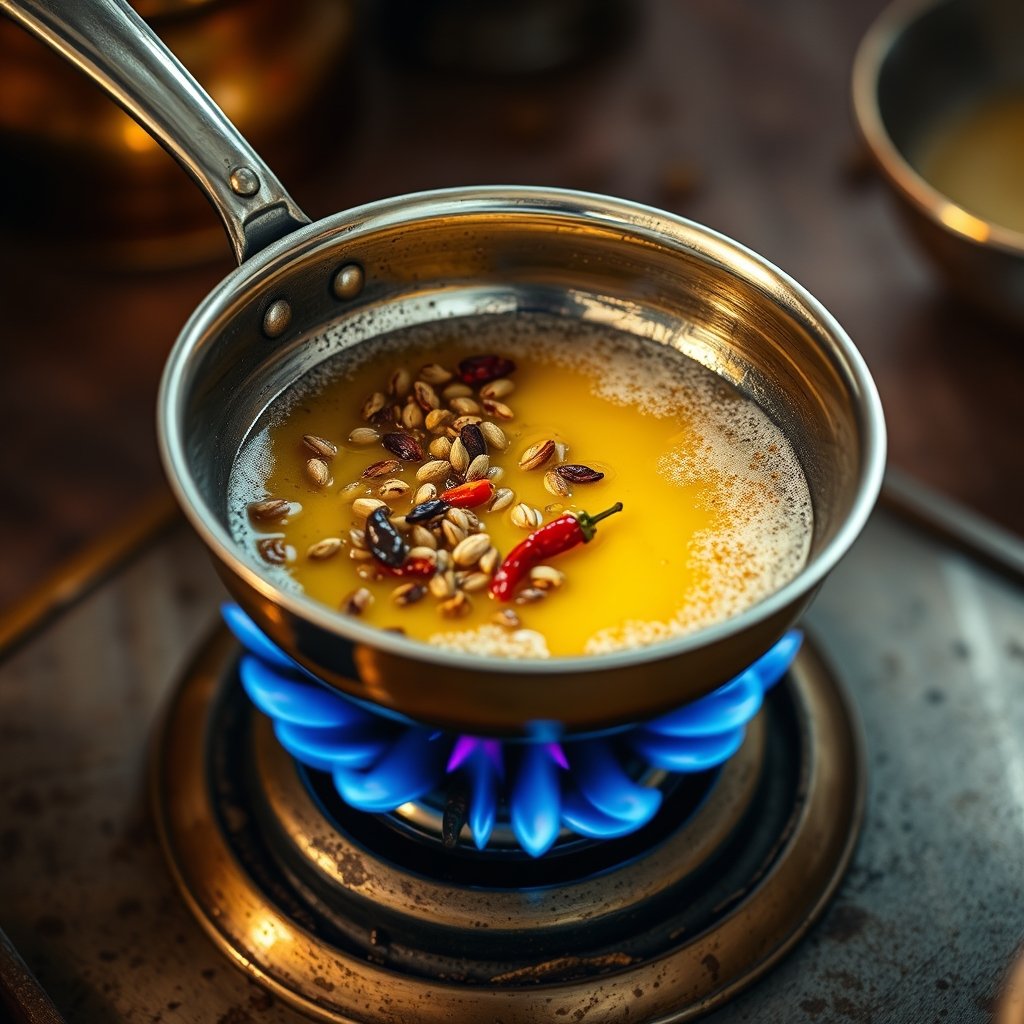
In almost every Indian kitchen, the preparation of a meal begins or ends with a familiar sound: the sharp, rhythmic splutter of spices hitting warm fat. We watch cumin seeds swell and darken, mustard seeds pop against the sides of the vessel, and turmeric turn the golden liquid into a deep, earthy amber. While we often think of this step—the tadka or baghar—as a simple way to build aroma, traditional Indian cooking views it through a much deeper lens. It is the practical application of a concept known in Ayurveda as Sanskara, the process of transformation and assimilation.
Sanskara refers to the inherent ability of certain substances to take on the qualities of the ingredients they are processed with, without losing their own beneficial nature. Among all the mediums used in the traditional kitchen, hand-churned bilona ghee is considered the premier vehicle for this transformation. It acts as a blank slate, patiently waiting to absorb, carry, and deliver the essence of herbs and spices directly into our daily meals.
Why the Bilona Method Prepares Ghee for This Role
To understand why traditional ghee is so receptive to spices, we must look at how it is made. Modern commercial ghee is often manufactured by spinning raw cream at high speeds in industrial centrifuges, then heating it rapidly. This process bypasses the natural fermentation stage. In contrast, the traditional bilona method begins by boiling fresh, whole milk from A2 Gir cows, cooling it, and inoculating it with curd cultures. This milk is left to set overnight into whole curd.
Before dawn, this curd is churned slowly using a bi-directional wooden stirrer, or bilona. This gentle, rhythmic churning separates the butter (makkhan) from the buttermilk. When this cultured butter is slowly clarified over a mild, wood or dung-fired flame, it retains a complex molecular structure, a rich grain, and a subtle lactic aroma. This traditional process ensures that the resulting ghee is stable, aromatic, and possesses a unique structural integrity. Because it has been fermented and slowly clarified, bilona ghee is remarkably pure, free of water content and milk solids, making it the perfect clean medium to draw out and hold the delicate compounds found in kitchen spices.
The Science of Fat-Soluble Spices
Many of the most valued spices in the Indian pantry—such as turmeric, black pepper, cumin, asafoetida, and fenugreek—contain active compounds that are hydrophobic, meaning they do not dissolve easily in water. When you boil these spices in a watery soup or curry without a fat medium, these active components remain locked inside the plant fibers, passing through the body without being fully absorbed.
When you introduce these spices to warm A2 Gir cow ghee, a beautiful transition occurs. The fat-soluble elements, such as the curcumin in turmeric or the volatile oils in cumin, dissolve gently into the lipid structure of the ghee. The ghee coaxes these compounds out of the dry spices, binding with them. When we consume the meal, the ghee acts as a carrier (referred to as a Vahana or vehicle in classical texts), guiding these lipid-soluble spice nutrients through our digestive tract, where they are easily recognized and assimilated by the body.
Traditional Kitchen Pairings and Their Purpose
Our grandmothers did not need textbooks to understand this process; their daily cooking routines were built on these very principles. Consider the simple assembly of a dal tadka. A spoonful of cultured bilona ghee is heated, followed by a pinch of asafoetida (hing) and a spoonful of cumin seeds (jeera). On their own, both hing and jeera can be sharp and overpowering. But when tempered in ghee, their harshness softens, and their carminative properties—which help ease digestion and prevent flatulence—are woven into the fat. When stirred into a pot of lentils, the ghee ensures that these digestive aids are evenly distributed throughout the dish, making a heavy protein meal lighter on the stomach.
Another classic example is the combination of ghee, turmeric, and black pepper. In many households during the damp monsoon months or the chill of winter, a warm cup of milk or a simple bowl of rice is seasoned with this trio. The piperine in black pepper significantly enhances the absorption of turmeric, but both require a lipid environment to work effectively. A small spoonful of golden bilona ghee provides that perfect environment, warming the body from within and supporting seasonal resilience without overheating the digestive system.
A Mindful Return to the Pan
In our hurry to adopt modern culinary shortcuts, we sometimes rely on neutral, highly refined vegetable oils that have been chemically deodorized and stripped of their natural character. While these oils can tolerate high heat, they do not possess the ability to bond with spices in the same way. They merely act as a barrier to keep food from sticking to the pan.
Using A2 Gir cow bilona ghee in your daily cooking is an invitation to slow down and observe the subtle shifts in your kitchen. When you heat a spoonful of real ghee, you will notice how it respects the spices. It does not burn them instantly; instead, it cradles them, allowing them to release their deep, earthy notes into the air. The next time you prepare a simple sabzi or a bowl of comforting khichdi, take a moment to appreciate the hot iron pan, the golden bilona ghee, and the humble spices. You are not just cooking dinner; you are participating in a centuries-old practice of food harmony, ensuring that every bite is as nourishing as it is flavorful.
Taste the difference
Small-batch A2 Gir cow ghee, hand-churned to order and delivered across India. Read how we make it if you want the detail first.
Order a jarKeep reading
-
 How to Make a Proper Tadka With Ghee
Learn the precise technique of tempering with ghee to unlock the deep aromas of your spices and elevate your…
How to Make a Proper Tadka With Ghee
Learn the precise technique of tempering with ghee to unlock the deep aromas of your spices and elevate your…
-
 Ghee or Oil for Tadka? What Actually Changes in the Pan
Ghee smokes at around 250°C and carries flavour that oil does not. What that means for tempering spices…
Ghee or Oil for Tadka? What Actually Changes in the Pan
Ghee smokes at around 250°C and carries flavour that oil does not. What that means for tempering spices…
-
 Millets and Bilona Ghee: Why Ancient Grains Need Traditional Fats
Explore why traditional Bilona ghee is the essential companion to ancient Indian millets like Bajra, Jowar…
Millets and Bilona Ghee: Why Ancient Grains Need Traditional Fats
Explore why traditional Bilona ghee is the essential companion to ancient Indian millets like Bajra, Jowar…