
Millets and Bilona Ghee: Why Ancient Grains Need Traditional Fats

The Return of the Ancient Grain
In kitchens across India, there is a visible shift happening. The polished whites of rice and the fine textures of refined wheat are making way for the coarse, earthy, and deep-toned colors of millets. Whether it is the dark grey of Bajra (pearl millet), the creamy white of Jowar (sorghum), or the deep reddish-brown of Ragi (finger millet), these ancient grains have reclaimed their place at the center of the Indian plate. However, as we bring these heritage grains back, it is essential to remember how our grandparents cooked them. They were rarely, if ever, eaten dry. The traditional partner to a millet-based meal has always been a generous dollop of A2 Gir cow ghee, specifically that made by the Bilona method.
Understanding the 'Ruksha' Nature of Millets
In Ayurvedic tradition, every food item is understood through its qualities, or 'gunas.' Most millets are categorized as having 'Ruksha' (dry) and 'Laghū' (light) qualities. While these attributes make millets excellent for sustained energy and staying light, they can also be somewhat taxing on the digestive system if consumed without a balancing agent. Because millets are naturally high in fiber and have a coarse structure, they can feel dry in the throat and may lead to a feeling of internal dryness over time.
This is where Bilona ghee becomes more than just a flavor enhancer; it becomes a functional necessity. Ghee is 'Sneha'—the word in Sanskrit for both 'oiliness' and 'love.' By adding a spoonful of cultured A2 ghee to a millet bhakri or a bowl of ragi porridge, you are introducing the necessary lubrication. This traditional pairing ensures that the dry nature of the grain is balanced by the smooth, cooling, and lubricating properties of the ghee, making the meal easier for the body to process.
The Culinary Chemistry of Grain and Ghee
If you have ever tried to make a roti out of Jowar or Bajra, you know that these grains lack gluten. They do not have the 'stretch' of wheat. This makes the resulting flatbreads prone to cracking and drying out quickly. In a traditional Indian home, as soon as a bhakri or rotla comes off the clay griddle, it is immediately smeared with ghee. The heat of the bread allows the ghee to seep into the coarse pores of the millet.
This does two things. First, it softens the texture, turning a potentially brittle bread into something supple and pleasant to eat. Second, it unlocks the flavors. Millets have a very distinct, nutty, and earthy profile. The complex aroma of Bilona ghee—which carries the scent of caramelized milk solids and the subtle tang of the curd-setting process—complements this earthiness perfectly. A plain millet roti can be humble, but a millet roti with Bilona ghee is a delicacy.
Why Bilona Ghee is the Right Choice for Millets
Not all ghee is created equal when it comes to pairing with ancient grains. Most commercially produced ghee is made by heating cream at high speeds, which often results in a flat, greasy texture. Bilona ghee, made from A2 Gir cow milk that has been turned into curd and then churned with a wooden whisker, has a unique 'Danedar' or granular texture. These tiny grains of fat provide a structural contrast to the smoothness of millet porridges and the coarseness of millet breads.
Furthermore, because Bilona ghee is made at lower temperatures and with a slow-cooking process, it retains a higher degree of its natural aromatic compounds. When you stir this into a hot Foxtail Millet khichdi or a Barnyard Millet pulao, the steam carries these aromas upward, creating a sensory experience that signals to the body that a nourishing meal is about to be consumed. This psychological 'appetite-awakening' is a key part of how we experience satisfaction after a meal.
Classic Pairings for Your Kitchen
If you are beginning to incorporate more millets into your daily routine, consider these three traditional ways to include A2 Gir cow ghee:
1. The Bajra Rotla: This is a staple in Gujarat and Rajasthan. The thick, hand-patted pearl millet flatbread is served with a large dollop of ghee and a piece of jaggery. The fat in the ghee helps in the slow release of energy from the complex carbohydrates in the Bajra.
2. Ragi Mudde or Porridge: In Karnataka and other parts of South India, Ragi is a powerhouse grain. Whether you are making the dense 'mudde' balls or a sweet/savory porridge, the addition of ghee is non-negotiable. It helps the Ragi slide down the throat easily and adds a rich, creamy depth to an otherwise simple grain.
3. Jowar Khichdi: Substitute your regular rice with cracked Jowar. Because Jowar takes longer to cook and has a firmer bite, finishing the dish with a 'tadka' of cumin and curry leaves in Bilona ghee helps bind the ingredients together and prevents the grains from becoming too chewy.
A Heritage Connection
Using Bilona ghee with millets is an act of honoring the wisdom of the past. For centuries, our ancestors cultivated these hardy, drought-resistant grains and understood exactly how to prepare them to maximize their benefits. By reaching for a jar of traditionally made A2 ghee, you are not just adding fat to your plate; you are completing a nutritional and culinary circle that has existed for thousands of years. As we modernize our diets, staying rooted in these simple, logical pairings ensures that our food remains as wholesome as it is flavorful.
Taste the difference
Small-batch A2 Gir cow ghee, hand-churned to order and delivered across India. Read how we make it if you want the detail first.
Order a jarKeep reading
-
 Nourishing Agni Without Excess Heat: Classical Ayurvedic Insights on Cultured Ghruta
Classical Ayurveda holds a unique view on cultured cow ghee: while most cooking fats dampen digestive fire…
Nourishing Agni Without Excess Heat: Classical Ayurvedic Insights on Cultured Ghruta
Classical Ayurveda holds a unique view on cultured cow ghee: while most cooking fats dampen digestive fire…
-
Wooden Tools and Clay Vessels in the Ancient Ghee Journey
Discover why traditional ghee making relies on clay pots and wooden churners, and how these natural…
-
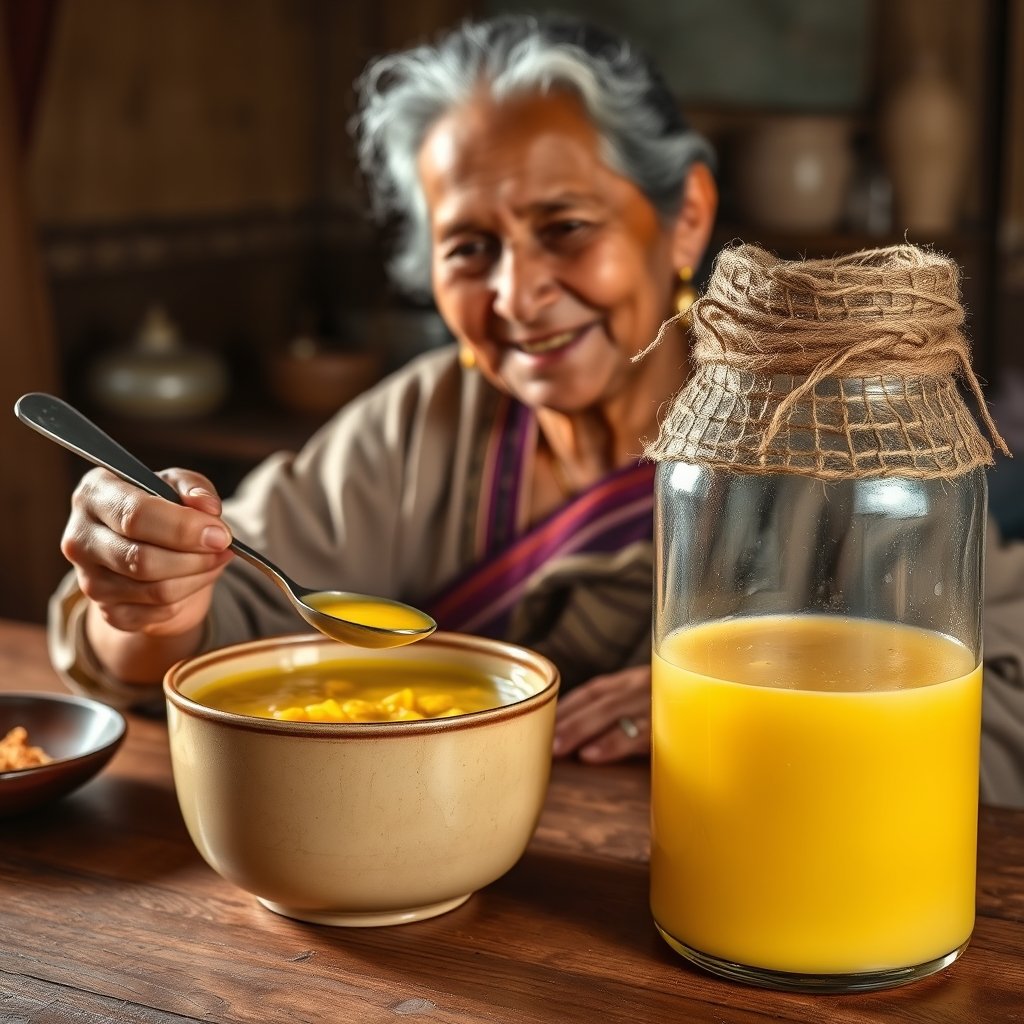 Cooking With Ghee for Elderly Family Members
Ghee is a suitable addition to the meals of elderly family members because it remains stable under heat and…
Cooking With Ghee for Elderly Family Members
Ghee is a suitable addition to the meals of elderly family members because it remains stable under heat and…