
Ghee for Annaprashan: It Enriches the First Rice Bite
What is the role of ghee in the Annaprashan ceremony?
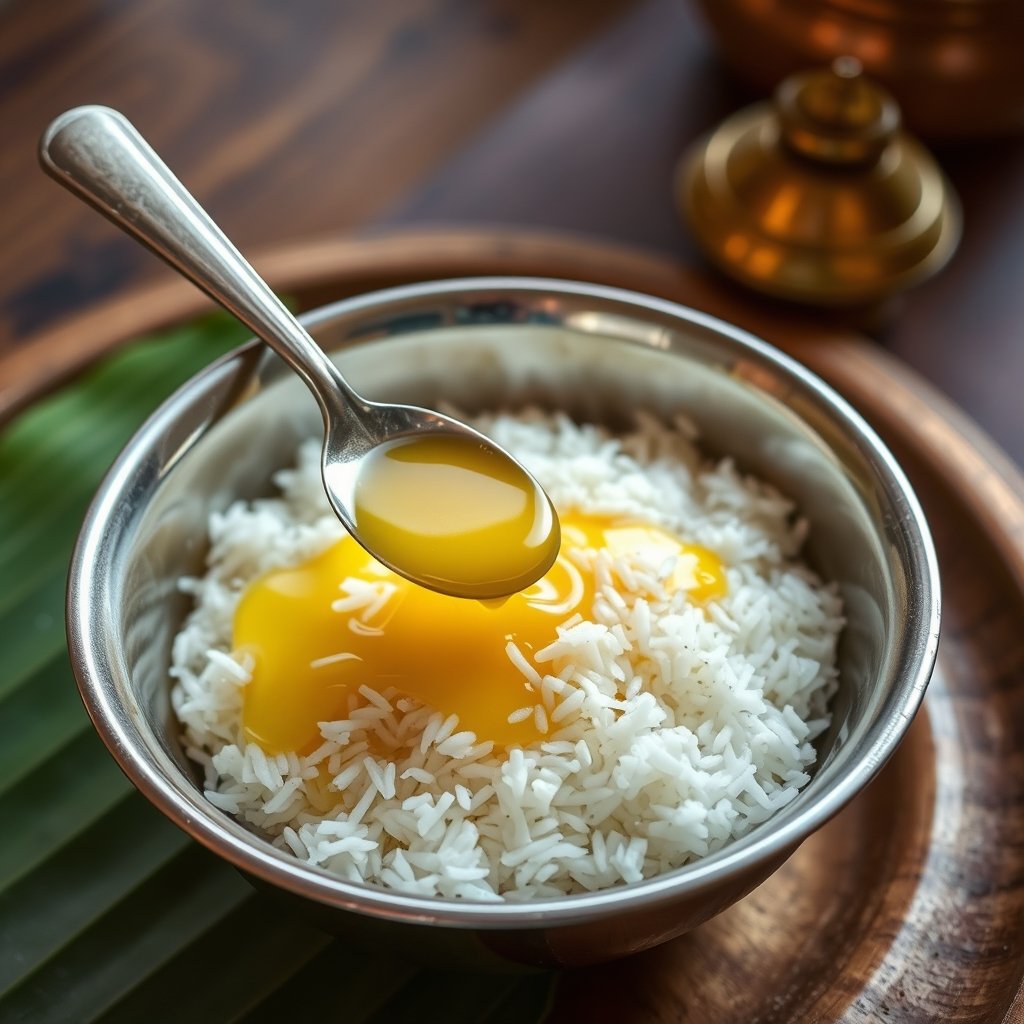
Annaprashan marks an infant's formal transition from exclusive milk feeding to complementary solid food, usually around the sixth month, and bilona ghee is the traditional medium stirred into that initial ceremonial taste of boiled rice. In traditional Indian domestic ritual, an infant is never given dry, unseasoned grain. Mixing a small dab of golden ghee into soft, warm rice softens the texture, imbues the starch with familiar milky warmth, and provides natural lubrication so the very first swallow passes smoothly down an inexperienced throat.
The ritual itself, celebrated across Indian regions under names like Choroonu in Kerala or Mukhe Bhaat in Bengal, represents more than a social gathering. It is an intentional milestone acknowledging that the child's digestive system is ready to encounter wholesome sustenance beyond mother's milk. The fat used in this ceremony is chosen with utmost care. By introducing grain in the presence of clarified butter, families honour a multi-generational custom designed to protect the delicate lining of the mouth and stomach as the child takes their very first steps into solid meals.
Why do elders choose bilona ghee over modern processed fats for first solids?
Elders choose cultured bilona ghee because it is prepared from whole curd rather than industrial cream, creating a pure fat that is remarkably gentle on an infant's young digestive tract. Industrial supermarket ghee is frequently separated from raw milk using high-speed mechanical separators, leaving behind residues and undergoing heat processes that strip away the subtle cultured aroma. In contrast, A2 Gir cow ghee made through the traditional bilona method involves boiling fresh milk, culturing it into curd overnight, and hand-churning it with a wooden bi-directional churn to extract makkhan before slow simmering over a mild hearth.
This patient fermentation process breaks down complex proteins and converts milk solids naturally. By the time the clarified butter is decanted, it contains virtually zero lactose and galactose, eliminating common sources of digestive discomfort. For a child whose gut flora is still forming, the simple short-chain and medium-chain fatty acids present in curd-churned ghee offer accessible calories without requiring heavy liver bile production. Grandmothers insist on real bilona ghee for the ceremony precisely because they know it sits lightly on the stomach and does not provoke gas or colic.
Our cows are not use and throw
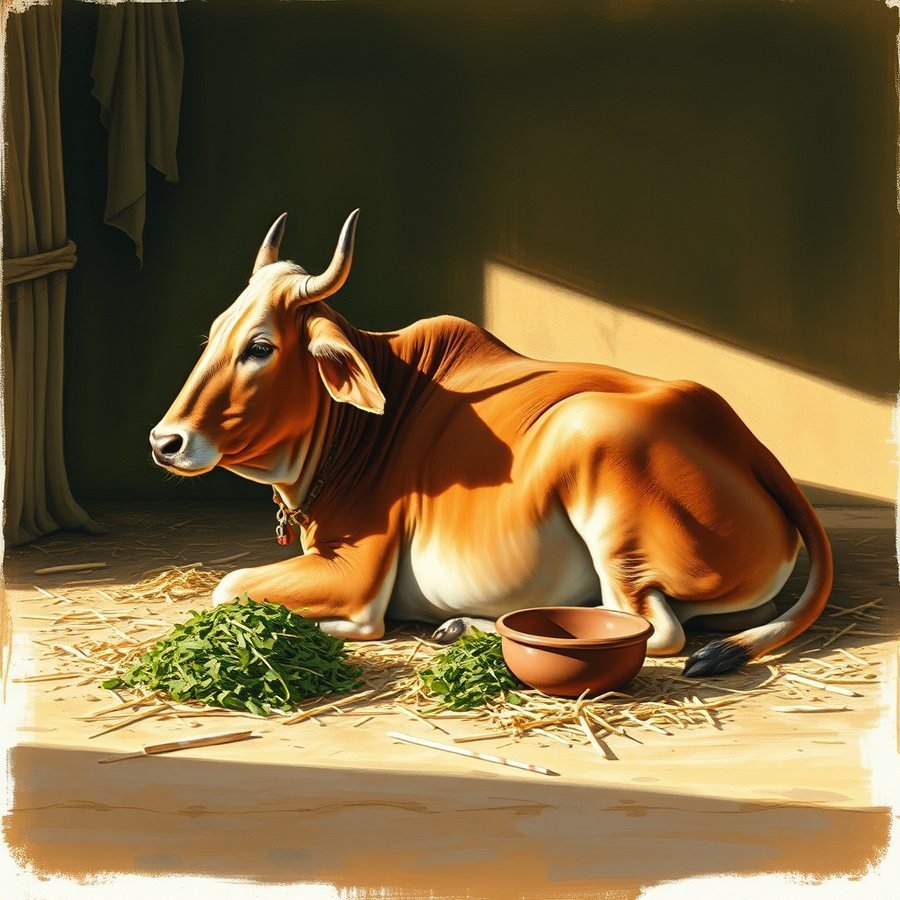
A cow that stops giving milk is still our cow. She stays on the farm, with the same feed, the same shed and the same medical care she had when she was milking. We do not sell her on and we do not let her go. That is the whole basis of the ghee we make — you cannot ask an animal for her milk and then abandon her for it.
Our mission goes further than our own herd. There are cows on the street who are injured every day, who eat plastic, who cry through the night with nobody coming. We want to take them in. The plan is a chain of Organic Farmz gaushalas in several places, so that help is not one shed in one city but something a hurt animal can actually reach.
This takes more than we can carry alone — land, fodder, vets, hands. Come and join our initiative. Anything you give goes to feed, treat and shelter these cows.

Scan with any UPI app
Bank transfer
- Account name Organic Farmz
- Bank Indian Bank
- Account number 8133177322
- IFSC code IDIB000K555
- UPI ID organicfarmz@ptaxis
On a phone, the button above opens your UPI app directly — a QR on the screen you are reading cannot be scanned by that same screen. On a laptop, scan the code with your phone instead.
How should ghee be introduced on the day of the ceremony?
Ghee should be offered in very modest quantities on the ceremony day, ideally no more than a quarter of a teaspoon blended thoroughly into warm, overcooked rice. Family members preparing the thali often boil short-grain white rice until the grains collapse into a smooth, porridge-like consistency. A tiny splash of warm boiled water or mild mung dal broth is stirred in, followed by just a drop or two of melted bilona ghee, ensuring there are no separated grease pockets or heavy oily puddles in the mash.
The mixture is traditionally placed on a clean silver spoon or the maternal uncle's fingertip, allowing the child to taste an emulsion that feels soft, warm, and comforting. After the celebratory first taste is accomplished, families keep daily portions equally restrained. Over the weeks that follow Annaprashan, caregivers add a few drops of ghee to afternoon khichdi or stewed apple purée, allowing the infant to gradually adapt to dietary fats without overburdening their developing metabolism. Moderation remains the foundation of safe traditional weaning.
Why is gifting a jar of bilona ghee considered auspicious for new parents?
Gifting a jar of handcrafted bilona ghee honours the Vedic concept of presenting mangala dravya, an inherently pure, nourishing substance that brings grounded blessing and practical utility to the household. While relatives commonly arrive with silver ornaments, baby jewellery, or toys that sit inside boxes, a jar of authentic A2 Gir cow ghee provides immediate, functional support for the nursery kitchen during the critical months of complementary feeding.
A well-prepared jar of bilona ghee keeps stable at pantry temperature for months without refrigeration, provided it is kept away from moisture and direct sunlight. When family members or close friends gift a freshly churned batch from Organic Farmz, they give the young parents peace of mind regarding ingredient authenticity. New mothers and fathers do not have to wonder whether the fat going into their infant's daily mash contains solvent residues, synthetic aromas, or adulterated vegetable oils. It is a gift of nourishment that demonstrates genuine care for the growing child's daily plate.
How does Ayurveda view combining ghee with early grains?
Ayurveda views ghee as the premier sanskara vehicle, an unctuous substance that carries nutritional benefits deep into bodily tissues while pacifying natural dryness in the alimentary canal. Grains such as rice possess grounding and cooling qualities, but raw or plain starches can provoke digestive sluggishness if not paired with a balanced digestive lubricant. Traditional texts describe cultured ghee as a substance that kindles the mild digestive fire without aggravating heat or irritation in delicate infant tissues.
Furthermore, fat is essential for absorbing fat-soluble micronutrients naturally present in grains and companion vegetables. By coating the grain with clarified butter, the child receives a balanced combination of quick carbohydrates and sustained lipid fuel. This ancient Ayurvedic balance keeps the stool soft, eases regular bowel evacuation, and ensures the infant associates solid meals with comfort and ease rather than gastrointestinal tension.
Taste the difference
Small-batch A2 Gir cow ghee, hand-churned to order and delivered across India. Read how we make it if you want the detail first.
Order a jarKeep reading
-
 How Much Ghee to Buy First: Order the Smallest Jar
Order the single smallest jar available when trying a new ghee brand, allowing you to test its aroma, grain…
-
 Bulk A2 Ghee Supplier in Delhi: What to Ask First
Before hiring a bulk A2 ghee supplier in Delhi, ask how cows are maintained, how butter is churned, how jars…
-
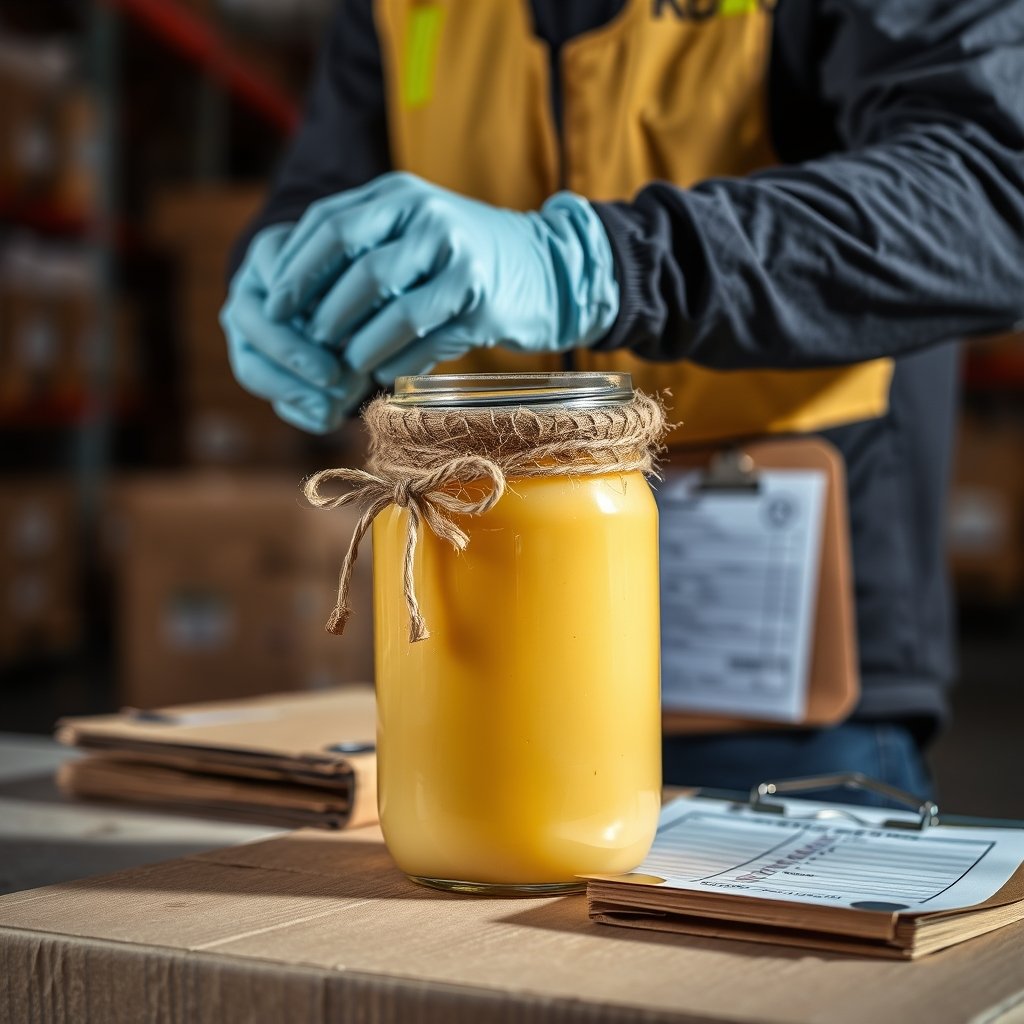 Corporate Ghee Hampers: Check Packing and Transit
A corporate ghee hamper buyer should check batch consistency, outer transit safety, custom labels, and a…
