
Soft Phulkas for Hours: Smear Ghee Off the Flame
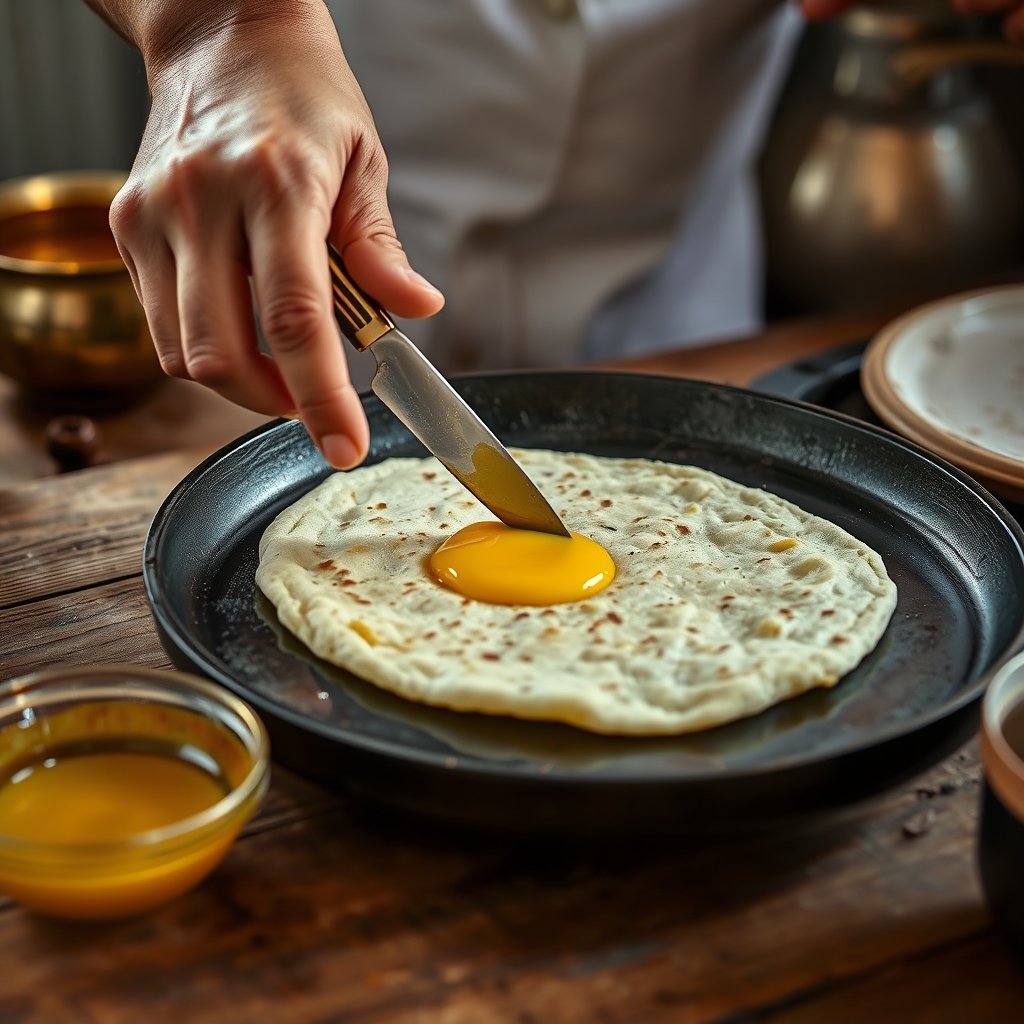
Why should you smear ghee on phulkas off the pan?
Applying ghee after lifting the puffed flatbread from the heat preserves both the structure of the crumb and the delicate aroma of cultured butterfat. When dough puffs over an open burner or dry tawa, the trapped steam separates the inner layers and gelatinises the wheat starch. Tossing uncooked fat onto a smoking iron griddle scorches milk solids and turns the bread leathery. Waiting until the phulka rests on a wooden board or cloth napkin allows the hot, escaping moisture to melt a measured scrape of room-temperature ghee across the blistered surface without burning it. The fat coats the exterior evenly, locks residual warmth within the puffed pocket, and ensures the flatbread stays supple rather than dry and brittle.
How does bilona ghee keep rotis soft in a dabba?
Bilona ghee creates a natural moisture barrier that slows starch retrogradation as the bread cools down inside a steel lunch box. As wheat flatbreads lose heat, the gelatinised starches naturally recrystallise and expel water, a process that makes ungreased rotis stiff and crumbly by midday. Handcrafted A2 Gir cow ghee contains pasture-derived fat chains and cultured aromatics that do not dry out quickly. By rubbing a light layer over the ballooned crown while it is steaming, the fat penetrates the porous outer bran and wraps the starch molecules. When stacked immediately inside a clean cotton cloth inside an insulated container, the trapped vapor remains gentle, leaving the bread pliable and tender for four to six hours.
Our cows are not use and throw

A cow that stops giving milk is still our cow. She stays on the farm, with the same feed, the same shed and the same medical care she had when she was milking. We do not sell her on and we do not let her go. That is the whole basis of the ghee we make — you cannot ask an animal for her milk and then abandon her for it.
Our mission goes further than our own herd. There are cows on the street who are injured every day, who eat plastic, who cry through the night with nobody coming. We want to take them in. The plan is a chain of Organic Farmz gaushalas in several places, so that help is not one shed in one city but something a hurt animal can actually reach.
This takes more than we can carry alone — land, fodder, vets, hands. Come and join our initiative. Anything you give goes to feed, treat and shelter these cows.

Scan with any UPI app
Bank transfer
- Account name Organic Farmz
- Bank Indian Bank
- Account number 8133177322
- IFSC code IDIB000K555
- UPI ID organicfarmz@ptaxis
On a phone, the button above opens your UPI app directly — a QR on the screen you are reading cannot be scanned by that same screen. On a laptop, scan the code with your phone instead.
What does ayurveda say about combining wheat and ghee?
Classical ayurvedic culinary practice views wheat as heavy and grounding, pairing it deliberately with cultured ghruta to support smooth digestion. Whole wheat flour carries an inherently dry quality after dry-roasting over direct fire. Charred dry flour can aggravate bodily dryness if consumed without a mediating lipid. Traditional texts describe cultured cow ghee as carrying the ability to balance this dryness by moistening the digestive passage without extinguishing the internal digestive fire. Because bilona ghee is prepared from curd rather than industrial cream, it carries a mild souring note and lightness that makes heavier grains easier for the body to assimilate during a standard midday meal.
Why does A2 Gir cow ghee smell sweeter on hot flatbread?
The subtle sweet fragrance comes from the caramelised milk solids that settle during slow, firewood-based boiling of cultured makkhan. Gir cows graze on diverse grasses, and their A2 milk yields a rich curd that is churned bidirectionally with a wooden bilona. When this cultured butter clarifies over a gentle hearth, the curd particles brown slowly without scorching. The moment this finished golden fat meets the hot crust of a freshly puffed phulka, the heat releases aromatic compounds called lactones alongside delicate nutty notes. Factory butter oils lack this cultured lactic foundation, often smelling flat or oily, whereas genuine bilona ghee blooms with an unmistakable sweet-toasted scent that defines the Indian home table.
How much ghee belongs on a single fresh phulka?
Half a teaspoon, or roughly two to three grams of ghee, provides sufficient coverage for a standard six-inch flatbread. Drowning bread in liquid fat makes the dough heavy and greasy to hold, whereas a modest smear allows the thin skin to drink the fat without sogginess. Home cooks traditionally take a small dab on the back of a brass spoon or fingertip, touch it to the hot ballooning top, and rub two warm phulkas face-to-face. This traditional gesture halves the effort, spreads an even micro-sheen across both pieces, and leaves your hands clean when you sit down to tear your first hot bite.
Taste the difference
Small-batch A2 Gir cow ghee, hand-churned to order and delivered across India. Read how we make it if you want the detail first.
Order a jarKeep reading
-
 Best Ghee for Cooking: Picking for Daily Dal and Roti
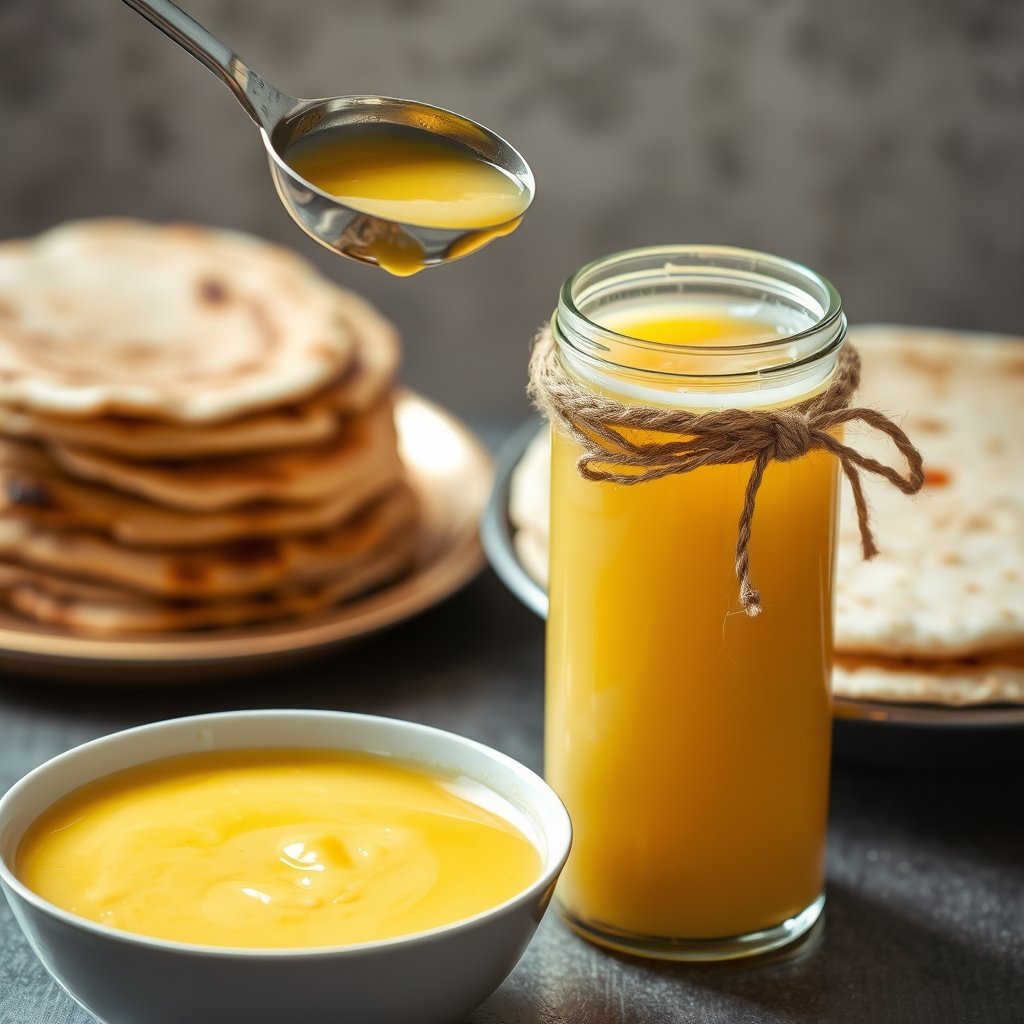
A2 Gir cow bilona ghee is best for daily dal and roti due to its 250°C smoke point and rich aroma. It stays…
-
 What is Takra and Bilona Ghee
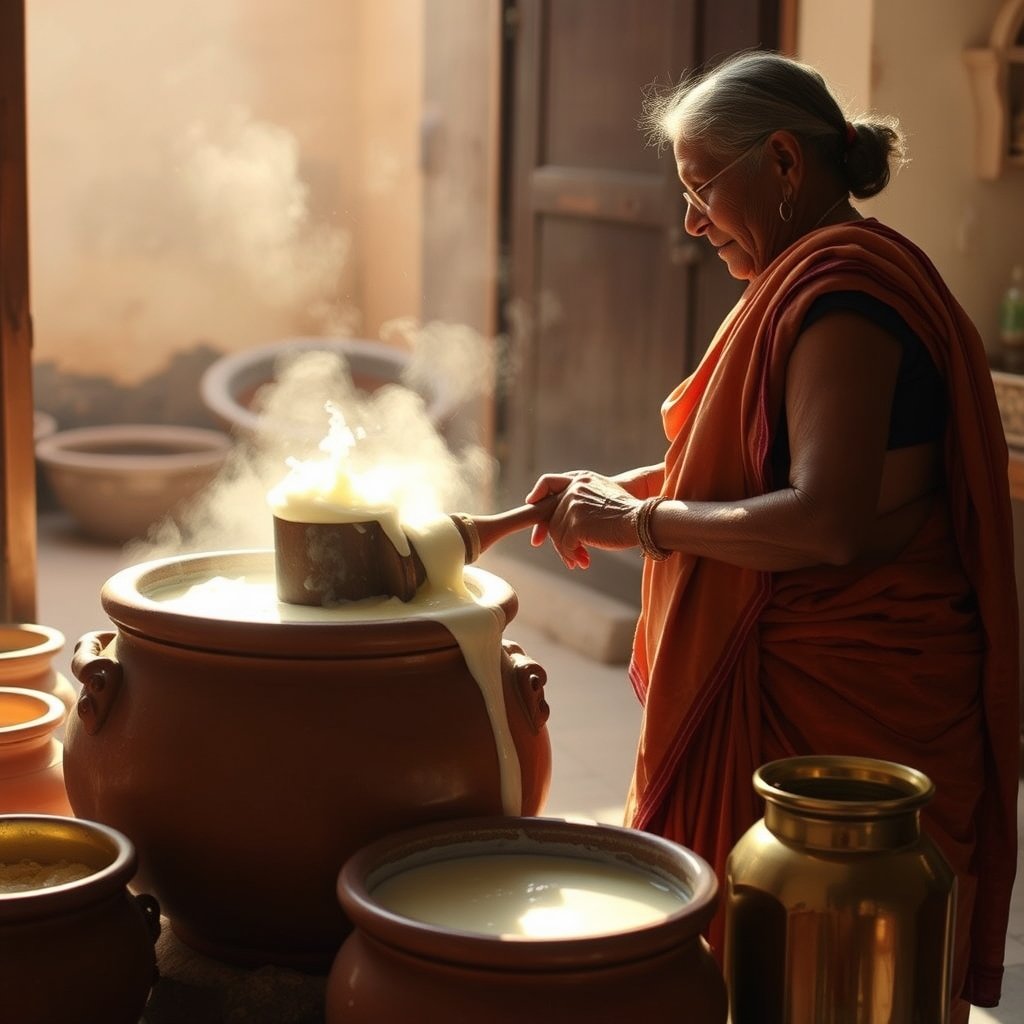
Discover the ancient connection between buttermilk (takra) and authentic bilona ghee, and how this…
-
 Bilona Ghee and Kitchen Spices
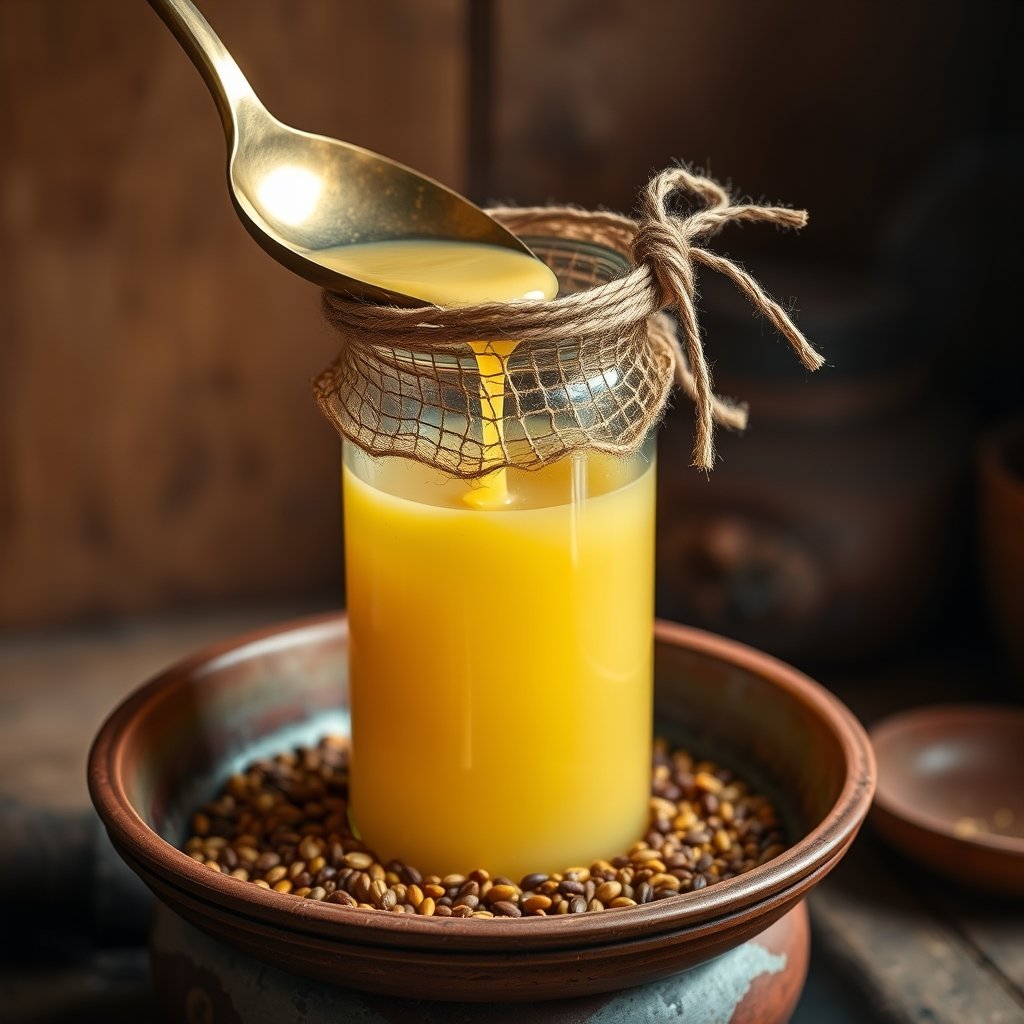
In classical Indian cooking, ghee is more than just a fat for frying. Discover the traditional concept of…
