
Roasting Rava in Bilona Ghee: The Secret to Lump-Free Halwa
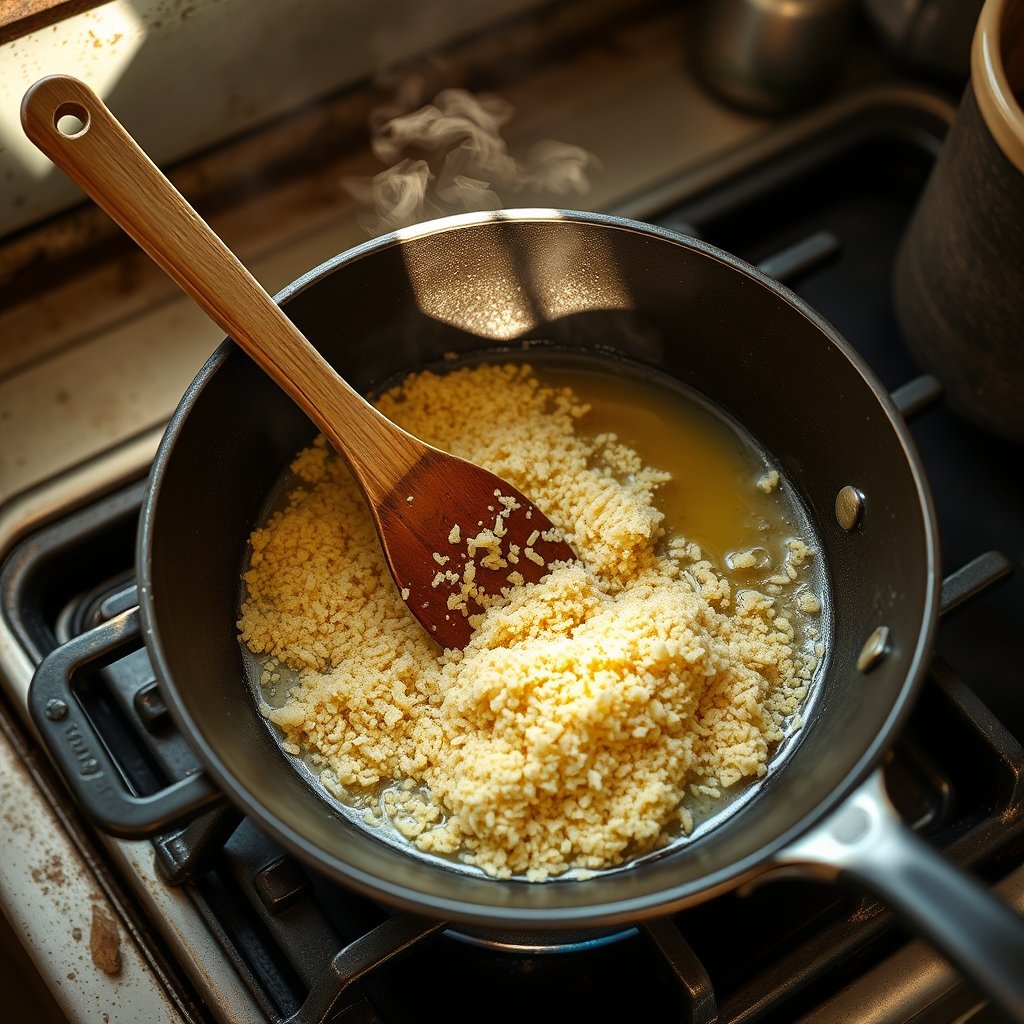
Why use equal parts of rava and bilona ghee for roasting?
When making traditional Indian sweets like rava halwa, matching the weight of the semolina to an equal measure of bilona ghee creates a fluid bath. Instead of dry grains sticking to the bottom of a heavy iron kadhai, each particle of rava is fully coated in the golden fat. This immersion allows every grain to expand evenly as the temperature rises, preventing the formation of hard, dry clumps that often ruin the texture of homemade halwa.
How long should you roast rava on a low flame?
Patience is essential during the roasting process. Rava should be stirred continuously over a low flame for 12 to 15 minutes. Rushing the process with high heat only browns the outside of the grains while leaving the center raw and chewy. As the semolina cooks slowly in the bilona ghee, it gradually turns a pale amber shade and releases a distinct, nutty aroma that signals it is ready for liquids.
When do you add sugar syrup to the roasted rava?
Once the rava reaches an even golden hue and the fat begins to separate slightly around the edges of the pan, warm water or sugar syrup can be introduced. Pour the liquid in a thin stream while stirring the mixture vigorously with a wooden ladle. The fat content in the bilona ghee acts as a buffer against sudden steam expansion, allowing the liquid to incorporate smoothly without splashing or forming dense lumps.
Why does traditional bilona ghee improve halwa texture?
Hand-churned bilona ghee contains the natural moisture and milk solids derived from cultured curd, which caramelize gently alongside the semolina. This slow caramelization imparts a rich, complex depth of flavour that standard refined fats cannot replicate. Furthermore, the granular texture of traditional ghee integrates seamlessly into the flour, yielding a soft, melt-in-the-mouth finish for everyday desserts and festive offerings alike.
Taste the difference
Small-batch A2 Gir cow ghee, hand-churned to order and delivered across India. Read how we make it if you want the detail first.
Order a jarKeep reading
-
 Best Ghee for Sweets: A2 Bilona Ghee Is the Gold Standard
A2 Gir cow bilona ghee is the best for sweets because its cultured aroma and high smoke point ensure a rich…
-
 Besan Ladoo Ghee Ratio: Use 1 Part Ghee to 2 Besan
A balanced besan ladoo requires 1 part ghee to 2 parts besan by volume to roast the gram flour slowly…
-
 Ghee Roast: What the Name Actually Means
Discover the true meaning behind the name Ghee Roast, its origins in coastal Karnataka, and why the cooking…


