
Ghee Roast: What the Name Actually Means
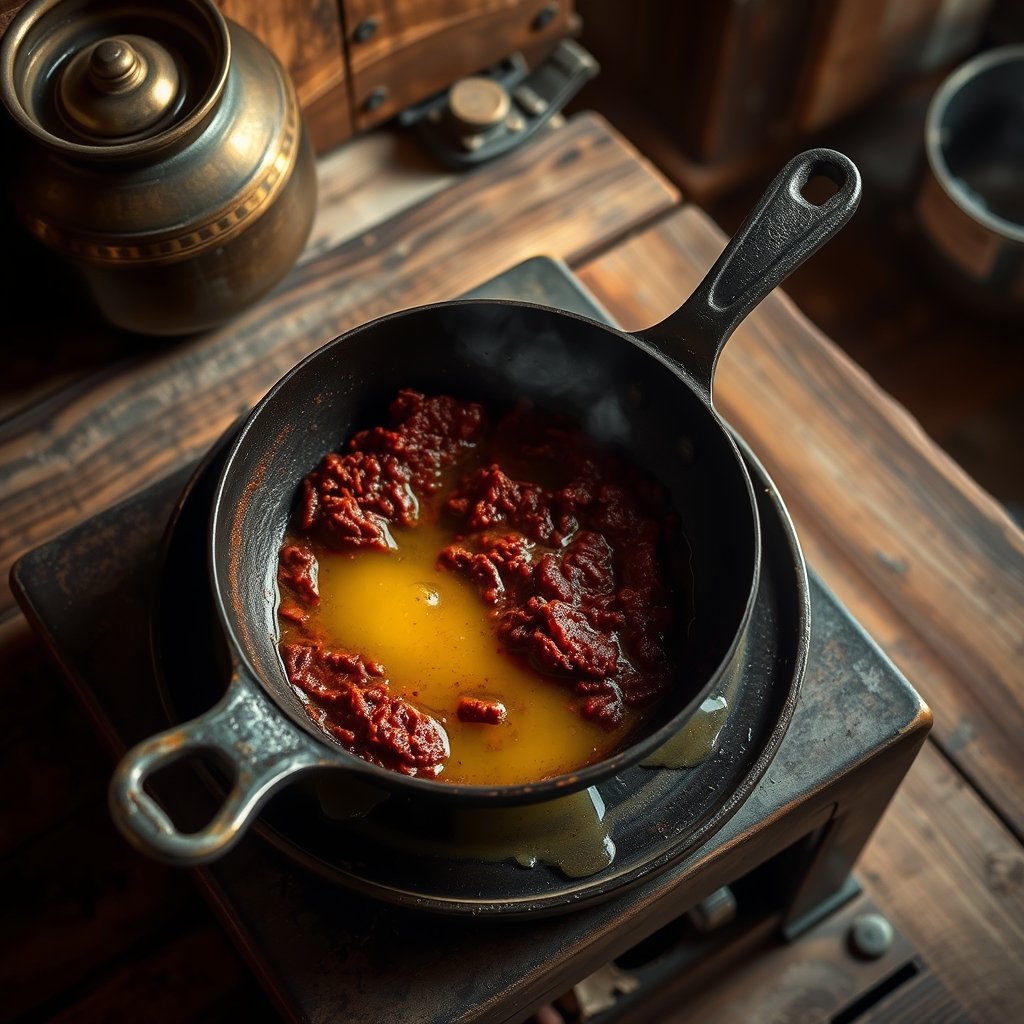
A ghee roast is a coastal Karnataka style of cooking where a fragrant, chilli-heavy spice paste is slowly fried and caramelized entirely in generous quantities of ghee until the moisture evaporates, the fat separates, and a glossy, deep-red glaze coats the meat or vegetables.
Where does the ghee roast originate?
The dish traces its roots to Kundapur, a coastal town near Mangalore in Karnataka. It was created in the kitchen of a local establishment called Shetty Lunch Home in the mid-twentieth century. What began as an experiment with chicken quickly spread across South India to become a benchmark preparation for everything from paneer and mushrooms to prawns and mutton. While many regional dishes use ghee as an optional garnish or finishing touch, a genuine ghee roast places ghee at the very centre of the technique. It is the primary cooking medium, the binder for the spice blend, and the source of the dish’s signature sheen and round aroma.
Why is it called a roast if it is cooked on the stovetop?
In western culinary terms, roasting refers to cooking food with dry, indirect heat inside an oven. In Indian regional cooking English, however, the word roast is often used to describe slow pan-roasting or bhunao. In the case of a ghee roast, the food is not baked or roasted over an open fire. Instead, the meat or vegetables and the ground masala are cooked over low to medium heat in a heavy-bottomed pan, constantly turned and tossed in hot ghee. The term roast describes the prolonged dry-heat effect achieved when moisture leaves the pan, allowing the spices to toast and caramelize against the hot metal and fat without stewing in water.
What spices give ghee roast its distinctive flavour?
The foundation of any authentic ghee roast is its spice blend, dominated by Byadgi chillies. These wrinkled red chillies give the dish its striking crimson colour and a mild, fruit-forward heat without overwhelming the palate. The whole spices—typically coriander seeds, cumin seeds, fennel, black peppercorns, fenugreek, and cloves—are gently dry-roasted to release their essential oils before being ground into a smooth paste along with garlic, ginger, and a touch of tamarind paste or thick curd for sourness. The natural acidity of the tamarind cuts through the richness of the ghee, creating a balanced, savoury profile that is rich rather than heavy.
How does a ghee roast differ from a regular masala fry?
While both dishes involve spices and a pan, their cooking process, fat ratio, and final texture are quite distinct.
| Feature | Mangalorean Ghee Roast | Standard Masala Fry |
|---|---|---|
| Cooking Medium | Generous amounts of pure ghee throughout | Neutral cooking oil or a light oil-ghee blend |
| Liquid Added | None; relies entirely on the moisture in the paste and meat | Water or tomato purees often added to form a gravy |
| Masala Texture | Thick, sticky, caramelized glaze that clings tightly | Loose sauce, gravy, or thin dry-powder coating |
| Cooking Technique | Slow bhunao until the fat splits and spices brown | Quick sautéing or shallow frying |
| Aroma Profile | Toasted, nutty fat combined with warm, earthy spices | Direct chilli-onion pungency with neutral fat background |
Why does the choice of ghee matter for this dish?
Because the recipe uses no water, stock, or heavy cream, every bit of flavour carrying capacity rests on the fat. Using a high-quality A2 Gir cow ghee made through the traditional curd-churned bilona method makes a tangible difference to the outcome. Bilona ghee contains subtle cultured notes from the natural curd fermentation stage, which meld with the tamarind and roasted Byadgi chillies in the pan. Furthermore, pure desi cow ghee has a high smoke point, allowing the spices to brown deeply and develop complex nutty undertones without burning or turning bitter during the extended roasting time.
How is a traditional ghee roast assembled in the kitchen?
The process begins with marinating the main ingredient—such as chicken, paneer, or yam—in curd, turmeric, lemon juice, and a pinch of salt. In a heavy iron kadai, a few spoonfuls of ghee are warmed to sear the marinated pieces lightly until partially cooked, after which they are set aside. More ghee is then added to the pan, followed by the ground masala paste. The cook must stir the paste patiently over a low flame. As the water from the paste cooks off, the masala darkens and the ghee begins to separate at the edges of the pan. The seared protein is reintroduced, along with a final splash of ghee and fresh curry leaves, and tossed until every piece is coated in a sticky, glistening red reduction. Served hot alongside neer dosa, appam, or steamed rice, it demonstrates how fat and spice can work together in complete balance.