
Khichdi With Ghee: The Everyday Case
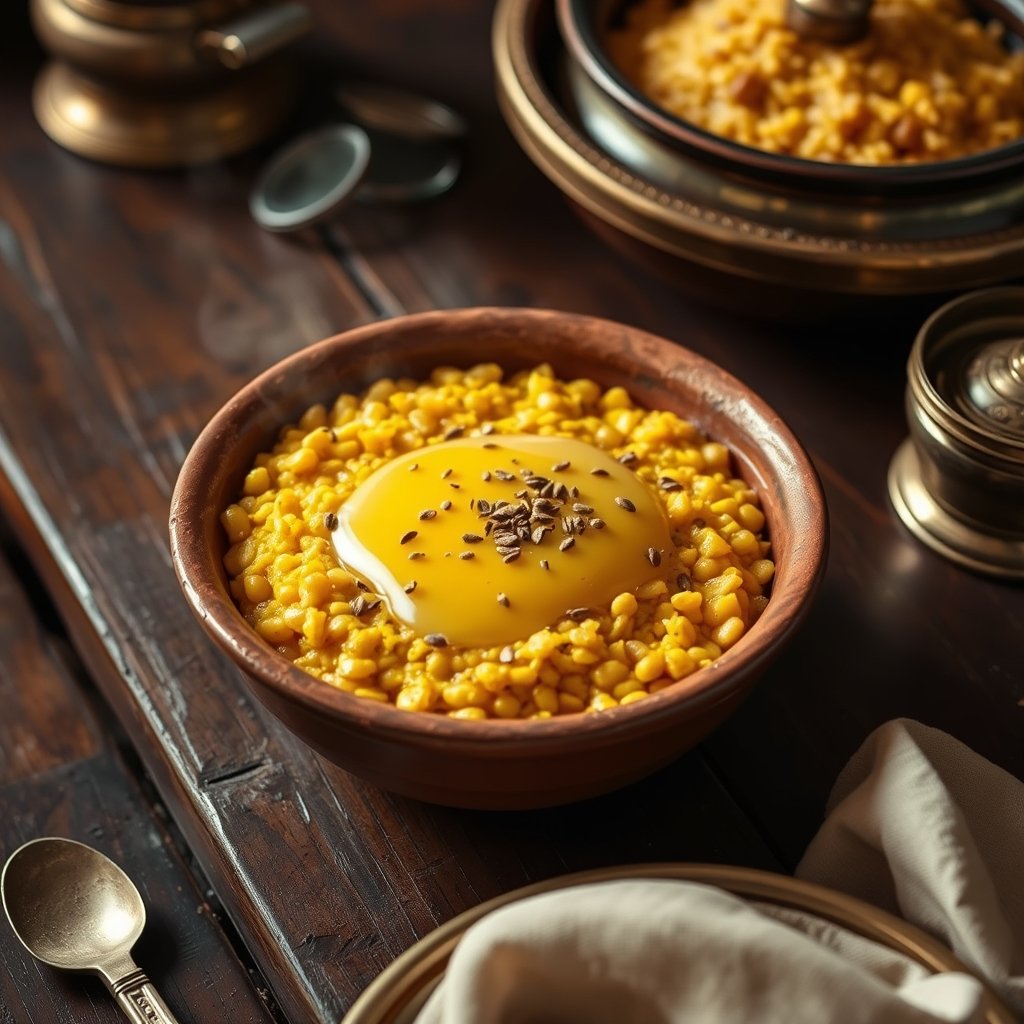
Adding ghee to khichdi binds the starch from rice and lentils, rounds out sharp spice notes, and provides the essential fat needed to make a simple grain bowl smooth and easily digestible.
Across Indian homes, khichdi is rarely served plain. Whether prepared for a quick weeknight dinner, cooked as a restorative meal after a long day, or served during a quiet monsoon evening, a spoonful of golden ghee is its constant companion. While it clearly improves flavor, the pairing of ghee and khichdi is rooted in practical kitchen chemistry and time-tested culinary tradition.
Why Is Ghee Added to Khichdi in Traditional Indian Kitchens?
When rice and split yellow moong dal simmer together, their starches break down into a soft, comforting porridge. However, cooked pulses alone can have an astringent, dry quality on the tongue. Without a binding fat, the dish dries out quickly as it cools, leaving a thick, heavy texture that can feel dull and sticky to eat.
Adding fat during or after cooking alters how the cooked starches interact with water. Ghee coats the swollen grain particles, giving khichdi its classic velvety consistency. Beyond texture, warm fat dissolves heat-stable aromatic compounds from spices like cumin seeds, hing (asafoetida), and fresh ginger. When spiced ghee mingles with humid steam inside the pot, those flavors spread evenly through every grain rather than sitting separately on top.
Should You Cook Khichdi with Ghee or Spoon It On Top?
Home cooks often debate whether ghee belongs in the pressure cooker during the initial spice tempering or poured directly over a steaming bowl just before eating. In practice, both approaches serve distinct kitchen purposes and work remarkably well together.
| Aspect | Cooking Ghee in the Pot | Spooning Ghee on Top |
|---|---|---|
| Flavor Profile | Mellow, deeply integrated, subtle background richness. | Bright, pronounced aroma with a glossy, golden finish pooled on heat. |
| Spice Bloom | Ideal for frying cumin, hing, and ginger to release fat-soluble oils. | Best for a final aroma boost or preserving raw golden sweetness. |
| Textural Effect | Binds cooked starches during simmering for a creamy mash. | Softens dry surface grains and creates a silky mouthfeel per bite. |
Using a small teaspoon of ghee to bloom your whole spices at the start ensures deep flavor throughout the dish, while finishing with another half teaspoon at the table provides that rich, golden aroma the moment you sit down to eat.
How Does Traditional Bilona A2 Ghee Alter Simple Khichdi?
Not all fat impacts a simple grain dish the same way. Standard commercially refined oils or cream-extracted fats can feel heavy without adding real depth. In contrast, traditional bilona ghee made from A2 Gir cow milk brings a layer of quiet, aromatic complexity to modest home cooking.
Because authentic bilona ghee is prepared by fermenting whole milk into curd before hand-churning it into butter and slow-clarifying the result, it carries a mild cultured tang and a deeply nutty finish. When a spoonful meets hot, steaming moong dal khichdi, it melts instantly, releasing a warm aroma that lifts plain, unadorned grains into something satisfying. Its natural fine granules dissolve cleanly in the steam, wrapping the rice in mild, toasted flavor without feeling greasy.
What Is the Ayurvedic Reason for Pairing Fat with Cooked Grains?
In classical Ayurvedic principles, food is understood through its foundational qualities. Pulses like lentils and grains like rice are naturally light and drying. Eating dry, starch-heavy meals regularly can sometimes cause mild gas or slow digestion, particularly for individuals with sensitive stomachs or during dry, cold weather.
Ghee introduces unctuousness, balancing the naturally drying tendency of pulses. It acts as an effective carrier that supports digestive warmth without overburdening the stomach. By combining soft, well-cooked rice and lentils with a small quantity of pure cow ghee, khichdi becomes a balanced, soothing meal suitable for almost any age or season.
How Much Ghee Belongs in a Daily Bowl of Khichdi?
A sensible guideline for everyday cooking is one to two teaspoons per serving. In peak winter months, you might lean slightly more generous, while in hot summer weather, a light touch suffices. This amount is enough to bind the cooked grains, carry whole spice aromatics, and deliver a soft texture without turning the bowl heavy.
For everyday meals, a simple yellow moong dal khichdi cooked with a pinch of turmeric, a mild cumin tempering, and a spoon of authentic bilona ghee remains the simplest, most reliable comfort food in the Indian home kitchen.