
Ghee on Khichdi: The Traditional Ratio for Comfort Meals
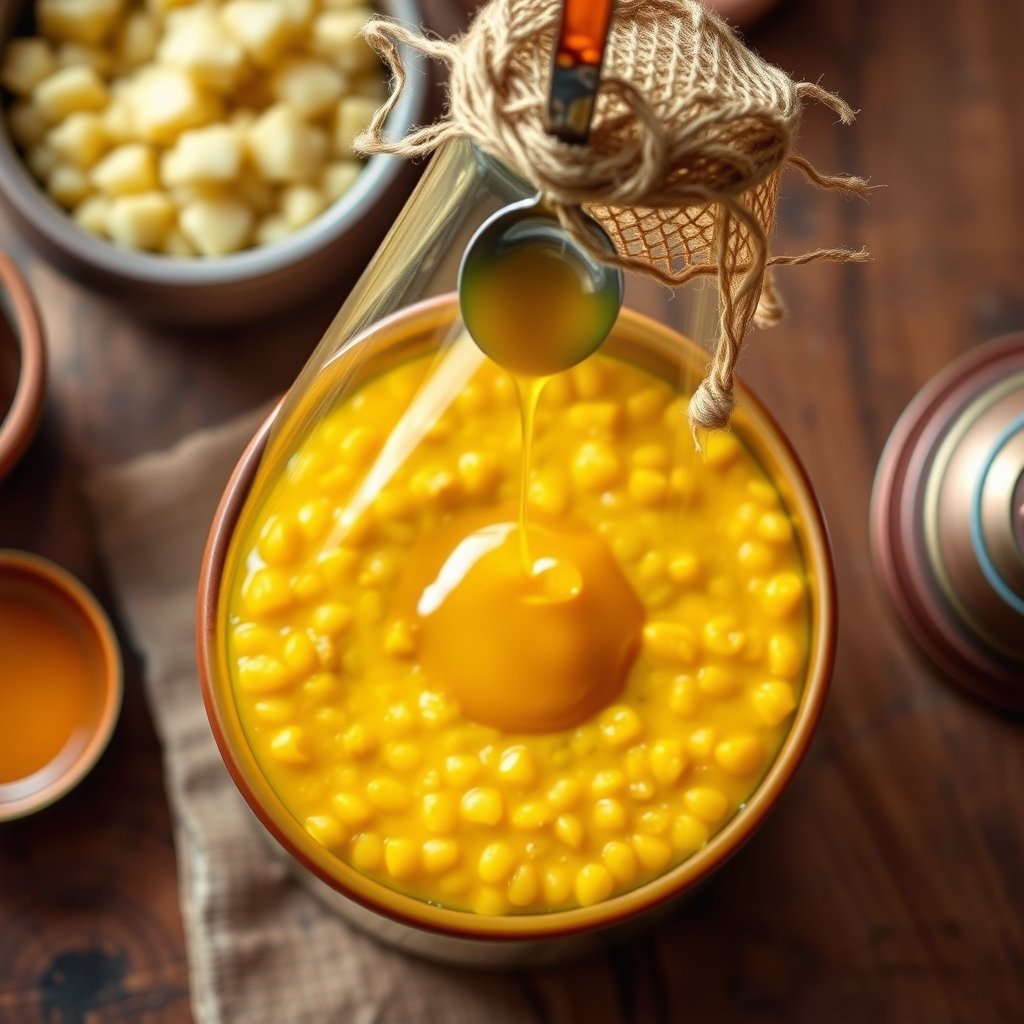
Why is ghee considered essential for a bowl of khichdi?
In the Indian kitchen, a bowl of khichdi is rarely served without a generous drizzle of golden fat. Khichdi, a simple mash of rice and lentils, is celebrated for being gentle on the system, but on its own, it can be quite lean. Adding bilona ghee introduces a necessary lipid component that transforms a basic meal into a complete one. Traditionally, the addition of ghee is not just about flavor; it is about providing the body with the lubrication and energy required to process the grains. The fat helps in softening the texture of the rice and dal, making the meal feel more satisfying and substantial without being heavy.
What is the ideal ratio of ghee to add to your khichdi?
For a standard single serving of khichdi—roughly 250 to 300 grams of cooked food—the traditional recommendation is to add one to two teaspoons of bilona ghee. This amounts to approximately 5ml to 10ml of fat. At this ratio, the ghee coats the grains evenly, providing a silky mouthfeel and a deep, nutty aroma without overpowering the delicate taste of the moong dal. If the khichdi is particularly dry or made with whole spices, a second teaspoon helps to mellow the heat of the spices and brings a cohesive taste to the plate. Using more than two tablespoons per serving is generally considered excessive for a regular daily meal, as the goal is balance rather than indulgence.
How does the bilona method affect the taste of a simple rice dish?
Ghee made via the bilona method—where milk is turned to curd, churned into butter, and then slow-cooked—has a complex flavor profile that differs significantly from industrial ghee. When this cultured ghee meets a hot bowl of khichdi, it releases a characteristic aroma that is both toasted and slightly tangy. This depth comes from the fermentation process of the curd. Because bilona ghee is cooked slowly over a low flame, it retains its natural essences, which act as a natural flavor enhancer for the rice. Regular butter or processed fats often lack this aromatic punch, which is why bilona ghee is the preferred choice for those seeking the authentic taste of a traditional Indian home.
Should you add ghee during the pressure cooking or as a topping?
While some families add a small spoonful of ghee into the pressure cooker along with the water and salt, the most common practice is to add it as a fresh topping right before eating. Adding ghee during the cooking process helps prevent the dal from foaming up and ensures the grains don't stick together. However, adding it as a 'kacha' or raw topping once the khichdi is on the plate preserves the volatile aromatic compounds of the ghee. In many households, a compromise is reached: a small amount is used during the boil, and a fresh teaspoon is placed in the center of the steaming mound of khichdi just as it is served, allowing it to melt slowly into the sides.
Our cows are not use and throw

A cow that stops giving milk is still our cow. She stays on the farm, with the same feed, the same shed and the same medical care she had when she was milking. We do not sell her on and we do not let her go. That is the whole basis of the ghee we make — you cannot ask an animal for her milk and then abandon her for it.
Our mission goes further than our own herd. There are cows on the street who are injured every day, who eat plastic, who cry through the night with nobody coming. We want to take them in. The plan is a chain of Organic Farmz gaushalas in several places, so that help is not one shed in one city but something a hurt animal can actually reach.
This takes more than we can carry alone — land, fodder, vets, hands. Come and join our initiative. Anything you give goes to feed, treat and shelter these cows.

Scan with any UPI app
Bank transfer
- Account name Organic Farmz
- Bank Indian Bank
- Account number 8133177322
- IFSC code IDIB000K555
- UPI ID organicfarmz@ptaxis
On a phone, the button above opens your UPI app directly — a QR on the screen you are reading cannot be scanned by that same screen. On a laptop, scan the code with your phone instead.
Does the type of lentil used change the amount of ghee needed?
The choice of dal significantly influences how much ghee you might want to add. Moong dal khichdi, which is the most common variety, is naturally light and absorbs ghee quite readily. For moong-based preparations, a single teaspoon is often enough to provide the desired richness. On the other hand, if you are making khichdi with toor dal or chilka (split with skin) lentils, the dish can be slightly more fibrous and dry. In these cases, a slightly more generous serving of ghee—closer to one and a half tablespoons—helps to smoothen the texture and makes the meal easier to swallow. The goal is always to reach a consistency where the khichdi is neither a dry cake nor a watery soup, but a soft, buttery porridge.
Why is A2 Gir cow ghee preferred in Ayurvedic meal planning?
In Ayurvedic traditions, the combination of rice, lentils, and ghee is known as a 'samskara' or a beneficial pairing. Ghee is considered a substance that carries the properties of the foods it is paired with deeper into the body's tissues. When you pair A2 Gir cow ghee with khichdi, you are combining a complex carbohydrate, a protein, and a high-quality fat. This trio is thought to keep the 'Agni' or digestive fire steady without overheating the system. Because A2 ghee is sourced from specific indigenous cow breeds and processed without harsh chemicals, it is viewed as a pure fuel that supports the body's natural rhythms. It is the go-to recommendation for anyone looking to reset their palate or eat a meal that is grounding and easy to process.
Can you use ghee for a tempering or tadka on top of khichdi?
A popular way to serve khichdi is by preparing a quick 'tadka' or tempering. This involves heating a tablespoon of bilona ghee in a small pan until it is hot but not smoking. You then add cumin seeds, a pinch of asafoetida (hing), and perhaps some chopped ginger or green chilies. Once the seeds crackle, the hot, infused ghee is poured directly over the cooked khichdi. This method not only adds the fat required for the meal but also blooms the fat-soluble flavors of the spices. The sizzle of the ghee hitting the moist rice is a sensory hallmark of Indian cooking. This tempering method is particularly popular in North Indian households, where the 'Ghee-Jeera' tadka is seen as the final, essential step of the recipe.
Taste the difference
Small-batch A2 Gir cow ghee, hand-churned to order and delivered across India. Read how we make it if you want the detail first.
Order a jarKeep reading
-
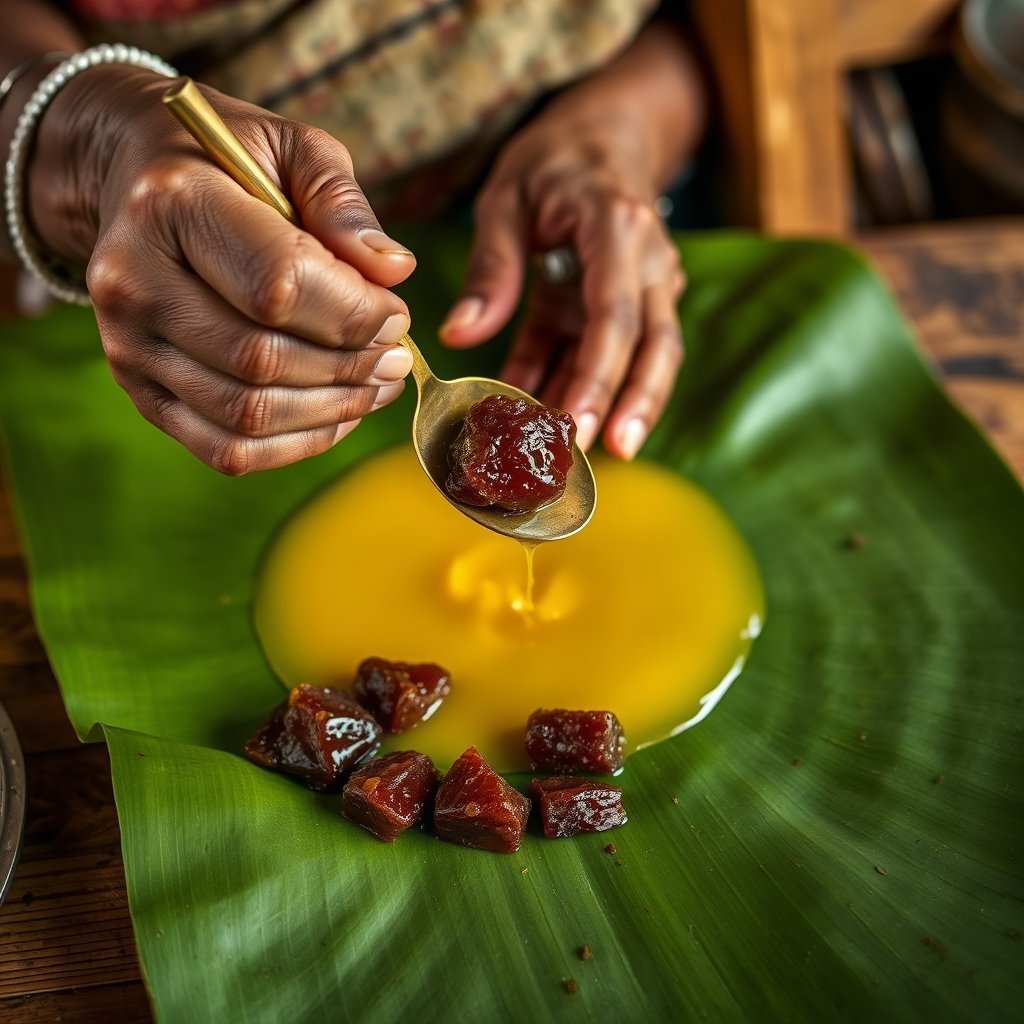 Gud and Ghee: The Old Practice of Ending a Thali
Across Indian homes, a modest spoonful of jaggery mashed into fragrant bilona ghee remains the quietest…
-
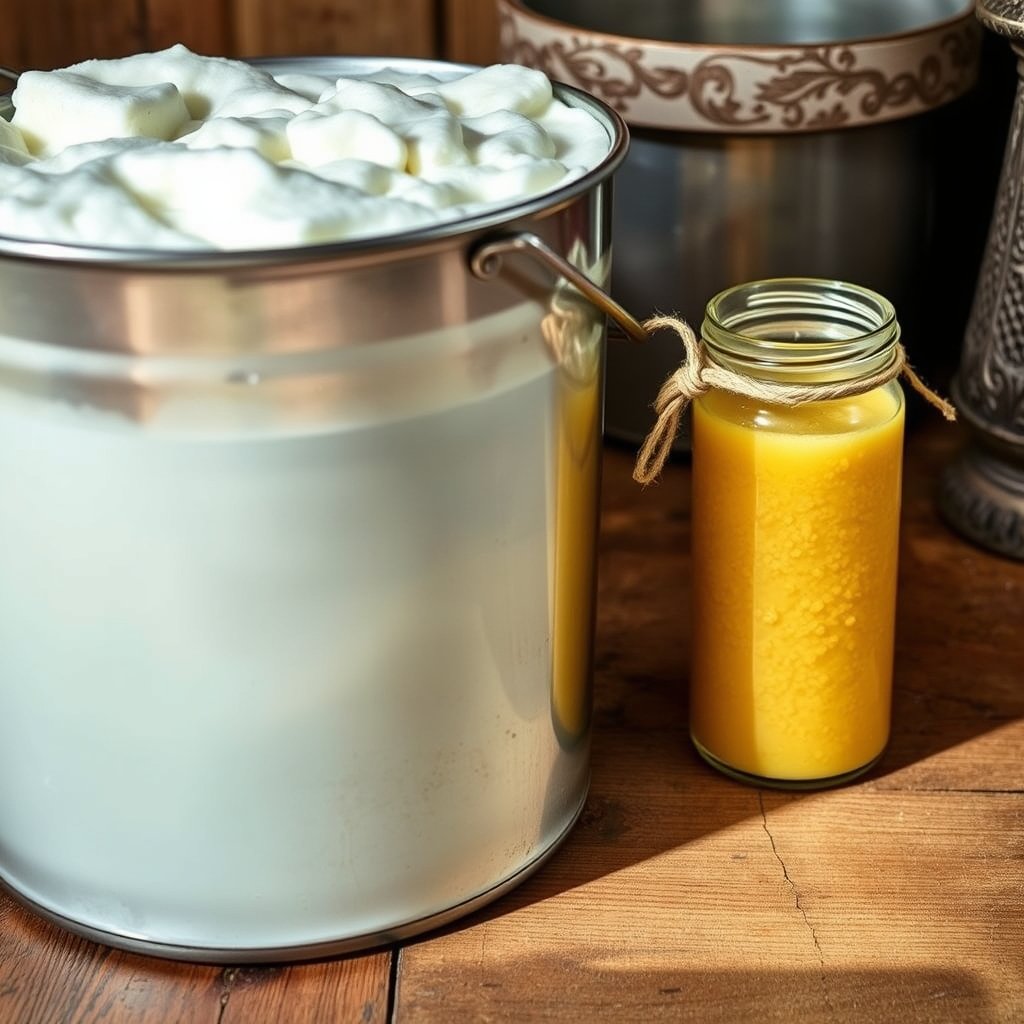 What 25 Litres of Milk Looks Like Next to One Litre of Ghee
Ever wondered about the real milk to ghee ratio? Discover why it takes 25 litres of fresh A2 Gir cow milk to…
-
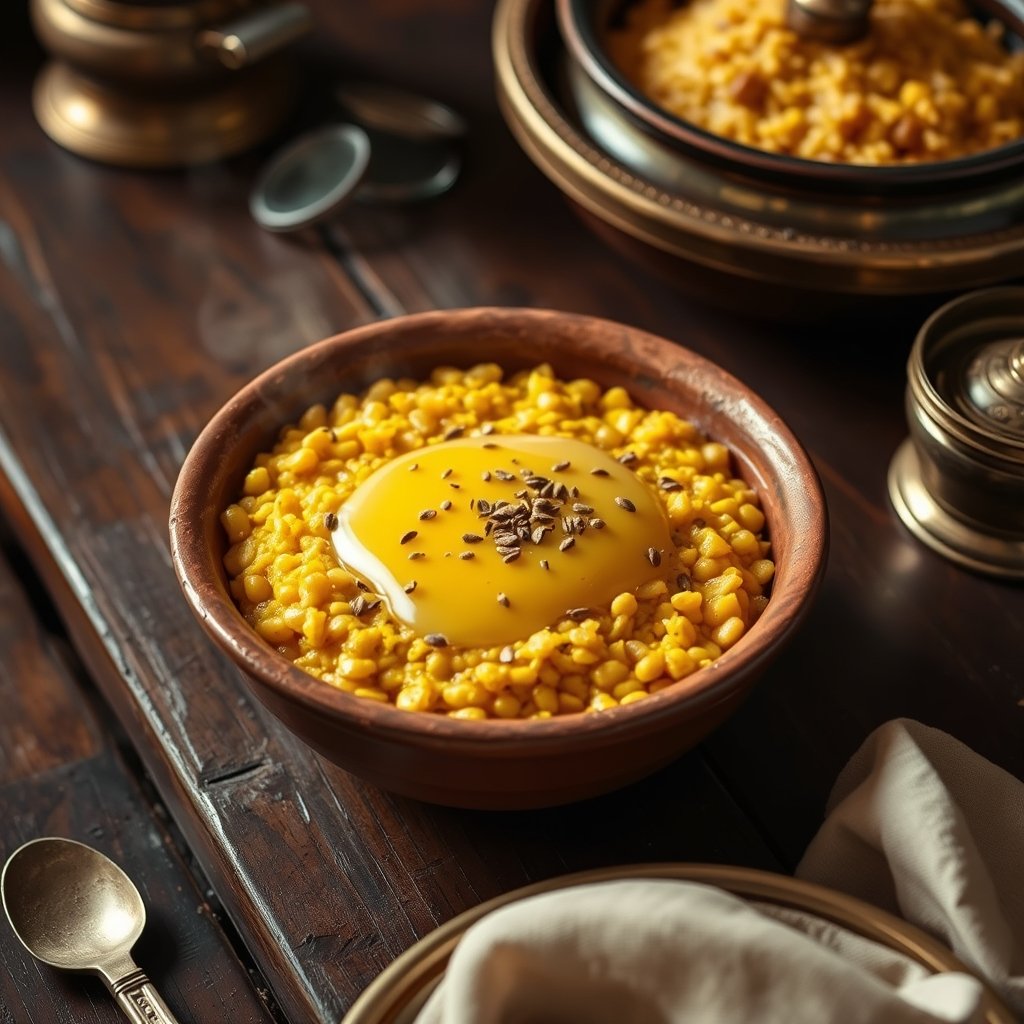 Khichdi With Ghee: The Everyday Case
Adding ghee to khichdi binds starch from rice and lentils, balances spice aromas, and provides essential fat…
