
Gud and Ghee: The Old Practice of Ending a Thali
The Corner of the Plate
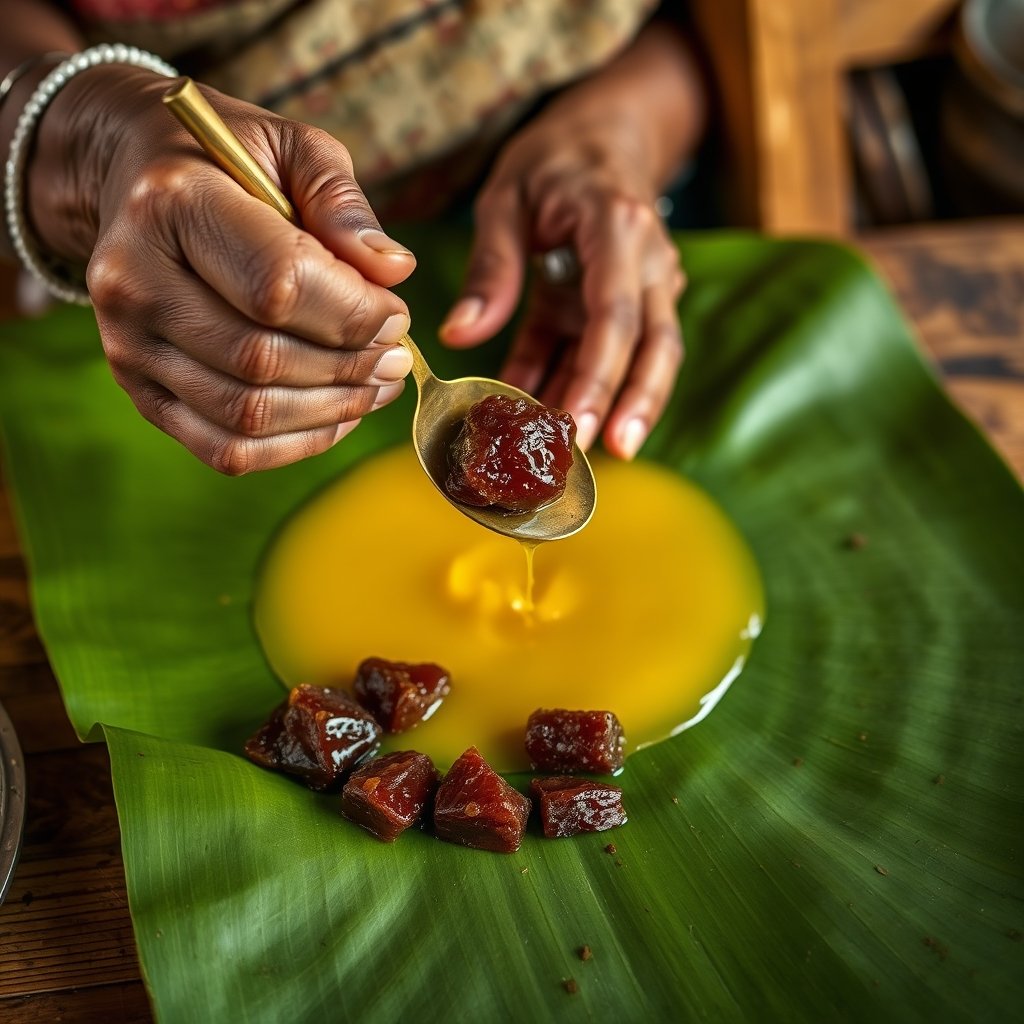
In many homes across Gujarat, Maharashtra, Rajasthan, and the northern plains, an everyday meal does not conclude with an elaborate sweetmeat. Instead, as the last roti is finished and the dal bowl sits empty, a small ritual takes place at the edge of the plate. Someone reaches for a lump of dark, unrefined jaggery, drops it onto the brass rim, and spoons a pool of warm, golden ghee directly over it. With the back of a spoon or the pad of a thumb, the two are pressed together until they yield into a soft, caramel-toned paste.
This bite has no formal name in modern restaurant culture. It is simply gud-ghee. Yet for generations, it has served as the punctuation mark of the Indian thali. Long before packaged sweets and cold puddings entered domestic kitchens, this modest pairing satisfied the natural desire for sweetness at the close of an unhurried lunch or dinner. It is fast to prepare, requires no cooking pot, and relies entirely on the integrity of two pantry staples.
The Ayurvedic Logic of the Pairing
Indian domestic cooking has always moved in step with classical Ayurvedic thought, often without the cook needing to quote a text. In traditional dietary philosophy, every meal aims to balance different tastes, or rasas. Most savoury dishes feature pungent spices, salty notes, sour tamarind or kokum, and bitter greens. Ending the sequence with something sweet (madhura rasa) is understood to ground the senses and signal to the body that nourishment is complete.
Refined white sugar offers sweetness, but tradition views it as hollow and sharp. Jaggery, by contrast, is dense, unrefined, and rich in natural molasses. It brings a mild heat and a deep, earthy warmth. Taken entirely on its own, however, raw jaggery can sometimes feel heavy or scratchy on the throat. This is where ghee enters as the balancing agent.
In Ayurvedic principles, good ghee is sweet in its post-digestive effect, cool in its fundamental energy, and unctuous (snigdha). When mashed into warm jaggery, ghee softens the sharp edges of the cane juice solids. It coats the palate, soothes the lining of the throat, and tempers the heating nature of the jaggery. The result is not an aggressive sugar spike, but a mellow, lingering warmth that feels restful rather than stimulating.
Why Bilona Ghee Makes the Difference
The success of such a simple preparation depends entirely on the character of the fat. Industrial ghee, produced by boiling raw cream separated mechanically from chilled milk, tends to have a flat aroma and a greasy aftertaste. When mixed with jaggery, it simply oils the cane sugar without truly marrying it.
Traditional bilona ghee behaves quite differently. Because it is prepared by fermenting whole A2 Gir cow milk into curd, churning that curd with a wooden bilona to collect butter (makkhan), and gently simmering that butter over a slow flame, the fat retains subtle lactic undertones and a delicate, nutty fragrance. When you blend room-temperature bilona ghee with fresh jaggery, the fine grains of the ghee suspend the jaggery crystals. The combination becomes light, fragrant, and instantly aromatic as the heat of your hand or the warmth of the plate releases its scent.
There is also a tactile pleasure here. A2 Gir cow ghee crafted through the bilona method possesses a naturally soft, crystalline texture (danedar). When crushed against sticky, pliable jaggery, it creates a comforting mouthfeel that industrial vegetable fats or neutral cooking oils could never replicate.
Regional Ways With the Same Bowl
While the combination is universal, different regions tuck it into their daily rhythms in slightly distinct ways. In rural Saurashtra, a thick, hot bajra rotla straight off the clay tava is broken into rough pieces and mashed directly into a generous hollow of gud and bilona ghee, forming an instant, rustic choori that sustains farmers through long afternoons.
In Maharashtra, a thin smear of ghee and finely grated jaggery is often rolled tightly inside a warm chapati for school-bound children or working family members who need an honest, portable bite. Further north, in Uttar Pradesh and Punjab, elders often keep a small clay pot of homemade jaggery pieces near the stove during cooler months. After the evening meal, a tiny cube is cracked open, dipped into the ghee pot, and savoured quietly while sitting away from the kitchen bustle.
Bringing the Habit Back to the Table
Recreating this habit today requires neither special skill nor advance planning. The only requirement is choosing ingredients that have not been stripped of their identity.
Look for jaggery that is dark amber to deep brown in color rather than unnaturally pale yellow, which usually indicates chemical bleaching. Soft, pliable jaggery that can be pinched with clean fingers works best, though a dry block grated finely with a knife will also soften instantly under warm ghee. Pair a walnut-sized piece of jaggery with half a teaspoon of fresh A2 Gir cow bilona ghee. Work them together directly on your plate until the mixture turns glossy and uniformly incorporated.
In a world of complicated desserts filled with stabilizers and artificial flavourings, gud-ghee remains an eloquent reminder of what home cooking used to be: modest, rooted in seasonal sense, and complete in just two clean, fragrant spoonfuls.
Taste the difference
Small-batch A2 Gir cow ghee, hand-churned to order and delivered across India. Read how we make it if you want the detail first.
Order a jarKeep reading
-
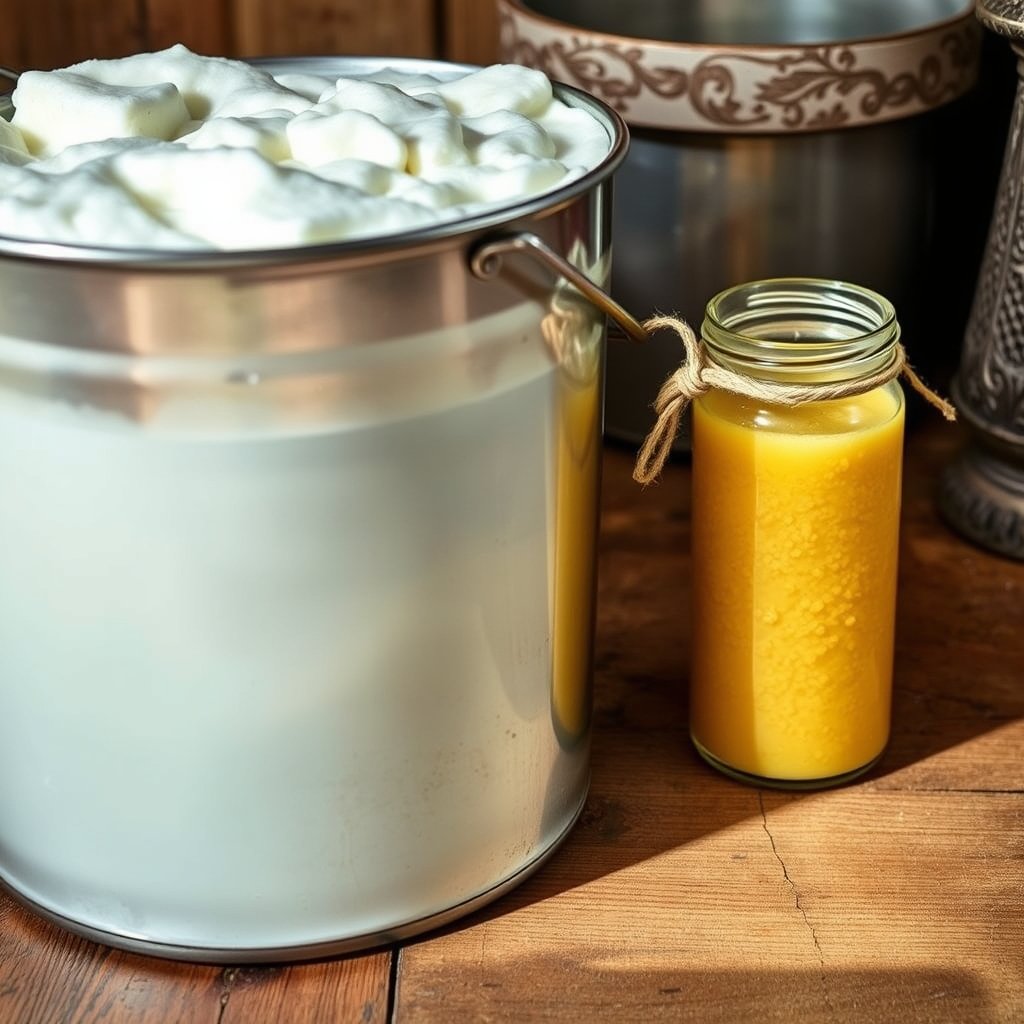 What 25 Litres of Milk Looks Like Next to One Litre of Ghee
Ever wondered about the real milk to ghee ratio? Discover why it takes 25 litres of fresh A2 Gir cow milk to…
What 25 Litres of Milk Looks Like Next to One Litre of Ghee
Ever wondered about the real milk to ghee ratio? Discover why it takes 25 litres of fresh A2 Gir cow milk to…
-
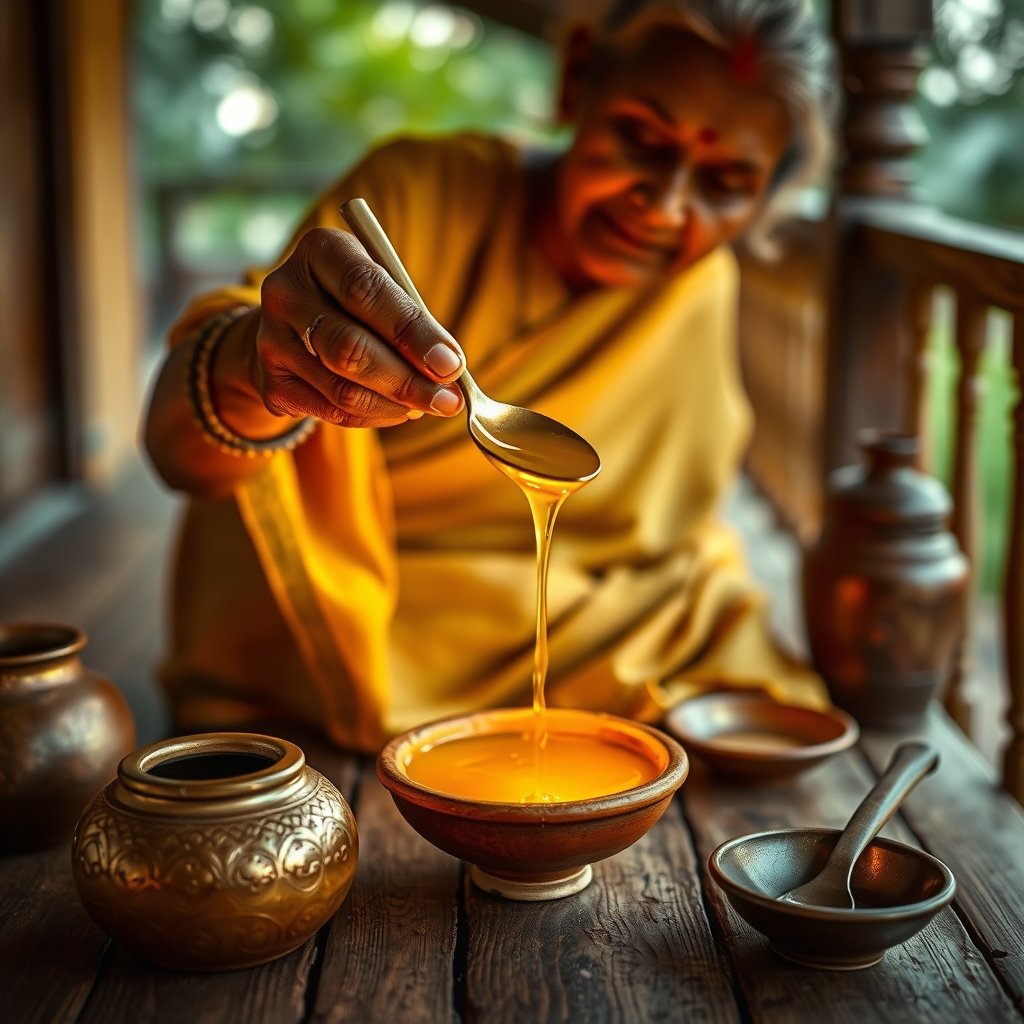 Traditional Uses of Ghee Beyond Cooking
Ghee has long been used in Indian households for applications outside of the kitchen, including massage and…
Traditional Uses of Ghee Beyond Cooking
Ghee has long been used in Indian households for applications outside of the kitchen, including massage and…
-
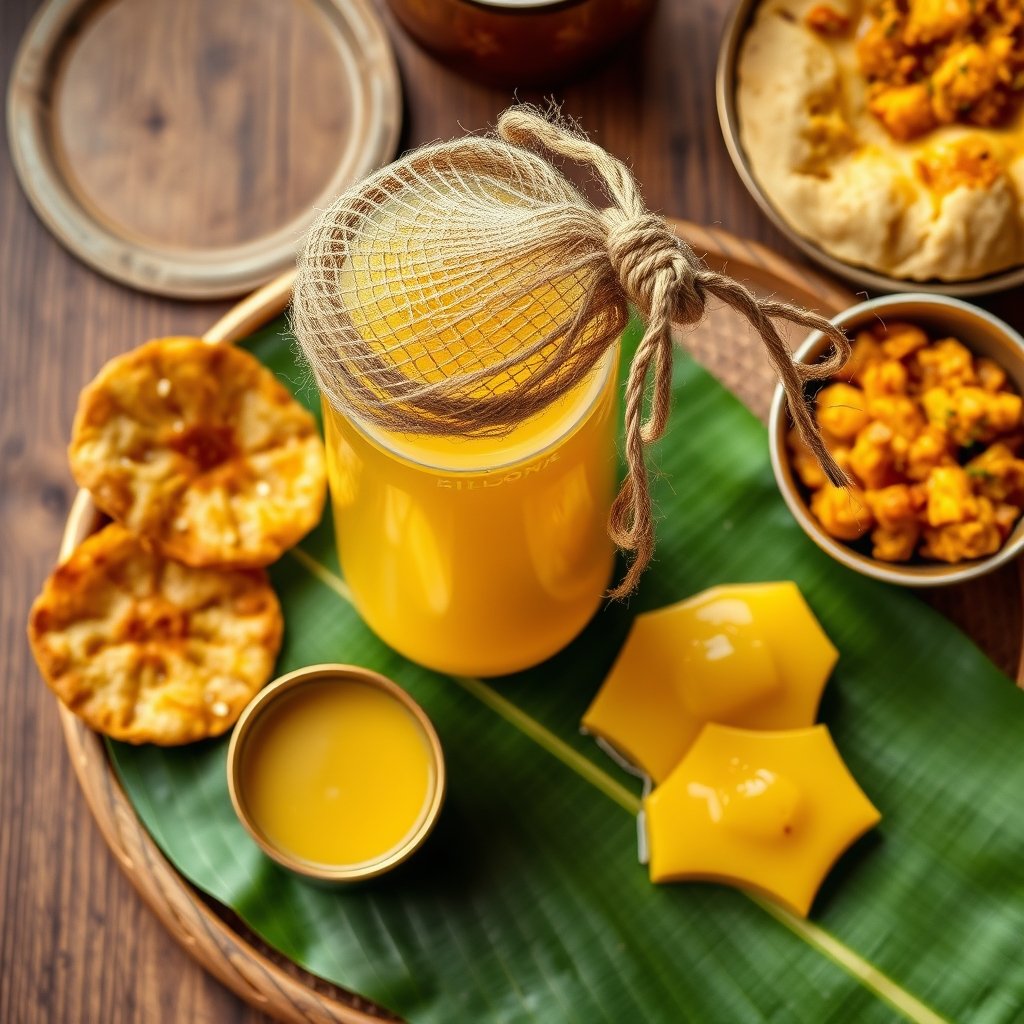 Ghee During Navratri Fasting
Discover why traditional Bilona A2 ghee is the preferred choice for Navratri fasting, how it supports your…
Ghee During Navratri Fasting
Discover why traditional Bilona A2 ghee is the preferred choice for Navratri fasting, how it supports your…