
Using Ghee in Everyday Sabzi
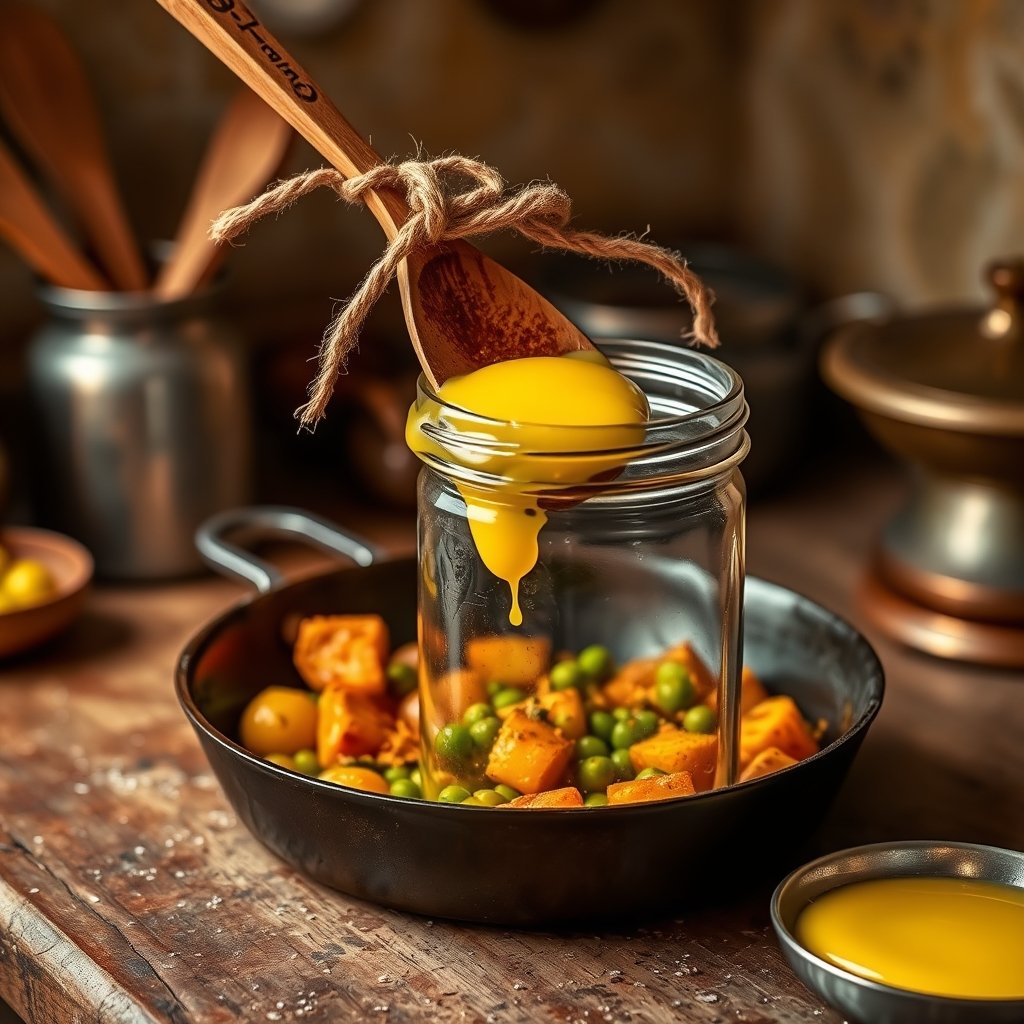
Cooking your everyday sabzi in ghee is as simple as replacing your regular cooking oil with an equal amount of A2 cow ghee during the tempering stage, which coaxes out the natural sweetness of vegetables and makes their fat-soluble nutrients more bioavailable to your body. In Indian homes, the daily gourd, cauliflower, or stir-fried okra does not require heavy spices to taste comforting. Instead, a simple spoonful of genuine bilona ghee, heated gently with cumin or mustard seeds, provides the perfect fat base that respects the natural flavors of the produce while remaining incredibly gentle on your digestive system.
Why should you use ghee for everyday sabzi?
Using ghee for your daily vegetables is an ancient Ayurvedic practice that goes far beyond mere taste. In Ayurveda, ghee is considered an anupana—a carrier medium that helps the body absorb the nutritional benefits of the herbs, spices, and vegetables cooked in it. When you cook fibrous vegetables like cabbage, beans, or raw banana in ghee, the fat coats the dietary fibers, making them softer on the stomach and easier to break down. Unlike refined oils that undergo intense chemical processing, traditional A2 Gir cow ghee is made by simmering butter obtained from churned curd (the ancient bilona method). This slow-cooked fat has a high smoke point of around 250°C, meaning it does not break down into harmful compounds when you saute your daily greens or brown your potatoes.
How do you swap oil for ghee in different types of sabzi?
The way you use ghee depends entirely on whether you are preparing a dry, crisp stir-fry (sukhi sabzi) or a comforting, stewed dish with juices (tari wali sabzi). For dry vegetables like bhindi (okra) or aloo gobhi, ghee serves as a natural lubricant that helps the vegetables brown beautifully without turning soggy. The moisture in the vegetables evaporates, leaving behind a delicate, nutty crust. For gravy-based dishes like rasedar lauki or paneer curry, ghee acts as an emulsifier. It blends with the onion-tomato masala, mellowing the sharp acidity of the tomatoes and creating a glossy, smooth gravy that does not separate on the plate.
| Aspect | Dry Sabzi (Sukhi Sabzi) | Gravy Sabzi (Tari Wali Sabzi) |
|---|---|---|
| Ghee Timing | Added at the very beginning to fry and crisp the vegetables. | Used to roast the masala paste, with an optional splash at the end. |
| Visual and Texture Goal | Crisp, distinct vegetable pieces with a golden, toasted exterior. | A cohesive, rich gravy with a thin, glossy sheen of golden fat on the surface. |
| Best Vegetable Matches | Bhindi, Karela, Aloo, Kundru, and Arbi. | Lauki, Tori, Kaddu, Paneer, and Matar. |
When should you add ghee to your sabzi?
For most everyday cooking, the best time to add ghee is at the very beginning of the process during the tadka or tempering. Because bilona ghee is free of milk solids that burn easily, you can heat it safely to splutter cumin, mustard seeds, asafoetida (hing), and green chilies. This process infuses the entire fat base with the aromatics before the vegetables enter the pan. However, there is another traditional method: finishing. If you have cooked a simple pot of boiled or steamed vegetables, tossing them with a teaspoon of raw, warm A2 ghee just before serving preserves the delicate, grassy aroma of the Gir cow milk while adding a silky mouthfeel that cannot be achieved by cooking alone.
Does ghee alter the natural taste of green vegetables?
Many home cooks worry that the rich, distinct aroma of A2 Gir cow ghee will overpower mild green vegetables like ridge gourd (tori) or round gourd (tinda). In reality, authentic bilona ghee does the exact opposite. Because it is cultured (made from curd, not cream), it has a rounded, mildly tangy depth rather than a heavy, greasy sweetness. When paired with watery, cooling vegetables, the ghee tames their blandness and balances their inherent coolness according to traditional dietary principles. Instead of hiding the vegetable's flavor, a small amount of ghee acts as a background note that binds the spices together, making even the simplest home-style gourd dish something the whole family looks forward to eating.