
Adding Ghee to Boiling Dal: It Prevents Overflow
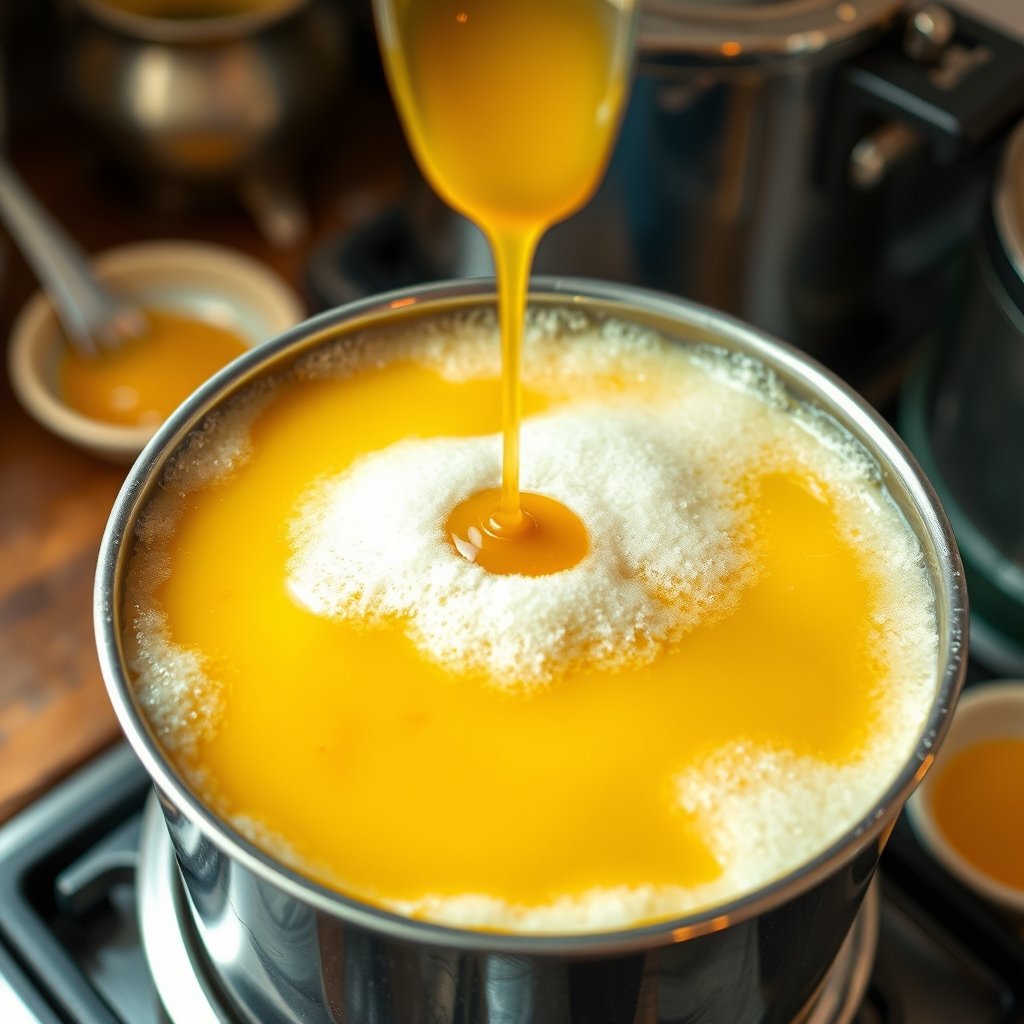
Anyone who cooks dal in an Indian home knows the familiar sound of a sputtering pressure cooker lid. A yellow, starchy froth escapes from beneath the weight valve, running down the sides of the cooker and pooling on the stove top. While wiping down the lid has become a routine chore in many kitchens, an older home remedy prevents the mess before it starts. Tossing half a teaspoon of traditional bilona ghee directly into the pot with raw lentils and water keeps the whistle clean and the liquid inside the vessel.
Why does dal froth and spill out of a pressure cooker?
Lentils, beans, and pulses contain natural proteins and complex starches alongside saponins, which are plant compounds that produce a stable foam when agitated in boiling water. As water heats under pressure inside the sealed pot, these starches gelatinise and trap rising steam bubbles. Instead of bursting at the surface, the bubbles form a thick, buoyant foam that climbs up the walls of the vessel. When the steam builds sufficient pressure to lift the whistle, this viscous froth forces its way through the narrow vent pipe, spraying starch-laden cooking water over the cooker lid and the surrounding counter.
How does adding ghee stop dal from foaming?
A small spoonful of ghee acts as an effective anti-foaming agent by altering the surface tension of the boiling water. Ghee is an anhydrous fat, meaning it contains virtually no moisture or milk solids when prepared properly by the bilona method. When added to the cooker, this pure lipid melts instantly and spreads in an ultra-thin layer across the surface of the cooking liquid. When steam bubbles rise through the water and contact this lipid film, the surface tension cannot support the bubble walls. The foam collapses immediately on contact, allowing clear steam to escape cleanly through the vent without carrying cooking liquid with it.
Does adding ghee before boiling change how dal cooks?
Adding fat during the boiling phase does more than keep the counter clean; it changes the texture of the cooked pulse. When dal boils in plain water, the skins often cook unevenly while the interiors take longer to soften. The fat in A2 Gir cow ghee lubricates the grains as they tumble under convection currents, distributing thermal energy steadily throughout the water. Legumes such as toor, masoor, and split chana break down into a softer, creamier consistency. Furthermore, the mild, nutty aroma of cultured ghee infuses into the interior of the lentil rather than remaining only as a surface dressing.
Our cows are not use and throw

A cow that stops giving milk is still our cow. She stays on the farm, with the same feed, the same shed and the same medical care she had when she was milking. We do not sell her on and we do not let her go. That is the whole basis of the ghee we make — you cannot ask an animal for her milk and then abandon her for it.
Our mission goes further than our own herd. There are cows on the street who are injured every day, who eat plastic, who cry through the night with nobody coming. We want to take them in. The plan is a chain of Organic Farmz gaushalas in several places, so that help is not one shed in one city but something a hurt animal can actually reach.
This takes more than we can carry alone — land, fodder, vets, hands. Come and join our initiative. Anything you give goes to feed, treat and shelter these cows.

Scan with any UPI app
Bank transfer
- Account name Organic Farmz
- Bank Indian Bank
- Account number 8133177322
- IFSC code IDIB000K555
- UPI ID organicfarmz@ptaxis
On a phone, the button above opens your UPI app directly — a QR on the screen you are reading cannot be scanned by that same screen. On a laptop, scan the code with your phone instead.
How does this practice connect to Ayurvedic cooking?
In classical Ayurvedic dietetics, pulses are valued for their lightness and tissue-building qualities, but they are also recognised as inherently dry, astringent, and cooling. This natural dryness, known as rooksha guna, can provoke vata dosha, leading to digestive stiffness, dryness, or intestinal gas. Ayurveda recommends countering the intrinsic dryness of ingredients by combining them with sneha, or unctuous healthy fats. Introducing cultured ghee at the initial boiling stage allows the unctuous quality to penetrate the core of the pulse during the cooking process, softening its drying nature and preparing it for smooth digestion without dulling the digestive fire, or agni.
Should you still temper your dal if ghee is added during boiling?
Adding ghee before boiling does not replace the final tadka, because both steps perform entirely different culinary functions. The ghee added into the raw pot is an emulsifying and textural agent designed to soften the pulse and calm surface froth. The final tempering, or chhonk, relies on brief, high-temperature cooking in a small pan to bloom whole spices like cumin seeds, mustard, hing, ginger, and dried chillies. High heat releases the volatile aromatic oils trapped inside those spices, which are then poured sizzling over the dal just before serving. Both uses of ghee complement each other, giving the dish depth in the base and freshness on the surface.
How much ghee should you add to the boiling pot?
You only need half a teaspoon to one teaspoon of bilona ghee for a standard family batch of dal made with one metric cup (about 200 grams) of dry lentils and three cups of water. This modest amount is sufficient to coat the surface area of a typical three- to five-litre pressure cooker. Adding more than a teaspoon to the raw water is unnecessary for preventing foam and can create an oily film on the surface before the dal has properly softened. Keep the initial measure small, let the cooker whistle cleanly, and save any additional spoonfuls of golden ghee for the finishing tadka at the table.
Taste the difference
Small-batch A2 Gir cow ghee, hand-churned to order and delivered across India. Read how we make it if you want the detail first.
Order a jarKeep reading
-
 Best Ghee for Cooking: Picking for Daily Dal and Roti
A2 Gir cow bilona ghee is best for daily dal and roti due to its 250°C smoke point and rich aroma. It stays…
-
 Ghee on Khichdi: The Traditional Ratio for Comfort Meals
One teaspoon of bilona ghee per bowl of khichdi provides the fats needed to balance the grains. This…
-
 Ghee on Stuffed Parathas: Add Just After Flipping
Applying ghee to stuffed parathas immediately after flipping on the tawa keeps the crust crispy while…
