
Ghee on Stuffed Parathas: Add Just After Flipping
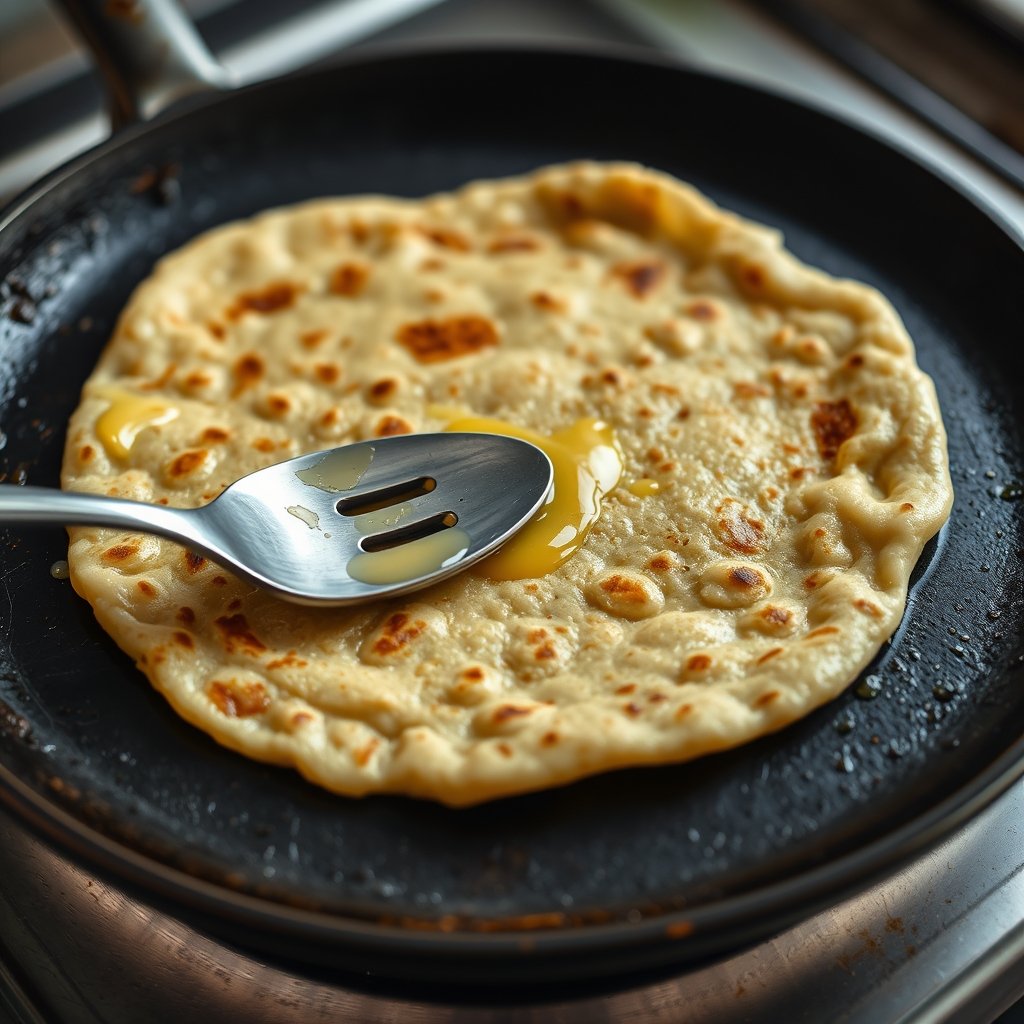
Making a stuffed paratha that is golden on the outside and soft inside relies heavily on how and when you apply cooking fat. While many home cooks spoon ghee directly onto raw dough on a cold pan, traditional Indian kitchens follow a precise sequence. Adding ghee to a stuffed paratha just after flipping the dough on a hot tawa produces a crisp exterior without rendering the bread heavy or soaked with excess fat.
Why should you add ghee to a paratha after flipping rather than raw dough?
Applying ghee to raw dough sitting on a tawa lowers the surface temperature of the pan and causes the unbaked flour to absorb fat liquidly before the dough structure has set. When unbaked dough absorbs cold fat, it turns dense and soggy rather than light and flaky. Flipping the paratha first allows the dry heat of the tawa to cook the bottom layer, creating a thin skin of cooked starch. Once you flip the flatbread, that cooked surface is ready to accept the ghee. The high heat instantly sizzles the fat across the top side, searing the surface starch and locking moisture inside the filling while preventing the raw interior from drinking up oil unnecessarily.
How does bilona ghee affect the crust of stuffed flatbreads?
Cultured bilona ghee contains milk solids that have undergone traditional lactic fermentation prior to simmering. When applied to the warm surface of a cooked paratha, these fermented solids caramelize quickly under direct heat, producing the signature golden spots and subtle nuttiness that define a well-made paratha. Traditional A2 Gir cow ghee also has a high smoke point of roughly 250 degrees Celsius, which means it will not burn or turn bitter when exposed to a searing hot skillet. Instead, it forms a light protective coat over the whole wheat crust, giving each bite an even crunch without leaving a heavy grease film on your palate.
What is the ideal flame level when cooking parathas with ghee?
Medium to high heat is essential for achieving the correct balance between a cooked filling and a crisp exterior. Cooking a stuffed paratha on a low flame dries out the whole wheat dough, resulting in a hard, chewy texture regardless of how much ghee you apply. Conversely, an excessively hot flame burns the outer surface before the filling inside warms through. Maintaining a steady medium flame ensures that the moisture within spiced potato, paneer, or radish fillings generates steam. This internal steam gently expands the dough layers from within while the ghee crisping the outer skin creates contrast.
Our cows are not use and throw

A cow that stops giving milk is still our cow. She stays on the farm, with the same feed, the same shed and the same medical care she had when she was milking. We do not sell her on and we do not let her go. That is the whole basis of the ghee we make — you cannot ask an animal for her milk and then abandon her for it.
Our mission goes further than our own herd. There are cows on the street who are injured every day, who eat plastic, who cry through the night with nobody coming. We want to take them in. The plan is a chain of Organic Farmz gaushalas in several places, so that help is not one shed in one city but something a hurt animal can actually reach.
This takes more than we can carry alone — land, fodder, vets, hands. Come and join our initiative. Anything you give goes to feed, treat and shelter these cows.

Scan with any UPI app
Bank transfer
- Account name Organic Farmz
- Bank Indian Bank
- Account number 8133177322
- IFSC code IDIB000K555
- UPI ID organicfarmz@ptaxis
On a phone, the button above opens your UPI app directly — a QR on the screen you are reading cannot be scanned by that same screen. On a laptop, scan the code with your phone instead.
How much ghee should you use per stuffed paratha?
Using half a teaspoon of ghee per side—a total of one teaspoon per stuffed paratha—is sufficient to achieve a crisp crust and rich flavor. Because traditionally churned A2 ghee possesses a concentrated aroma and rich texture, a small quantity covers the surface area effectively. Spreading the fat thinly with the back of a spoon or a wooden spatula allows the pan heat to shallow-fry the micro-ridges of the whole wheat dough uniformly. Excessive ghee pools on the cast iron surface and smokes unnecessarily, whereas a thin spread delivers the ideal texture while keeping the meal light and digestible.
Does using A2 Gir cow ghee change the aroma of hot parathas?
The natural aroma of traditional A2 Gir cow ghee comes from cultured curds made from raw milk, which releases complex nutty and roasted notes when heated on a pan. When smeared over a freshly toasted paratha, the heat releases these aromatic compounds immediately, mingling with kitchen spices like roasted cumin, carom seeds, and amchur inside the filling. This warm scent is a hallmark of traditional Indian breakfast cooking, enhancing the sensory appeal of simple whole grains and fresh herbs without overpowering the natural flavors of the filling.
How should you store leftover parathas brushed with ghee?
If you plan to store cooked parathas for a few hours, wrap them in a clean cotton cloth or place them inside a ventilated stainless steel container immediately after taking them off the tawa. Avoid sealing warm parathas directly in plastic containers or tight foil without a fabric lining, as trapped condensation makes the ghee-slicked crust soggy. The cotton cloth absorbs excess steam while keeping the outer layer tender. Reheating the parathas on a hot dry tawa for thirty seconds on each side will restore their original crisp texture without requiring any additional ghee.
Taste the difference
Small-batch A2 Gir cow ghee, hand-churned to order and delivered across India. Read how we make it if you want the detail first.
Order a jarKeep reading
-
 Ghee for Parathas: How Much and When to Add It
Discover the ideal amount of ghee to use for parathas and exactly when to apply it for the perfect balance…
-
 Adding Ghee to Boiling Dal: It Prevents Overflow
A single teaspoon of bilona ghee breaks surface tension to stop dal from frothing through the pressure…
-
 Gift for Someone Who Cooks Seriously: Choose Pure Fat
An exceptional cooking fat like bilona A2 cow ghee makes the ideal gift for a serious cook because skilled…
