
Ghee for Parathas: How Much and When to Add It
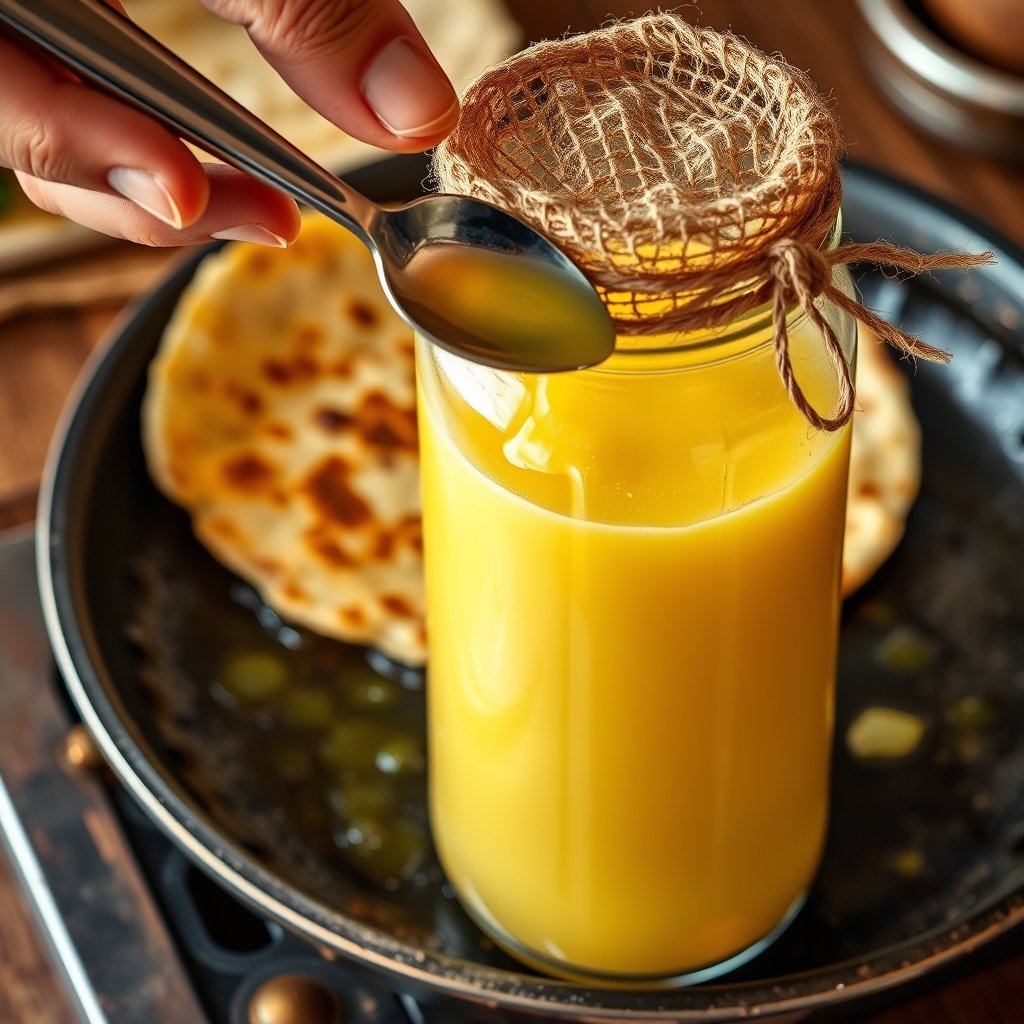
For a single, perfectly flaky paratha, you need about one to one and a half teaspoons of ghee, applied both inside the folds during rolling and on the hot tawa during roasting.
The paratha is a cornerstone of Indian home cooking. Whether it is a lazy Sunday morning breakfast or a quick weekday dinner, the satisfaction of a warm, layered paratha is hard to match. However, getting that perfect balance of a crisp exterior and soft, flaky layers inside requires a bit of technique. If you apply the ghee at the wrong time or use the wrong quantity, you can end up with a flatbread that is either dry and chewy or excessively greasy. Understanding how fat interacts with wheat dough on the hot griddle is the key to mastering this kitchen staple.
When is the best time to apply ghee to a paratha?
Applying ghee to a paratha is a two-stage process that directly influences the final texture. The first application happens on the rolling board, and the second happens on the hot tawa. You should never skip the first step or rush the second.
The first application occurs during the rolling process. After rolling out a small ball of whole wheat dough into a circle, you spread a thin layer of A2 Gir cow ghee across the surface. When you fold the dough—whether you are making a triangular paratha, a square one, or pleating it for a layered laccha paratha—the thin layer of ghee keeps the layers of dough separate. As the paratha cooks on the hot griddle, the natural moisture in the dough turns to steam, causing these layers to puff up and separate, creating a beautiful flaky crumb.
The second application happens on the tawa, but timing is crucial here. You should always wait to apply ghee until the paratha has been partially dry-cooked on both sides. If you put raw dough onto a tawa already slick with ghee, the uncooked flour will absorb the fat immediately, resulting in a heavy, soggy flatbread. Instead, place the rolled dough on a dry, hot tawa. Let it cook for about thirty seconds until tiny bubbles appear, flip it over, and let the other side cook until light brown spots form. Only then should you spoon the ghee over the surface and around the edges, pressing down gently with a wooden spatula to crisp the outer layers.
How do inside folding and surface roasting compare?
To understand why both steps are necessary for the perfect Indian flatbread, let us look at how ghee behaves during each stage of cooking.
| Stage of Application | Primary Purpose | Ghee Quantity Needed | Effect on Final Texture |
|---|---|---|---|
| Inside the folds (Rolling stage) | Separates the dough layers during rolling | About 1/2 teaspoon per paratha | Creates a soft, flaky, and layered interior |
| On the tawa (Roasting stage) | Toasts the outer starch of the dough | About 1/2 to 1 teaspoon total | Produces a crisp, golden-brown outer crust |
How much ghee should you use per paratha?
The exact amount of ghee depends on whether you are making a plain layered flatbread or a stuffed variety like aloo, gobhi, or paneer paratha. For a standard plain layered paratha, one to one and a half teaspoons is ideal. This is distributed as half a teaspoon for the inner layers during rolling, and about half a teaspoon divided between the two sides while roasting on the tawa.
Stuffed parathas, which are thicker and contain moist fillings, require slightly more ghee to cook through properly and keep the outer wheat layer tender. For stuffed parathas, one and a half to two teaspoons per paratha ensures that the thick edges are thoroughly cooked and do not remain dry or chewy. Traditional Indian home cooking relies on this balance—using just enough pure fat to assist heat transfer through the dense whole wheat dough without letting it pool heavily on the plate.
Why does bilona A2 Gir cow ghee make parathas taste different?
When you use traditional bilona A2 Gir cow ghee, the flavour and texture of your parathas are entirely different from those made with vegetable oils or mass-produced, cream-separated butter. Bilona ghee is made using the ancient curd-churning method. Whole milk from Gir cows is boiled, cooled, and converted into curd. This curd is then churned using a wooden bilona to obtain butter (makkhan), which is slowly heated to separate the milk solids.
This traditional process preserves the delicate, nutty aroma compounds that bloom beautifully when the ghee hits the hot iron tawa. Because A2 Gir cow ghee has a naturally high smoke point of around 250 degrees Celsius, it does not burn or break down easily on the hot griddle. Instead, it toasts the outer starch of the whole wheat flour to a perfect golden brown, releasing a rich, comforting fragrance that fills the kitchen and makes the parathas stay soft for hours, even after they have cooled down.
What does ayurveda say about combining ghee and whole wheat?
In ayurvedic kitchen wisdom, whole wheat flour is considered heavy, dry, and slightly cooling. Cooking it without a source of healthy fat can sometimes make the flatbreads hard to digest, leading to dryness in the digestive tract. Incorporating a small amount of pure desi ghee acts as a natural lubricant.
According to ayurvedic principles, ghee serves as an excellent vehicle that helps the body assimilate the nutrients in the wheat. The gentle warmth and moisture of ghee balance the dry quality of the grain, making the parathas soft, moist, and much easier on the stomach. Using hand-churned, cultured bilona ghee further enhances this digestive harmony because the curd-churning process makes the fat lighter and easier for the body to break down, ensuring you feel light and energized after your meal.