
Ghee in Monsoon Cooking: Balancing Dampness and Digestion
How does the monsoon affect the body's internal fire?
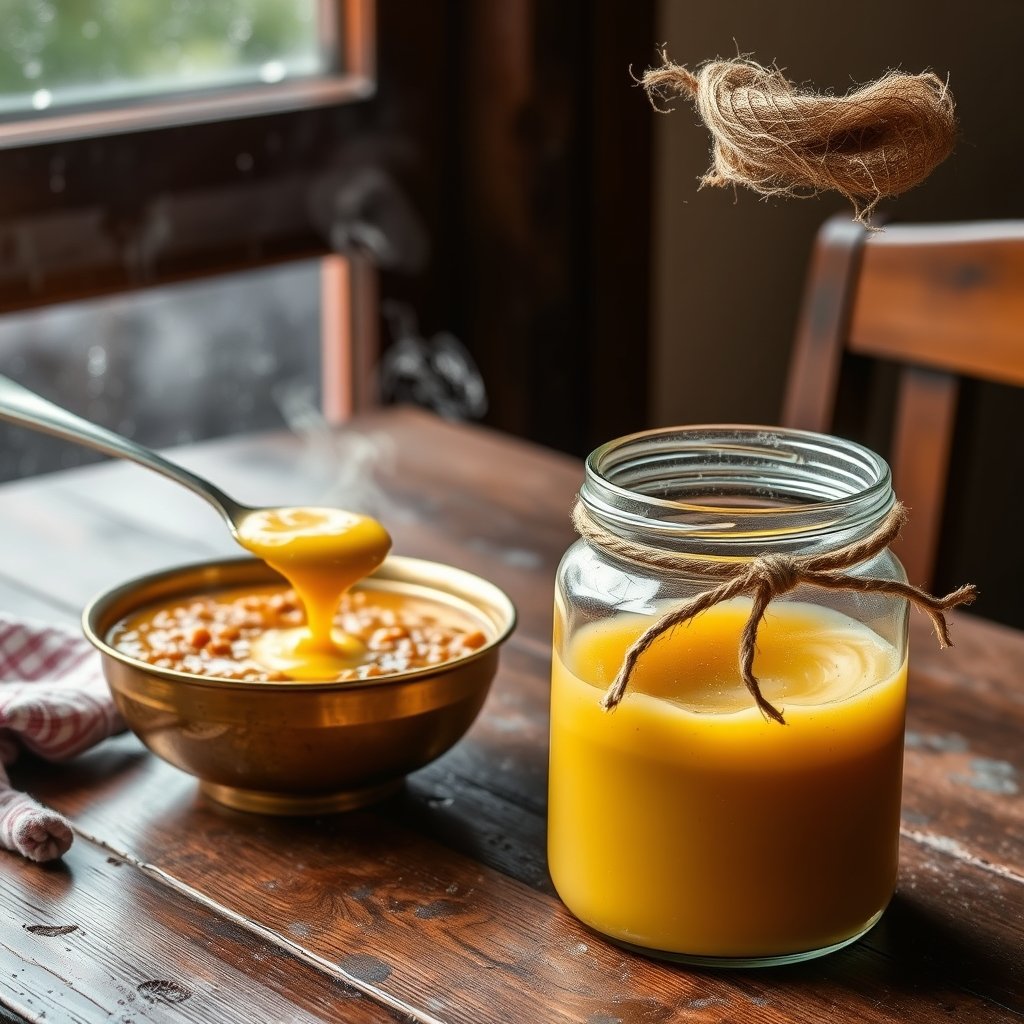
In the traditional calendar, the monsoon or Varsha Ritu brings a significant shift in the environment. As the heat of summer breaks and the humidity rises, the external cooling effect of the rain often contrasts with the dampness in the air. According to Ayurvedic principles, this transition period can weaken the 'Agni' or the digestive fire. When the atmosphere is heavy with moisture, the body's ability to process food can become sluggish. This is why Indian home cooking traditionally shifts during these months, moving away from the cooling, hydrating foods of summer toward items that provide gentle internal warmth. A2 Gir cow ghee plays a vital role here, acting as a steady fuel that helps the digestive system maintain its strength without causing the excessive internal heat that refined oils might trigger.
Why is bilona ghee considered a grounding fat in humid weather?
Bilona ghee, made by the traditional method of churning curd into butter, contains a different structural integrity than industrially processed fats. During the monsoon, the air is often described as 'Vata-aggravating'—a term used in Ayurveda to describe the cool, mobile, and erratic nature of the wind and rain. To balance this, the kitchen requires 'Snehana' or lubrication that is grounding and stabilizing. The richness of Gir cow ghee provides a dense, nourishing quality that counters the lightness and dampness of the rainy season. Unlike cold oils or heavy cream, bilona ghee is clarified to a point where it is easily integrated into warm meals, providing the body with the lipids it needs to maintain energy levels when the gloomy weather might otherwise lead to lethargy.
Which spices should be tempered in ghee during the rains?
Tempering, or the 'tadka,' is the heart of an Indian kitchen, and its composition changes with the clouds. During the monsoon, the choice of spices focused on clearing the respiratory tract and boosting the metabolic rate. When you heat a spoonful of bilona ghee, it serves as the perfect carrier for fat-soluble compounds in spices. Black pepper, dried ginger (sunthi), and long pepper (pippali) are excellent choices for monsoon tempering. The ghee helps to mellow the sharp bite of these spices, ensuring they do not irritate the stomach lining while still delivering their warming benefits. Adding a pinch of ajwain (carom seeds) to ghee-tempered dals during the rains is a common practice to help prevent the bloating that often accompanies humid weather.
Our cows are not use and throw

A cow that stops giving milk is still our cow. She stays on the farm, with the same feed, the same shed and the same medical care she had when she was milking. We do not sell her on and we do not let her go. That is the whole basis of the ghee we make — you cannot ask an animal for her milk and then abandon her for it.
Our mission goes further than our own herd. There are cows on the street who are injured every day, who eat plastic, who cry through the night with nobody coming. We want to take them in. The plan is a chain of Organic Farmz gaushalas in several places, so that help is not one shed in one city but something a hurt animal can actually reach.
This takes more than we can carry alone — land, fodder, vets, hands. Come and join our initiative. Anything you give goes to feed, treat and shelter these cows.

Scan with any UPI app
Bank transfer
- Account name Organic Farmz
- Bank Indian Bank
- Account number 8133177322
- IFSC code IDIB000K555
- UPI ID organicfarmz@ptaxis
On a phone, the button above opens your UPI app directly — a QR on the screen you are reading cannot be scanned by that same screen. On a laptop, scan the code with your phone instead.
How does ghee help with the absorption of seasonal foods?
The rainy season brings a specific bounty of produce, including various gourds and early leafy greens. However, these vegetables can be naturally cooling or 'Sheetal' in nature. When these vegetables are cooked with a small amount of A2 Gir cow ghee, the fat helps the body absorb the fat-soluble vitamins—specifically A, D, E, and K—that are present in the fresh harvest. Furthermore, the bilona method preserves the natural essence of the milk fat, which helps in softening the fibrous texture of monsoon vegetables. This makes the meal easier for a dampened digestive system to break down, ensuring that the nutrition of the seasonal harvest is actually utilized by the body rather than passing through undigested.
What are the best ways to serve ghee with monsoon comfort foods?
Monsoon comfort food in India is often synonymous with steaming bowls of khichdi or hot, crispy snacks. While deep-frying in ghee is a traditional luxury, a more common daily practice is the 'upari' or top-dressing of ghee. A hot bowl of moong dal khichdi, served with a generous dollop of A2 ghee, provides a balanced meal that is easy on the gut. For those who enjoy rainy-day snacks like roasted corn (bhutta) or steamed sprouts, a light brush of melted ghee along with black salt and lemon can make these snacks more satisfying and easier to digest. Even the simple ritual of adding a teaspoon of ghee to a warm cup of herbal decoction or 'kadha' is a known practice to soothe a throat irritated by the damp air.
How can you protect your ghee from moisture during high humidity?
The high moisture content in the air during the rainy season poses a challenge for pantry storage. Ghee is anhydrous, meaning it contains almost no water, which is why it has a long shelf life. However, if steam from the stove or humidity from the air enters the jar, it can lead to spoilage or a change in the characteristic danedaar texture. During the monsoon, it is essential to keep your ghee jar tightly sealed when not in use. Always use a completely dry spoon; even a single drop of water from a recently washed spoon can introduce moisture that allows mold to grow. Storing the jar in a dry, dark cupboard rather than on the humid countertop near the sink or stove will help maintain the fresh, nutty aroma of the bilona ghee throughout the season.
Does the quality of milk change during the rainy season?
The cows themselves respond to the changing seasons. As the monsoon arrives, the pastures often turn lush and green with fresh grass. For Gir cows that are allowed to graze, this change in diet can subtly alter the profile of the milk. The ghee produced during these months may have a slightly different hue or a more pronounced earthy aroma compared to the ghee made during the dry summer months. This is a natural occurrence in small-batch, traditional production. At Organic Farmz, we respect these seasonal cycles, understanding that the ghee is a reflection of the cow's health and the environment. Using this seasonally-aware ghee in your monsoon kitchen connects your daily meals to the natural rhythm of the Indian landscape, providing nourishment that is in harmony with the weather outside your window.
Taste the difference
Small-batch A2 Gir cow ghee, hand-churned to order and delivered across India. Read how we make it if you want the detail first.
Order a jarKeep reading
-
 Ghee in Ritucharya: Eating With the Seasons
Discover how the traditional practice of Ritucharya uses A2 Gir cow bilona ghee to balance the body through…
-
 Ayurvedic View on Cultured Ghee and Agni
Classical Ayurveda holds a unique view on cultured cow ghee: while most cooking fats dampen digestive fire…
-
 Ghee and Digestion: What Tradition Claims and What Is Known
Ghee has been used in Indian kitchens for centuries to make meals easier to digest. Here is a clear look at…
