
How Much Ghee Goes Into a Roti
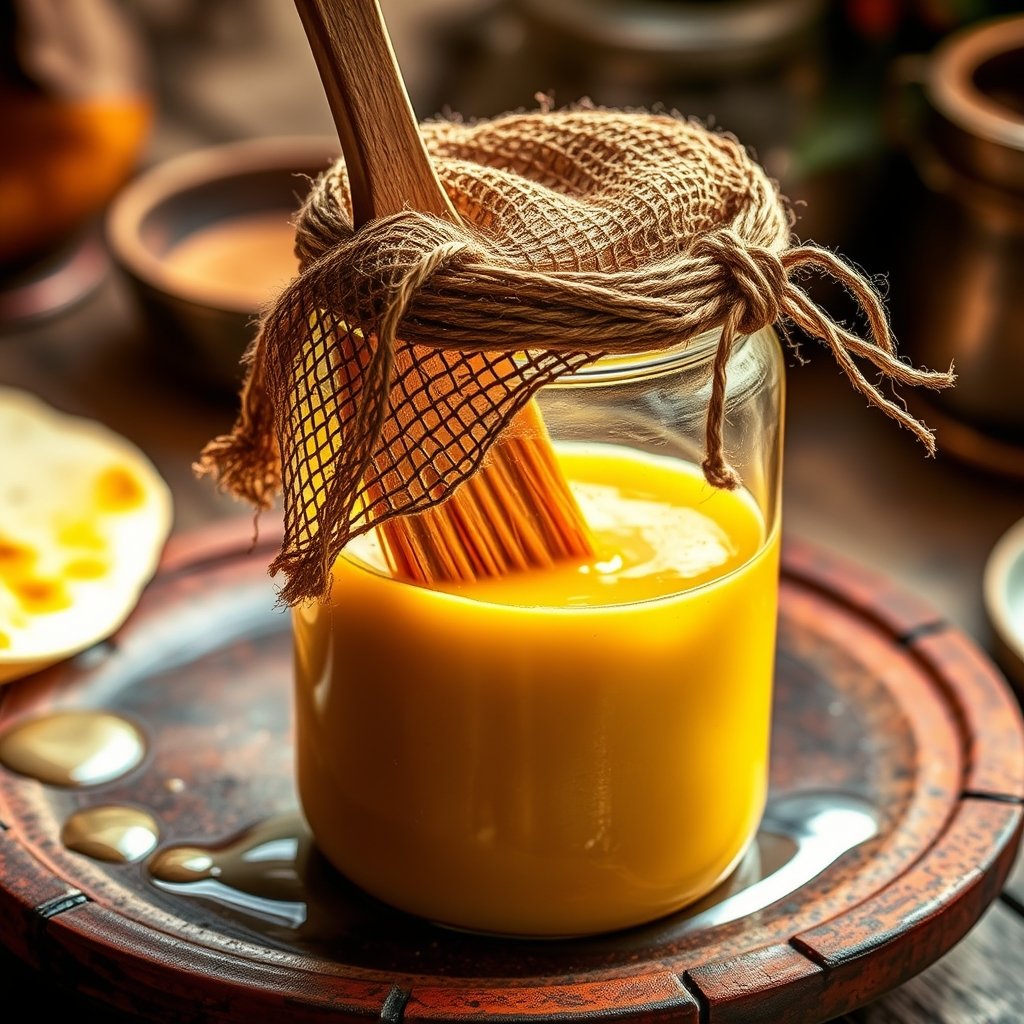
A single everyday roti needs about half a teaspoon to one full teaspoon (2.5 to 5 millilitres) of warm ghee spread across its surface to keep it soft and fragrant without making it greasy. For a regular home-cooked meal, this small amount provides just enough moisture to coat the top layer without overpowering the gentle flavour of the toasted wheat. The exact quantity can vary depending on whether the flatbread is meant to be eaten immediately at the dining table, packed into a tiffin box for work or school, or made from dense winter grains like bajra or makki that naturally absorb more fat to remain pliable.
How Does Ghee Change the Texture and Keeping Quality of a Roti?
When you smear a small portion of ghee over a freshly puffed phulka, the residual heat instantly melts the fat, allowing it to seep into the outer layers of the grain. This thin layer acts as a natural seal against moisture loss. Without any fat, the steam trapped inside a freshly cooked chapati escapes rapidly into the room, causing the outer crust to turn papery and stiff within twenty minutes. A light coating of ghee retains that internal hydration, ensuring the roti remains supple, flexible, and easy to tear even hours later at room temperature. This simple kitchen practice is the reason tiffin chapatis in traditional Indian households are always greased right off the stove.
When Should You Apply Ghee to Your Flatbread?
Timing is just as critical as quantity when it comes to greasing a roti. Applying ghee the moment the phulka comes off the direct flame or tawa yields the best results because the open grain structure of the hot dough absorbs the liquid fat immediately. Waiting until the roti cools creates a greasy film on top rather than a seamless absorption into the bread.
Some home cooks also like to work a teaspoon of ghee directly into the dry whole wheat flour while kneading the dough, a practice known as adding moin. This creates a softer crumb throughout the entire flatbread. However, for everyday phulkas, brushing a measured half teaspoon across the top surface right after cooking delivers the ideal balance of rich fragrance and light texture without making the dough heavy to handle.
How Much Ghee Do Different Types of Indian Rotis Need?
Not all flatbreads carry fat in the same way. A thin, air-puffed wheat phulka requires only a light touch, whereas rustic millet flours lack gluten and need extra fat to bind their crumb and stay tender on the plate.
| Property | Light Everyday Smear (Wheat Phulka) | Generous Winter Spread (Bajra or Makki Roti) |
|---|---|---|
| Amount per Roti | 0.5 to 1 teaspoon (2.5 to 5 ml) | 1 to 2 teaspoons (5 to 10 ml) |
| Grain Texture | Fine whole wheat flour with natural elasticity | Coarse, gluten-free grain with a dry crumb |
| Application Timing | Immediately after puffing off direct flame | While steaming hot on the tawa or serving plate |
| Primary Function | Seals steam inside, prevents drying in tiffins | Moistens dense grain, softens coarse edges |
| Visual Finish | Sheer golden sheen, fully absorbed | Rich glossy coat that slowly seeps inward |
Why Does A2 Gir Cow Bilona Ghee Elevate the Simple Roti?
Because a plain chapati has no bold spices or heavy gravies to mask its ingredients, the quality of fat you use is immediately noticeable. A2 Gir cow ghee made using the traditional bilona churn method brings a distinct, nutty fragrance and a warm granular texture that melts effortlessly over hot bread. In the traditional bilona process, whole milk curd is hand-churned to yield cultured butter, which is then slow-cooked over a low flame. This gentle method preserves delicate aromatic compounds and milk solids that release an inviting smell the second the ghee touches a hot phulka. In Ayurvedic kitchen tradition, combining simple grain flatbreads with small portions of pure cultured ghee is cherished as a balanced, comforting foundation for daily living.
How Can You Tell If You Are Using the Right Amount of Ghee?
Judging the correct amount comes down to a quick visual and tactile check after serving. If your fingers feel excessively slick or wet after breaking off a piece, you have applied slightly too much. On the other hand, if the edges of the chapati begin to curl up, feel crusty, or snap like cardboard within fifteen minutes, the roti was under-greased or coated after it had already lost its steam. A properly greased roti should show a delicate, golden-tinged sheen across one side, feel moist and pliable to touch, and leave only a gentle, warm aroma on your hands.