
Ghee in Indian Skincare Tradition
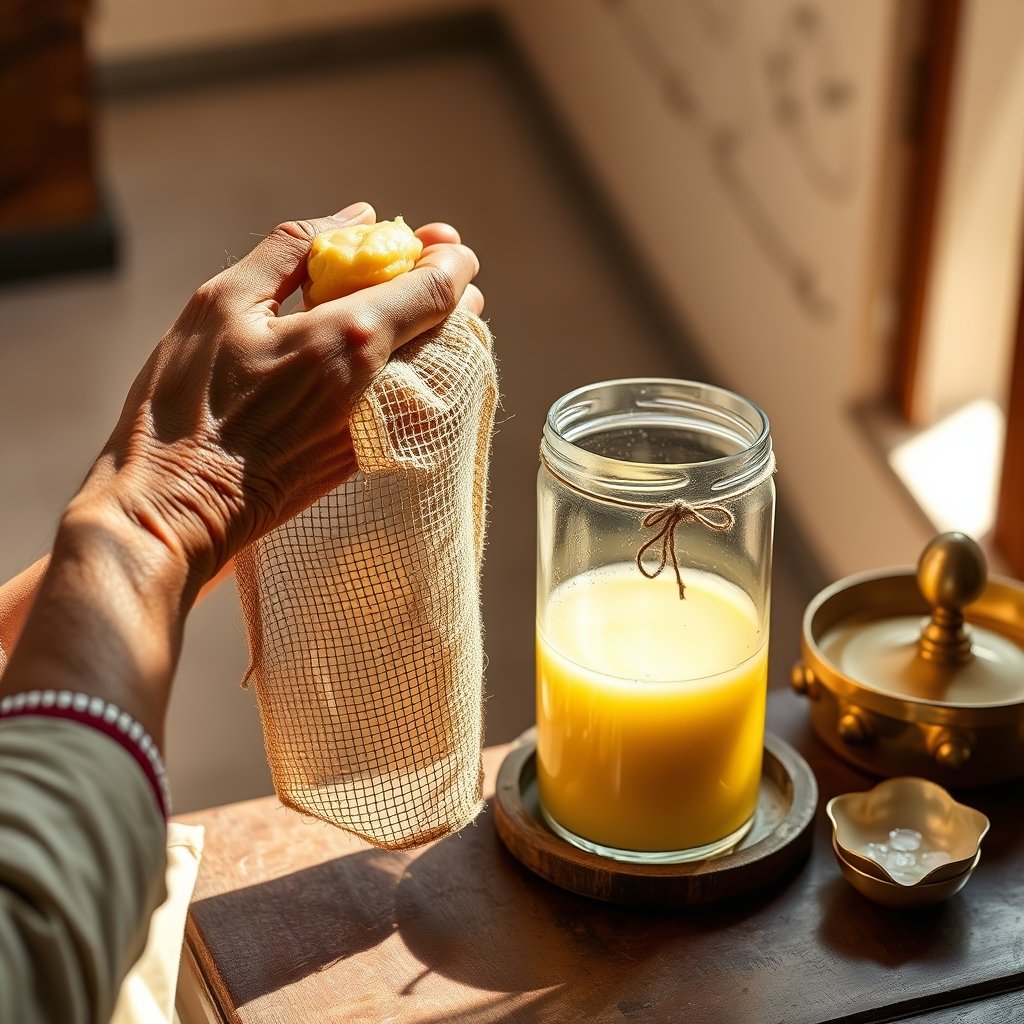
In Indian skincare tradition, ghee is applied topically as a rich natural moisturiser to soften dry skin, soothe chapped lips, and help lock in surface hydration after washing.
For generations across Indian households, the brass or glass jar of ghee sitting near the stove was not strictly reserved for tempering dal or brushing over hot rotis. A tiny dab from that same jar often doubled as an immediate home remedy for winter-chapped lips, dry elbows, or rough heels. In classical Ayurvedic texts, ghee (referred to as ghrita) is valued as one of the finest natural lipids for nourishing dry skin tissues, providing a smooth protective barrier, and acting as a base for herbal skin preparations.
When made through the traditional bilona churned-curd method using milk from A2 Gir cows, ghee retains its soft grain and clean fatty acid composition. While cooking remains its main purpose, understanding how this golden fat found a secondary place in traditional Indian skincare offers a grounded look at the sensible, non-wasteful wisdom of traditional homes.
How Has Ghee Been Traditionally Used for Skin in Indian Homes?
Long before commercial lotions became everyday household items, Indian domestic skin care relied on pure fats readily available in the kitchen. Ghee was favoured because it is almost entirely anhydrous—meaning it contains virtually no water—allowing it to act as an effective occlusive seal on the surface of the skin.
In everyday practice, families used ghee for skin care in several practical ways:
- Lip Care: Before going to sleep, a single droplet of ghee rubbed between clean fingertips and pressed onto dry lips helped prevent night-time moisture loss, especially during harsh northern winters.
- Softening Rough Joints and Heels: Knees, elbows, and cracked heels were routinely massaged with warm ghee after a bath. The rich fat layer softened hardened skin over time through consistent daily lubrication.
- Infant Body Massage (Abhyanga): In many regional traditions, newborn babies were gently massaged with lukewarm ghee or ghee mixed with mild herbal extracts during colder months to nourish delicate skin and keep their limbs warm.
- Protecting Over-Washed Hands: Hands worn rough from household washing or handling cold water were lightly oiled with ghee to restore a comfortable, soft feel to the skin.
What Is Shata Dhruta Ghrita in Traditional Ayurveda?
While applying plain kitchen ghee directly to dry skin is a simple home custom, Ayurvedic practice describes a specialized topical preparation known as Shata Dhruta Ghrita. The name translates literally to "ghee washed a hundred times."
To make this traditional skin cream, pure cow ghee is combined with cool water inside a flat copper vessel and whipped rhythmically by hand using a wooden or copper bowl. The water is drained off and replaced repeatedly through roughly one hundred wash cycles. As the ghee undergoes this extensive churning with water in the presence of trace copper, its structure transforms completely. The dense, yellow oil turns into a light, silky, bright white cream with a smooth, cooling emulsion texture.
This washed ghee was traditionally used as a soothing paste for sun-exposed skin, minor heat rashes, and delicate facial areas. The washing process removes the heavy, greasy feeling of pure fat, making it far lighter and easier for the skin to absorb.
How Does Plain Ghee Compare to Washed Ghee?
Comparing raw kitchen ghee with traditionally washed ghee helps clarify how each form served a different place in home care routines.
| Attribute | Plain Bilona Ghee | Washed Ghee (Shata Dhruta Ghrita) |
|---|---|---|
| Preparation | Directly melted cultured butter from A2 milk | Ghee whipped with cold water 100 times in a copper dish |
| Texture | Semi-solid, slightly grainy, melts with body heat | Silky, light, whip-like white cream |
| Skin Feel | Heavy, occlusive, slow to absorb | Cooling, lightweight, absorbs quickly |
| Common Traditional Use | Chapped lips, cracked heels, winter baby massage | Soothing delicate facial skin, sunburn, heat rashes |
| Storage Profile | Long shelf life at room temperature | Higher moisture content; best kept cool and used fresh |
How Can You Apply Ghee to Your Skin at Home?
If you wish to explore traditional ghee-based skin care using a jar of pure A2 Gir cow bilona ghee, simplicity is the best approach. A tiny amount goes a long way because pure ghee is concentrated lipid.
1. Apply on Damp Skin: The most effective way to use plain ghee on the face or body is immediately after washing, while your skin still holds surface water. Rub a droplet smaller than a grain of rice between warm palms and gently press it onto damp skin to trap that moisture underneath.
2. Overnight Foot Treatment: Wash your feet with warm water, pat them dry, and massage a generous layer of ghee into cracked heels. Put on clean cotton socks before bed to protect your sheets and let the ghee soften the thick skin overnight.
3. Natural Lip Balm: Keep a small, clean glass container of pure bilona ghee on your nightstand. Dab a trace amount on dry lips morning and night to keep them soft and protected against wind-burn.
What Should You Keep in Mind Before Applying Ghee to Your Face?
While ghee has a long history of safe domestic use, modern skin types vary, and thoughtful application is essential. Because ghee is rich in saturated fatty acids, it acts as a strong occlusive. On naturally oily or acne-prone facial skin, applying heavy layers of pure fat can trap sebum and clog pores. If your face breaks out easily, keep plain ghee away from your T-zone and restrict its use to targeted dry spots like the lips, elbows, or cuticles.
Always ensure that any ghee you put on your skin is completely pure, unadulterated, and free from added salt, spices, or artificial aromatic compounds. Authentic A2 bilona ghee churned from curd provides a naturally sweet, clean scent and a soft texture suitable for traditional home care.
Taste the difference
Small-batch A2 Gir cow ghee, hand-churned to order and delivered across India. Read how we make it if you want the detail first.
Order a jarKeep reading
-
 Ghee for Hair in Indian Tradition
Discover how traditional Indian households have used ghee for hair conditioning, scalp massages, and dry…
Ghee for Hair in Indian Tradition
Discover how traditional Indian households have used ghee for hair conditioning, scalp massages, and dry…
-
 Ghee and Digestion: What Tradition Claims and What Is Known
Ghee has been used in Indian kitchens for centuries to make meals easier to digest. Here is a clear look at…
Ghee and Digestion: What Tradition Claims and What Is Known
Ghee has been used in Indian kitchens for centuries to make meals easier to digest. Here is a clear look at…
-
 Ghee During Navratri Fasting
Discover why traditional Bilona A2 ghee is the preferred choice for Navratri fasting, how it supports your…
Ghee During Navratri Fasting
Discover why traditional Bilona A2 ghee is the preferred choice for Navratri fasting, how it supports your…