
Ghee for Hair in Indian Tradition
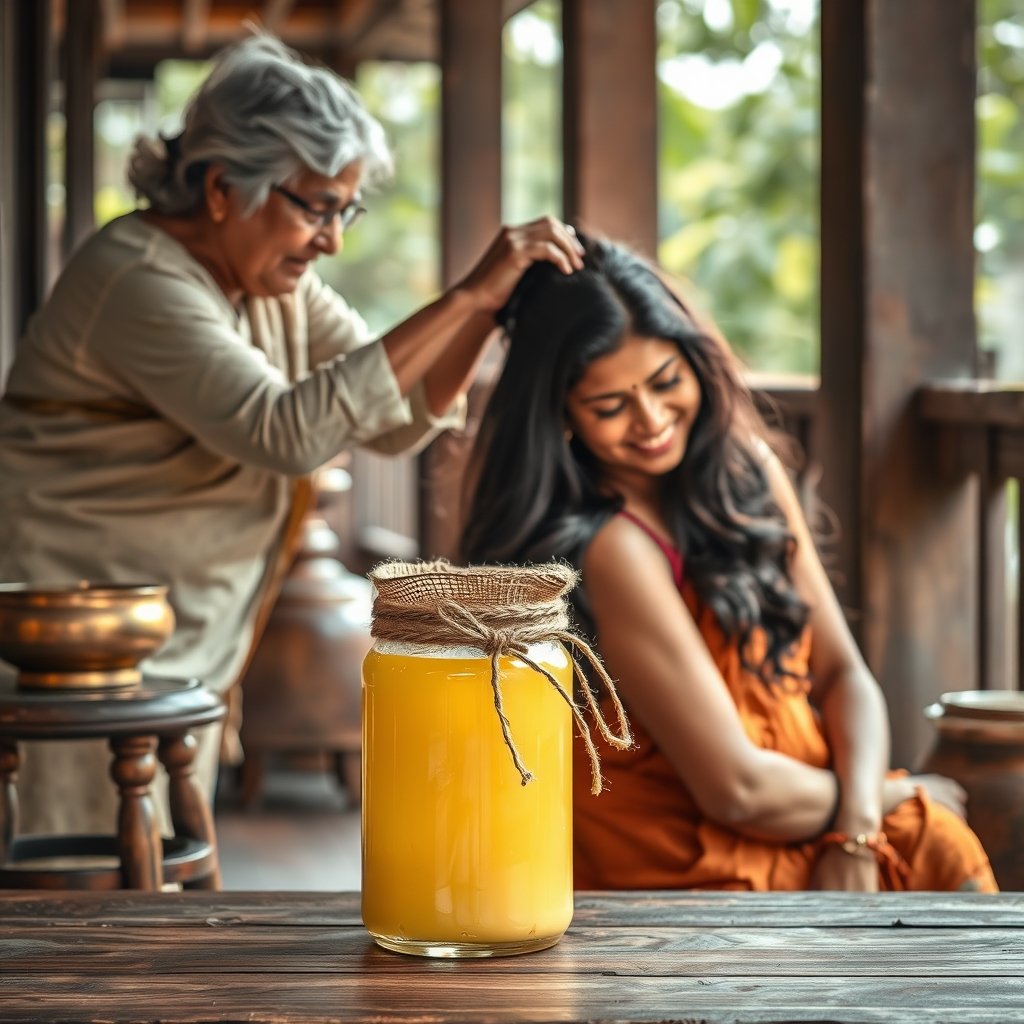
In traditional Indian hair care, ghee is applied directly to dry ends or gently warmed for scalp massages to help seal in surface moisture, soften coarse strands, and protect hair against seasonal dryness. Long before modern conditioners and synthetic serums became bathroom staples, small brass pots of cultured ghee sat on dressing tables across rural and urban India alike. While ghee is primarily celebrated for its role in the kitchen, its topical use on hair and scalp is a deeply rooted practice handed down through generations of home care.
How Was Ghee Traditionally Used for Hair in Indian Homes?
In classical household routines, ghee was rarely used in large, lavish quantities for hair. Instead, it was treated as a concentrated cosmetic lipid. Grandmotherly care routines often involved taking a tiny dabs of ghee, warming it between the palms until liquefied, and working it through dry or sun-bleached hair ends. During harsh winters, particularly in northern regions, a brief head massage—or champi—with lukewarm ghee was common before a warm bath.
Ayurvedic manuscripts and regional folk traditions also speak of pairing ghee with herbal preparations. Kitchen remedies frequently combined warm ghee with crushed hibiscus leaves, amla powder, or a drop of camphor. These mixtures were applied to the scalp to soothe flaky dryness caused by dry wind or hot sunshine. Because ghee melts at body temperature, it glides across hair shafts smoothly, providing a natural protective coat that holds surface moisture in place.
How Does Ghee Compare to Traditional Hair Oils?
While seed oils like coconut and sesame are everyday staples across India, ghee occupies a distinct place in hair care due to its fat profile and thickness. Being an animal-derived lipid rich in fatty acids, ghee behaves differently from lighter botanical oils.
| Property | A2 Cow Ghee (Bilona) | Coconut or Sesame Oil |
|---|---|---|
| Texture & Fat Profile | Dense, rich saturated fat with short and medium-chain fatty acids | Lighter, fluid liquid oils that spread quickly across fine strands |
| Traditional Role | Intensive conditioning for dry ends, winter scalp care, and herbal masks | Everyday oiling, pre-wash lubrication, and daily scalp grooming |
| Rinsing Requirement | Requires warm water and a thorough, mild wash to remove completely | Rinses out easily with mild soap or lukewarm water |
| Best Application | Coarse, frizzy, or brittle hair needing heavy surface sealing | General maintenance, daily styling, and lightweight scalp oiling |
As shown in the comparison, ghee provides a much heavier barrier than regular hair oils. This makes it particularly suited for thick, frizzy, or weather-damaged hair that requires extra moisture retention, while lighter oils remain ideal for frequent daily use.
How Do You Apply Ghee to Hair Without Making It Hard to Wash Out?
Because pure ghee is rich and thick, using too much can leave hair feeling weighed down if it is not washed out properly. Indian tradition emphasizes moderation and warm rinsing techniques when using ghee on hair.
To practice a traditional ghee application at home, start with a small quantity—about half a teaspoon for medium-length hair. Melt the ghee by placing a small cup in warm water rather than heating it directly over a flame. Once warm and liquid, apply it sparingly to the scalp using your fingertips, gently massaging in circular motions to encourage relaxation and skin hydration. Work any remaining lipid down to the dry tips of your hair.
Leave the ghee on for twenty to thirty minutes. To wash it out cleanly, damp your hair with warm water first, apply a gentle herbal cleanser or reetha (soapnut) paste, and lather thoroughly before rinsing. Rinsing with warm water helps melt the remaining fat barrier so your hair feels soft rather than greasy once dry.
Why Does the Quality of Ghee Matter for Hair Application?
In traditional practices, the origin and processing of ghee were just as important for external topical use as they were for cooking. Cultured ghee, prepared using the traditional bilona method from the milk of indigenous Gir cows, was preferred over industrially produced butter fats.
The bilona process involves boiling whole A2 milk, setting it into curd, and churning the curd bidirectionally to yield fresh butter before slow-clarifying it over a mild flame. This traditional process retains the natural aroma and fine granular structure of the fat without exposing it to harsh industrial solvents, bleaching agents, or synthetic additives. When applying fat directly to hair and scalp, using a clean, traditional A2 Gir cow ghee ensures you are using a pure milk fat free from chemical contaminants that could otherwise cause scalp irritation.
Taste the difference
Small-batch A2 Gir cow ghee, hand-churned to order and delivered across India. Read how we make it if you want the detail first.
Order a jarKeep reading
-
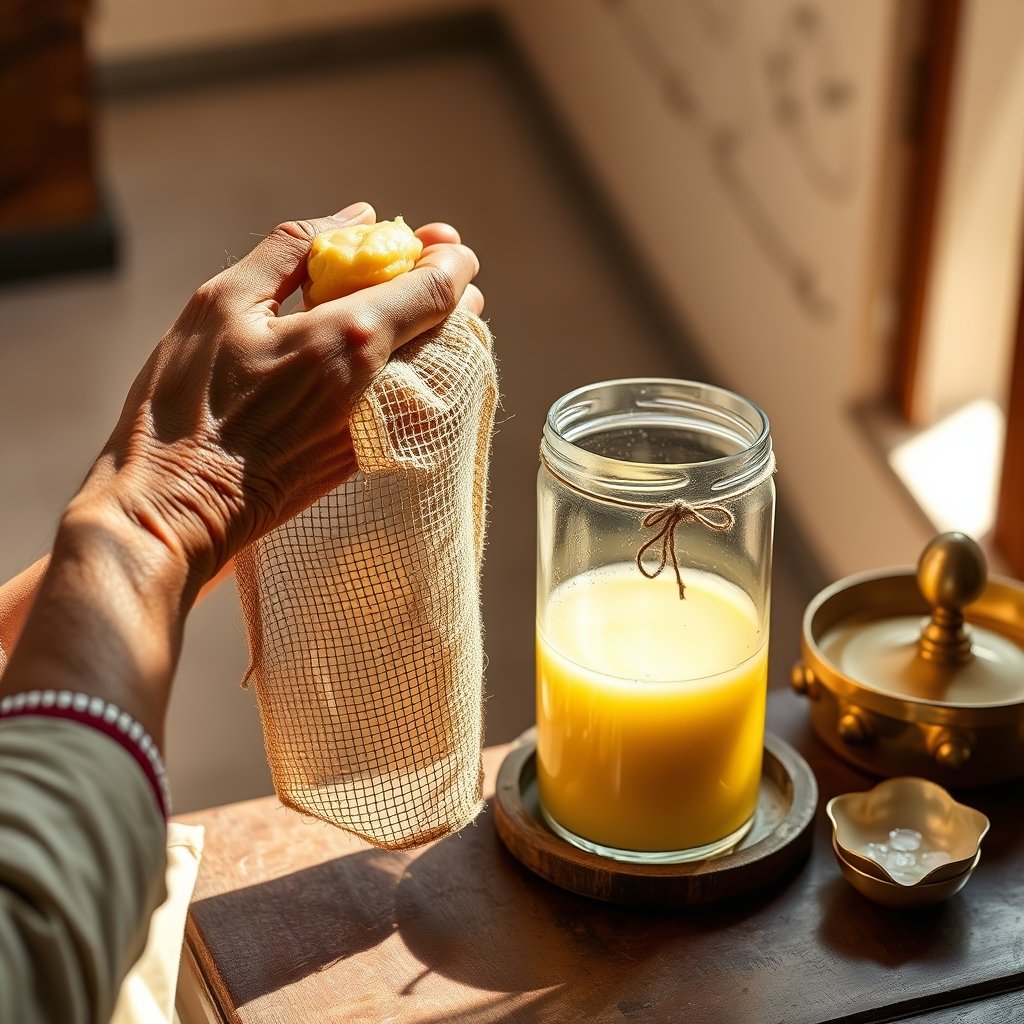 Ghee in Indian Skincare Tradition
Discover how pure cow ghee was traditionally used for topical skin care in Indian homes, from everyday…
Ghee in Indian Skincare Tradition
Discover how pure cow ghee was traditionally used for topical skin care in Indian homes, from everyday…
-
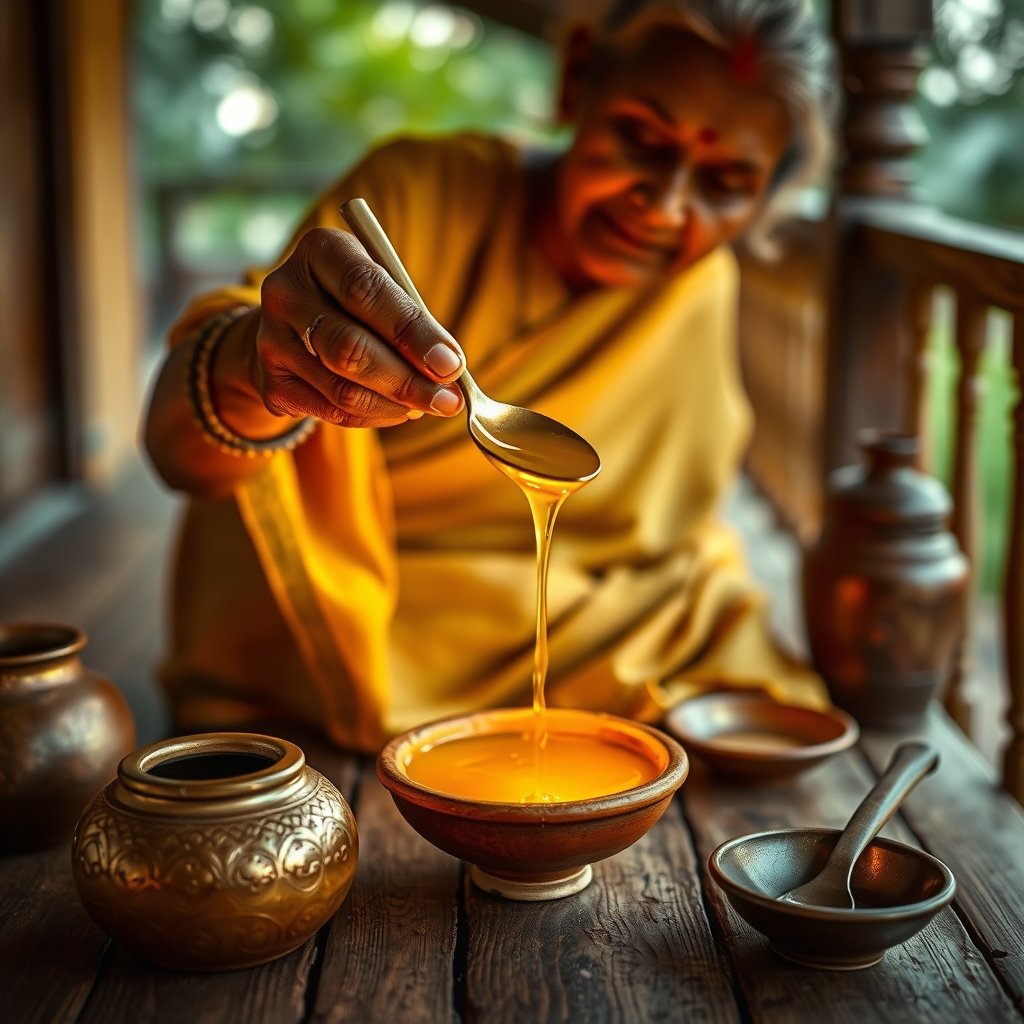 Traditional Uses of Ghee Beyond Cooking
Ghee has long been used in Indian households for applications outside of the kitchen, including massage and…
Traditional Uses of Ghee Beyond Cooking
Ghee has long been used in Indian households for applications outside of the kitchen, including massage and…
-
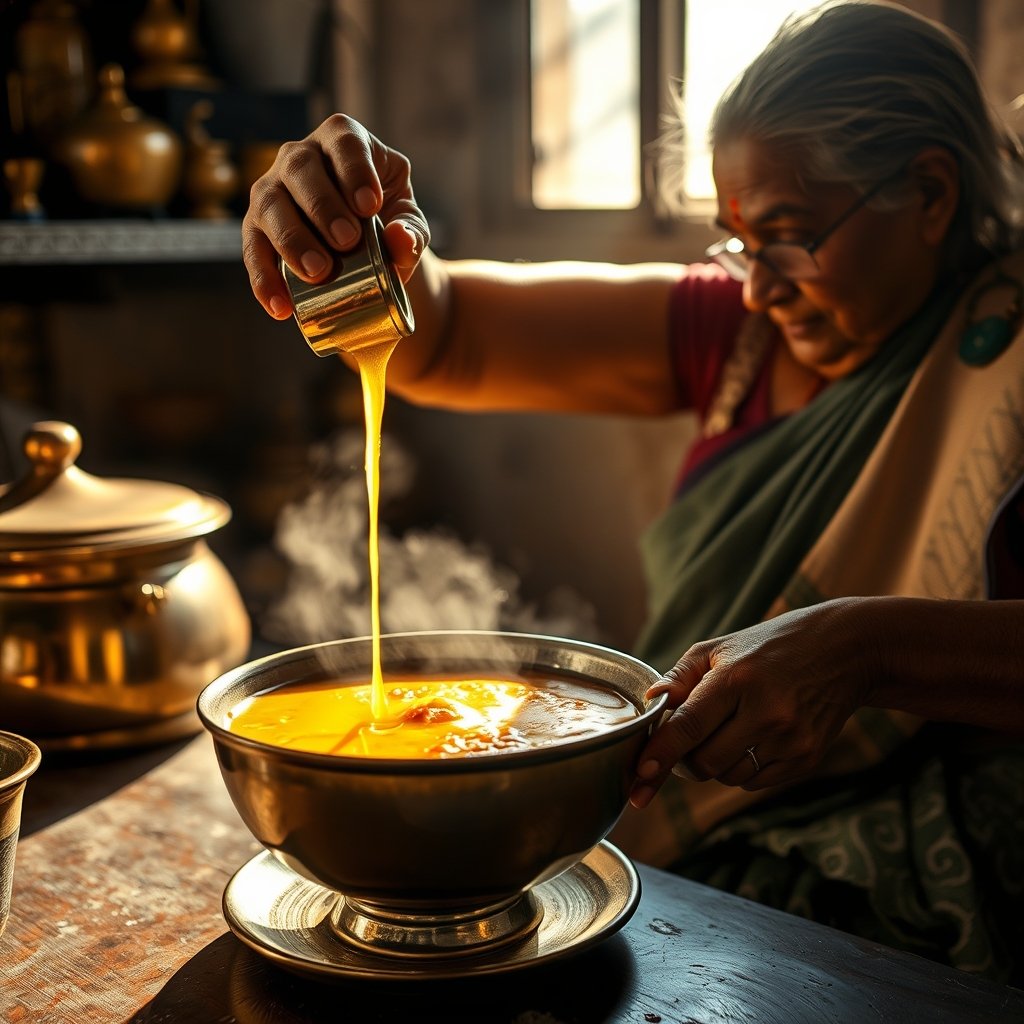 Ghee and Digestion: What Tradition Claims and What Is Known
Ghee has been used in Indian kitchens for centuries to make meals easier to digest. Here is a clear look at…
Ghee and Digestion: What Tradition Claims and What Is Known
Ghee has been used in Indian kitchens for centuries to make meals easier to digest. Here is a clear look at…