
Ghee in Baby First Food: Consult a Paediatrician First

Who should you ask before adding ghee to a baby's diet?
You should always consult your paediatrician before introducing ghee or any other new ingredient into your baby's first solid foods. While ghee is a staple in Indian households and is traditionally introduced during the weaning process, every child has a unique developmental timeline and digestive capacity. A medical professional can provide a personalized schedule based on your baby's growth, weight, and any potential sensitivities. They will guide you on the appropriate age to begin and the quantity that is suitable for a starting palate. Once you have received the go-ahead from a doctor, the focus usually shifts to the quality and purity of the fat you choose to include in their meals.
Why is the source of ghee important for infants?
When you are preparing food for an infant, the origin of the ingredients becomes a primary concern for the household. In the context of Indian home cooking and Ayurveda, the distinction between industrial ghee and traditional bilona ghee is significant. At Organic Farmz, we focus on A2 Gir cow ghee made through the bilona method, which begins with culturing the milk into curd rather than simply separating the cream. This traditional process ensures that the fat has been naturally fermented before it is heated. For a baby who is just learning to process foods other than milk, a clean source with no additives, preservatives, or synthetic fillers is the standard many parents seek.
How does bilona ghee compare to industrial ghee?
Understanding the difference between processing methods helps in making an informed choice for your kitchen. Industrial ghee is often produced by high-speed machinery that separates cream from milk, which is then boiled at high temperatures. In contrast, the bilona method is a slower, more labor-intensive cycle that respects the integrity of the milk fat.
| Feature | Bilona Ghee (Traditional) | Cream-Process Ghee (Industrial) |
|---|---|---|
| Base Material | Cultured curd (Dahi) | Fresh milk cream (Malai) |
| Churning Method | Wooden churner (Bilona) | Centrifugal separators |
| Heat Intensity | Slow-cooked over mild fire | Rapid high-heat boiling |
| Aroma & Texture | Deeply nutty and grainy | Mild and often smooth |
Our cows are not use and throw

A cow that stops giving milk is still our cow. She stays on the farm, with the same feed, the same shed and the same medical care she had when she was milking. We do not sell her on and we do not let her go. That is the whole basis of the ghee we make — you cannot ask an animal for her milk and then abandon her for it.
Our mission goes further than our own herd. There are cows on the street who are injured every day, who eat plastic, who cry through the night with nobody coming. We want to take them in. The plan is a chain of Organic Farmz gaushalas in several places, so that help is not one shed in one city but something a hurt animal can actually reach.
This takes more than we can carry alone — land, fodder, vets, hands. Come and join our initiative. Anything you give goes to feed, treat and shelter these cows.

Scan with any UPI app
Bank transfer
- Account name Organic Farmz
- Bank Indian Bank
- Account number 8133177322
- IFSC code IDIB000K555
- UPI ID organicfarmz@ptaxis
On a phone, the button above opens your UPI app directly — a QR on the screen you are reading cannot be scanned by that same screen. On a laptop, scan the code with your phone instead.
What role does Ayurveda play in first foods?
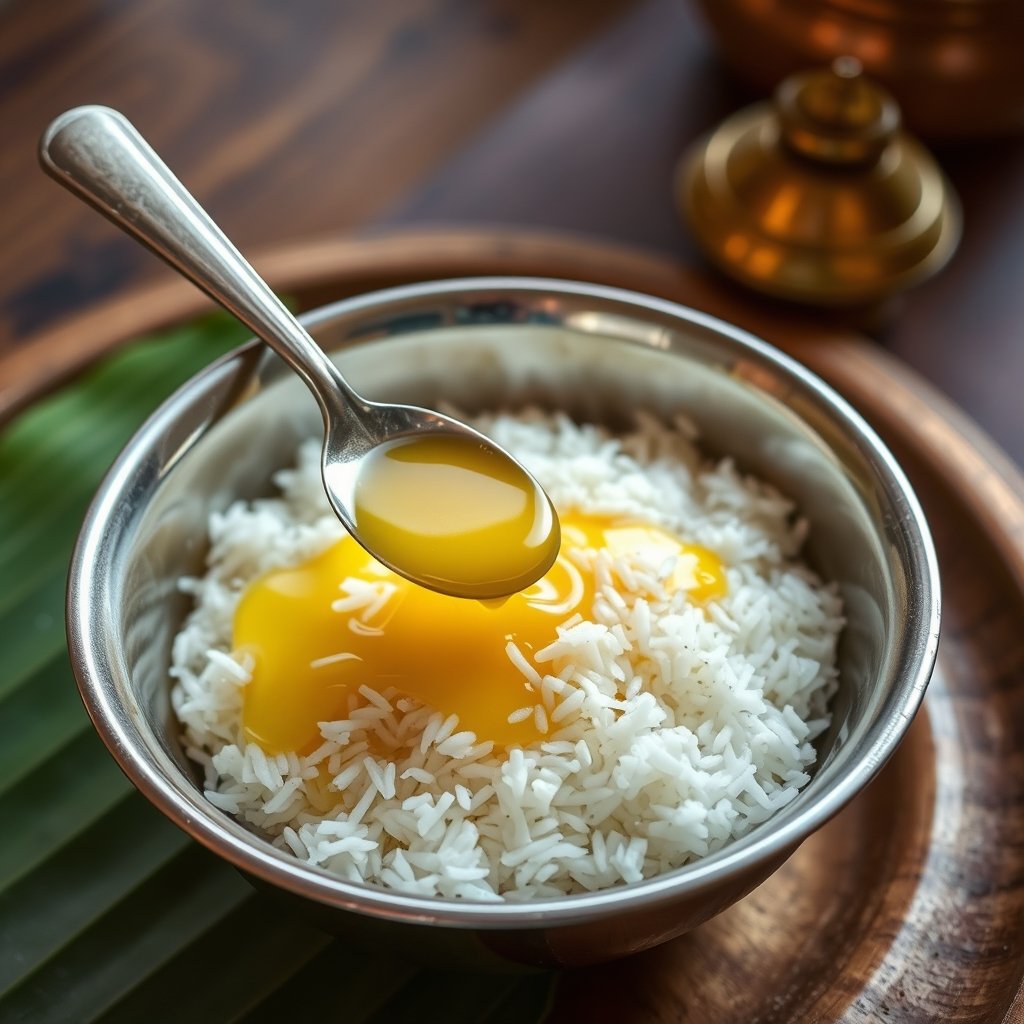
In Ayurvedic traditions, the introduction of solid foods is a celebrated milestone known as Annaprashan. Ghee is often viewed as a substance that supports 'Agni' or the digestive fire, which is why a small drop is frequently added to the first servings of mashed dal or rice. The traditional belief is that A2 ghee from indigenous cows, like the Gir cow, is more compatible with the human body than fats derived from crossbred cattle. While these traditions are deeply rooted in Indian culture, they are intended to complement, not replace, the specific dietary advice provided by your child's doctor.
How should you store ghee for a baby's meals?
Hygiene is the most critical factor when storing ghee that will be used for infant meals. It is advisable to keep a small, separate jar specifically for the baby to minimize the risk of cross-contamination from other kitchen activities. Always use a clean, dry stainless steel spoon to scoop the ghee, as even a single drop of water or a crumb of food can introduce moisture and lead to spoilage. At Organic Farmz, we pack our A2 Gir cow ghee in glass jars because glass is non-reactive and does not leach chemicals into the fat, especially during the warm summer months in India. Store the jar in a cool, dark cupboard away from direct sunlight to preserve its natural aroma and grainy texture.
What should you check on the label?
When selecting a jar for your kitchen, the label should provide clear information about the source and the process. Look for 'A2 Gir Cow Ghee' and 'Bilona Method' to ensure the product aligns with traditional standards. Avoid any product that lists 'vegetable oil', 'hydrogenated fats', or 'flavoring agents' in the ingredients. Pure ghee should contain only one ingredient: milk fat. Transparency in the supply chain—knowing where the cows graze and how the milk is handled—gives parents peace of mind that the fat they are adding to the family pot is as close to nature as possible. We ensure our Gir cows are grass-fed and that the calves are fed first, maintaining an ethical cycle that reflects in the quality of the final batch.
How do you introduce ghee into the kitchen routine?
Once your paediatrician has approved the use of ghee, it is typically added as a finishing touch rather than a primary cooking medium for initial foods. A small amount can be stirred into warm, mashed khichdi or soft-cooked vegetables. This not only introduces the baby to the rich, nutty flavor of bilona ghee but also helps in making the texture of the food smoother. Because ghee has a high smoke point, it is stable at room temperature and does not require refrigeration, making it a convenient staple for a busy parent. The focus remains on observation; watch how the baby reacts to new flavors and textures, and always move at a pace that feels comfortable for their specific needs.
Taste the difference
Small-batch A2 Gir cow ghee, hand-churned to order and delivered across India. Read how we make it if you want the detail first.
Order a jarKeep reading
-
 Ghee for Annaprashan: It Enriches the First Rice Bite
Ghee is gifted at Annaprashan to mix with the first ceremonial spoon of rice, providing cultured fat that…
-
 Sell Ghee Online in India: Settle Marketplace Papers First
Selling your own ghee brand on Indian marketplaces requires verified brand details, FSSAI numbers, jar label…
-
 Introducing Ghee to a Baby: What Paediatric Guidance Says
Paediatric guidance generally recommends introducing ghee around six to eight months of age, beginning with…
