
Besan Ladoo and Why It Needs Real Ghee
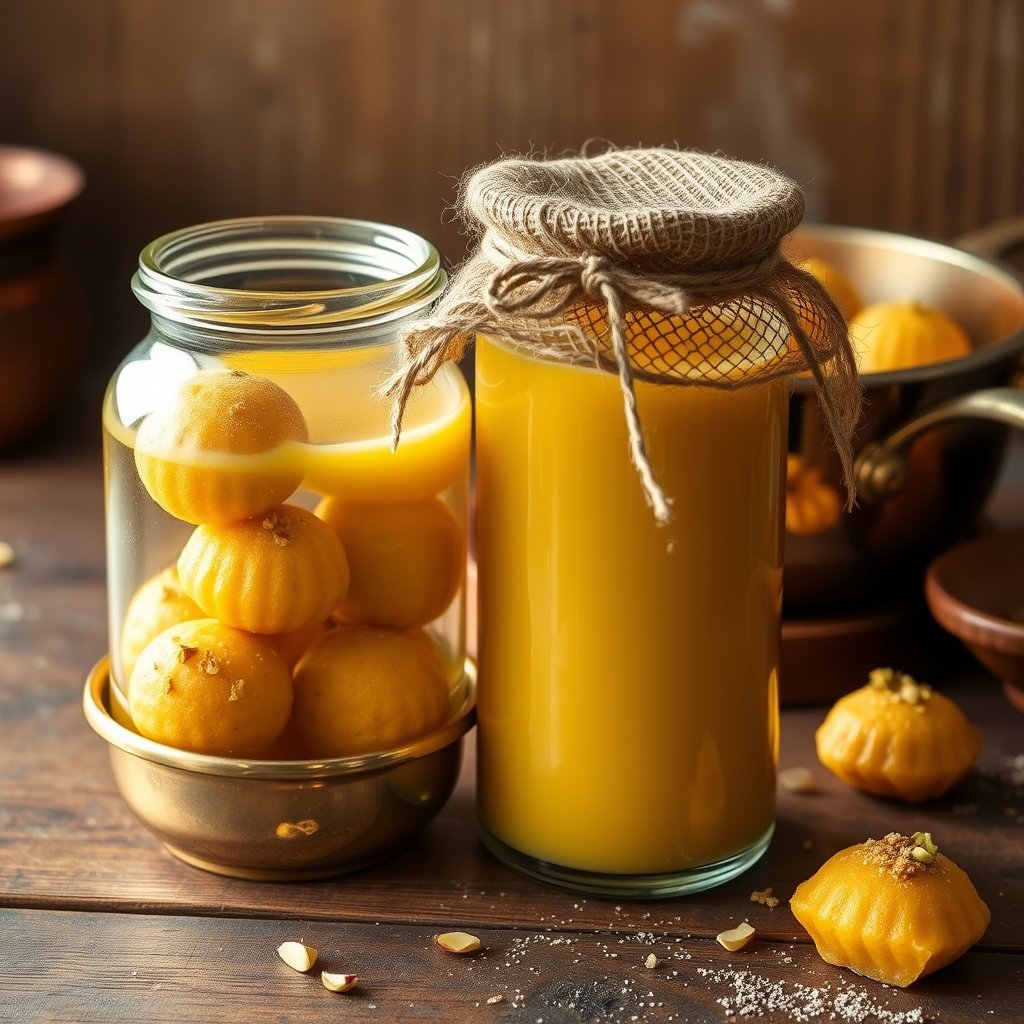
Besan ladoo needs real ghee because the quality and type of fat directly determine whether the gram flour roasts evenly without clumping, releases its signature nutty aroma, and binds into a smooth, melt-in-the-mouth sweet.
Why is the choice of fat critical for besan ladoo?
When you make besan ladoo, fat is not just an ingredient; it is the medium in which the entire sweet is built. Gram flour (besan) is highly absorbent and dry by nature. If you use a fat that lacks depth, such as refined vegetable oil or hydrogenated fats (vanaspati), the flour will either absorb it and turn pasty or remain dry and chalky. Real ghee acts as a lubricant that wraps around every single grain of roasted flour, ensuring that the final ladoo is cohesive yet breaks apart gently when you take a bite.
Furthermore, the fat defines the mouthfeel. Traditional Indian home cooking relies on the unique melting point of cow ghee, which is very close to human body temperature. This means that a ladoo made with pure A2 Gir cow ghee will literally melt on your tongue. Using synthetic or highly processed fats leaves a heavy, waxy coating on the roof of your mouth, which masks the delicate, roasted flavor of the chickpea flour.
How does ghee influence the roasting process?
The secret to a perfect besan ladoo lies entirely in the roasting stage. Raw chickpea flour has a sharp, slightly bitter taste that must be thoroughly cooked out over a low flame. This process takes patience and a fat that can withstand continuous heating without burning. Pure bilona ghee has a high smoke point, making it exceptionally stable for this slow-roasting ritual.
As you stir the besan in a heavy-bottomed kadhai, the ghee coaxes out the natural oils of the flour. Traditional bilona ghee, made by churning curd rather than cream, contains tiny caramelized milk solids. During the long roasting process, these solids toast alongside the besan, multiplying the nutty, sweet fragrance that defines a festive Indian home. Without real ghee, you lose this deep, aromatic complexity, and the kitchen misses that nostalgic scent that signals a celebration is underway.
What is the difference between bilona ghee and commercial fats in ladoos?
Using the right fat changes everything from the aroma to how the sweet sits in your stomach. Below is a comparison of how traditional bilona ghee performs in besan ladoos compared to commercial alternatives:
| Characteristic | Traditional Bilona A2 Ghee | Commercial Vanaspati or Oils |
|---|---|---|
| Aroma and Flavor | Rich, naturally sweet, with deeply toasted, caramelized dairy notes. | Neutral, flat, or artificially flavored with chemical additives. |
| Mouthfeel | Smooth, grainy texture that melts instantly at body temperature. | Greasy, sticky, or waxy, leaving a coating on the palate. |
| Binding Ability | Sets gently at room temperature, keeping the ladoo soft yet structurally intact. | Can turn rock-hard when cool or bleed oil in warmer weather. |
| Digestive Comfort | Balances the dryness of legumes and supports gentle digestion. | Often feels heavy, causing acidity or a sluggish sensation. |
How does bilona ghee improve digestion and texture?
In ayurvedic cooking, the combination of ingredients is just as important as the individual components themselves. Besan, or chickpea flour, is classified as dry, heavy, and dry-natured. If consumed in large quantities without a proper balancing agent, it can be difficult for the digestive fire to process, sometimes leading to gas or bloating.
Pure cow ghee acts as the perfect antidote to this dryness. Because bilona ghee is cultured and churned from curd, it has a softening, lubricating quality that balances the dry, binding properties of the chickpea flour. It carries the nutrients of the legume deep into the body's tissues while ensuring that your digestive system processes the heavy flour smoothly. This is why traditional sweets were always laden with ghee; it was a deliberate culinary science to make heavy festive foods easy on the stomach.
How do you achieve the perfect consistency when making ladoos?
A common struggle when making besan ladoo is getting the fat ratio exactly right. If you add too little ghee, the ladoos will be dry, crumbly, and difficult to shape. If you add too much, the mixture will turn into a runny paste that flattens out instead of holding a round dome shape.
To avoid this, look for the visual cues during the roasting process. When you first mix the besan and ghee, it will look like dry crumbs. As you roast it slowly on a low flame, the mixture will gradually loosen, turning into a smooth, paste-like consistency resembling wet sand. At this point, the ghee begins to separate slightly, and the mixture will feel light to stir. This release of fat is your cue that the flour is fully cooked. Always let the roasted mixture cool down to a lukewarm temperature before adding your powdered sugar; adding sugar to a hot mixture will melt the sugar and turn your ladoos into a liquid mess.
Why does real ghee keep ladoos fresh for longer?
Before the era of refrigeration, sweets were designed to last for weeks on the pantry shelf. Real ghee is a stable fat with very low moisture content. When you roast besan in pure ghee, any residual moisture in the flour is evaporated, leaving a dry, cooked mixture thoroughly coated in stable fat. This natural barrier prevents mold growth and rancidity.
A2 Gir cow ghee made by the bilona method contains natural antioxidants that act as a preservative. Ladoos made with pure ghee can easily be stored in an airtight steel container at room temperature for up to a month without losing their fresh taste or aroma. When you open the jar, that same rich, comforting scent of roasted gram flour and caramelized butter will greet you, just as it did on the day they were rolled.