
Why the Curd Stage Cannot Be Skipped
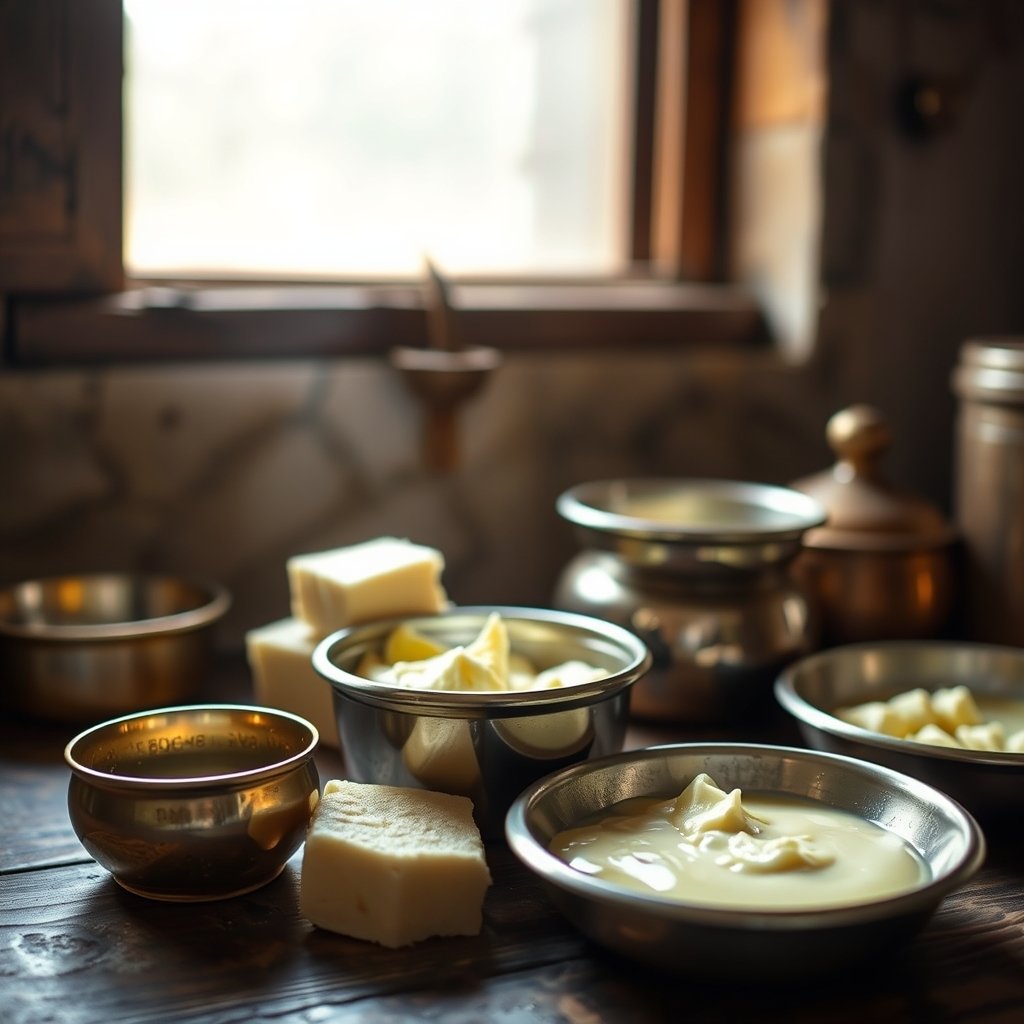
The curd stage cannot be skipped in traditional bilona ghee making because fermenting whole milk into curd alters fat structures, develops rich complex flavour compounds, and allows clean separation of butter during bi-directional churning.
How Is Bilona Ghee Defined by the Curd Stage?
In classical Indian kitchen traditions and traditional Ayurvedic texts, ghee is not made directly from cream skimmed off raw or boiled milk. Instead, fresh whole milk is boiled, allowed to cool to warm room temperature, and cultured with a spoonful of natural starter culture (jaman) overnight. This converts the entire batch of milk into thick, fragrant curd (dahi). Skipping this step converts the process into a cream-separation method, which produces a fundamentally different style of clarified butter.
What Happens During Milk Fermentation?
When starter culture is added to warm milk, naturally present lactic acid bacteria (such as Lactobacillus species) begin consuming lactose, the natural sugar in milk. This process produces lactic acid, which lowers the pH of the milk and causes milk proteins (casein) to form a soft gel network. As the milk curdles, several key changes occur:
1. Fat Globule Release: The structural changes in casein proteins weaken the membranes surrounding individual fat globules, making them far easier to release during wooden churning.
2. Flavor Development: Fermentation releases natural volatile aromatic compounds, including diacetyl and short-chain organic acids, which impart a distinct cultured aroma to the finished butter and ghee.
3. Natural Preservation: The acid developed during curd formation acts as a natural inhibitor against unwanted wild microbes during the churning process.
Our cows are not use and throw
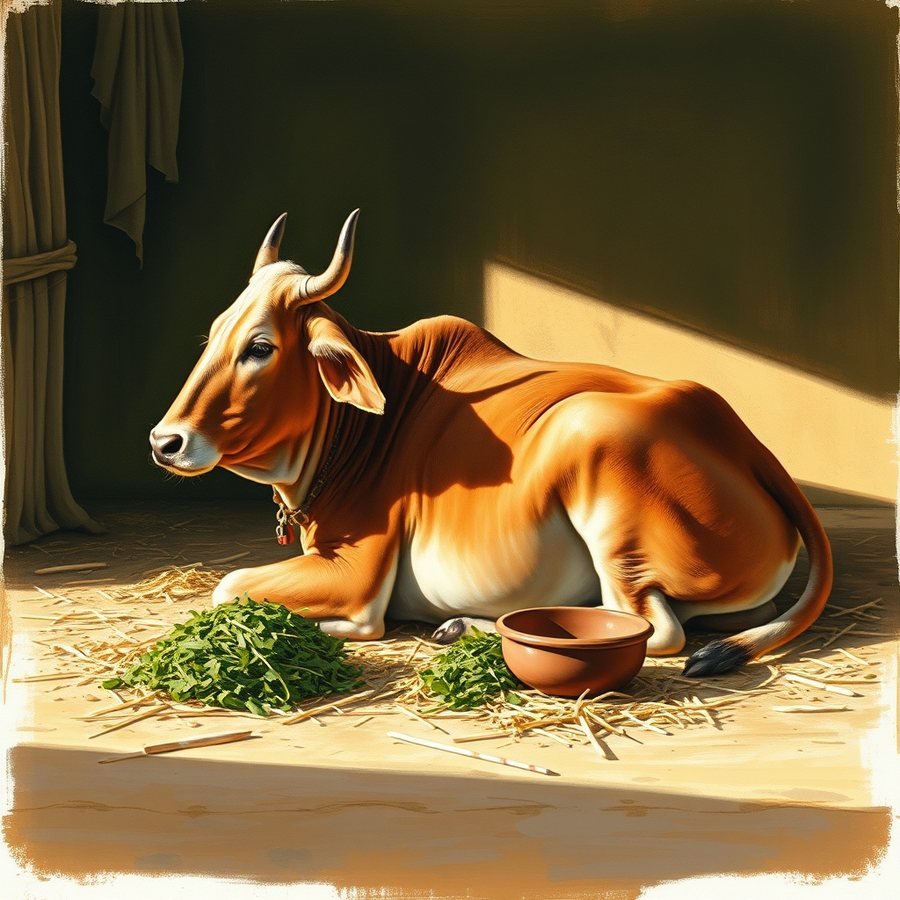
A cow that stops giving milk is still our cow. She stays on the farm, with the same feed, the same shed and the same medical care she had when she was milking. We do not sell her on and we do not let her go. That is the whole basis of the ghee we make — you cannot ask an animal for her milk and then abandon her for it.
Our mission goes further than our own herd. There are cows on the street who are injured every day, who eat plastic, who cry through the night with nobody coming. We want to take them in. The plan is a chain of Organic Farmz gaushalas in several places, so that help is not one shed in one city but something a hurt animal can actually reach.
This takes more than we can carry alone — land, fodder, vets, hands. Come and join our initiative. Anything you give goes to feed, treat and shelter these cows.

Scan with any UPI app
Bank transfer
- Account name Organic Farmz
- Bank Indian Bank
- Account number 8133177322
- IFSC code IDIB000K555
- UPI ID organicfarmz@ptaxis
On a phone, the button above opens your UPI app directly — a QR on the screen you are reading cannot be scanned by that same screen. On a laptop, scan the code with your phone instead.
How Does Curd-Churned Ghee Compare to Direct Cream Ghee?
The difference between the two main methods of ghee extraction illustrates why skipping the curd stage alters the final culinary output.
| Processing Aspect | Bilona Curd Method (Traditional) | Direct Cream Method (Industrial/Modern) |
|---|---|---|
| Base Material | Whole milk curd (dahi) | Separated milk cream (malai) |
| Fermentation Step | Yes ( overnight culture ) | No ( unfermented or sweet cream ) |
| Churning Action | Two-way bi-directional wooden churn | High-speed centrifuge or single-way blender |
| Aroma Profile | Nutty, cultured, deep aromatic bouquet | Mild, milky, flat sweet scent |
| Grain Texture | Consistent, uniform crystalline grains | Smooth, paste-like or greasy solid |
What Happens to Texture and Grain When You Skip Curd?
When unfermented cream is melted directly into ghee, the absence of lactic acid culture leaves behind un-transformed milk solids. During heating, these solids burn quickly or stick to the pan, producing a flatter flavor profile and a softer, greasy texture. In contrast, butter obtained from churned curd separates cleanly from buttermilk (chhaas). When this cultured butter is gently melted over low heat in a heavy brass or iron handi, the milk solids settle evenly, producing clear, amber liquid fat that sets into the classic coarse, granular grain prized in Indian households.
Taste the difference
Small-batch A2 Gir cow ghee, hand-churned to order and delivered across India. Read how we make it if you want the detail first.
Order a jarKeep reading
-
 How Long Does It Take to Make One Jar of Bilona Ghee?
A detailed timeline breakdown of the 24 to 36 hour traditional process required to craft a single jar of…
How Long Does It Take to Make One Jar of Bilona Ghee?
A detailed timeline breakdown of the 24 to 36 hour traditional process required to craft a single jar of…
-
 What 25 Litres of Milk Looks Like Next to One Litre of Ghee
Ever wondered about the real milk to ghee ratio? Discover why it takes 25 litres of fresh A2 Gir cow milk to…
What 25 Litres of Milk Looks Like Next to One Litre of Ghee
Ever wondered about the real milk to ghee ratio? Discover why it takes 25 litres of fresh A2 Gir cow milk to…
-
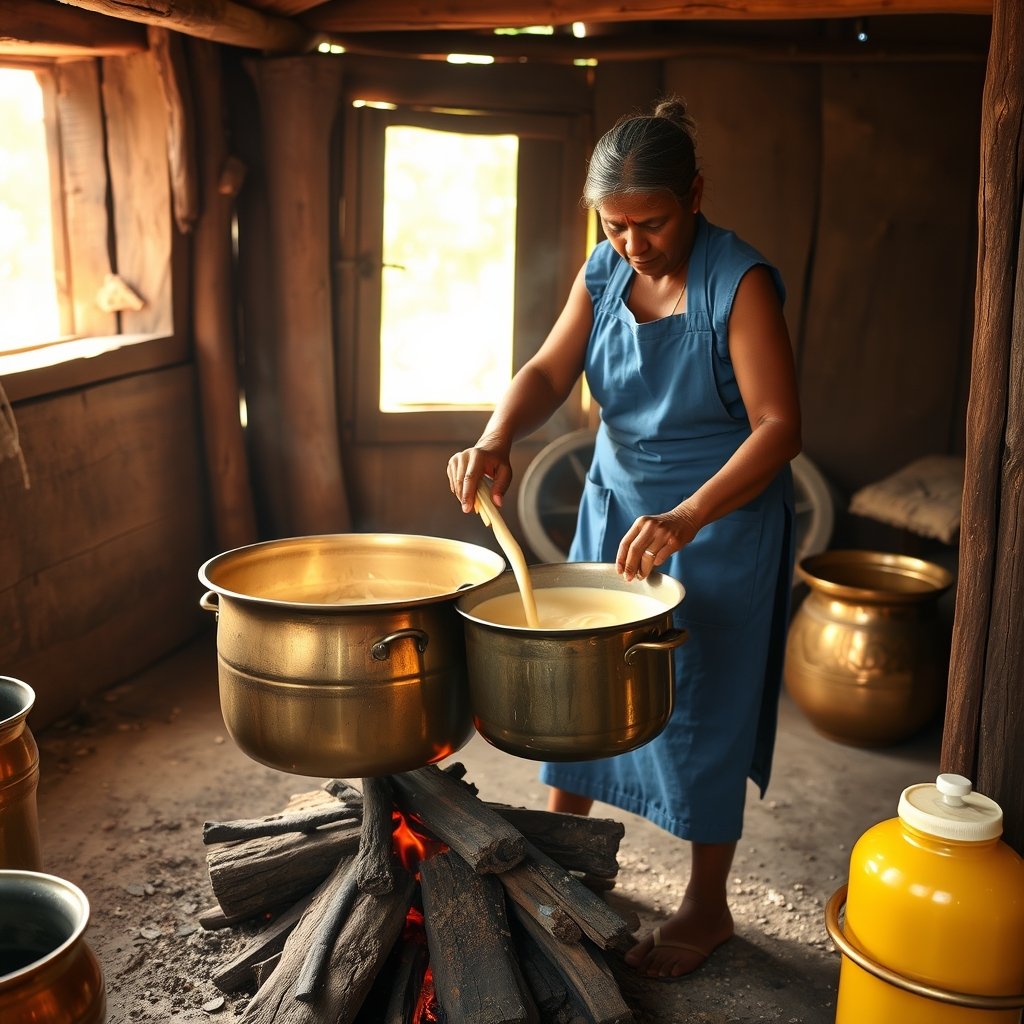 A Day at a Small Ghee Dairy
Ever wondered how a traditional bilona dairy operates? Step inside a day of small-batch ghee making, from…
A Day at a Small Ghee Dairy
Ever wondered how a traditional bilona dairy operates? Step inside a day of small-batch ghee making, from…
