
Cows Eat Plastic Because of Food Smells: It Blocks the Rumen
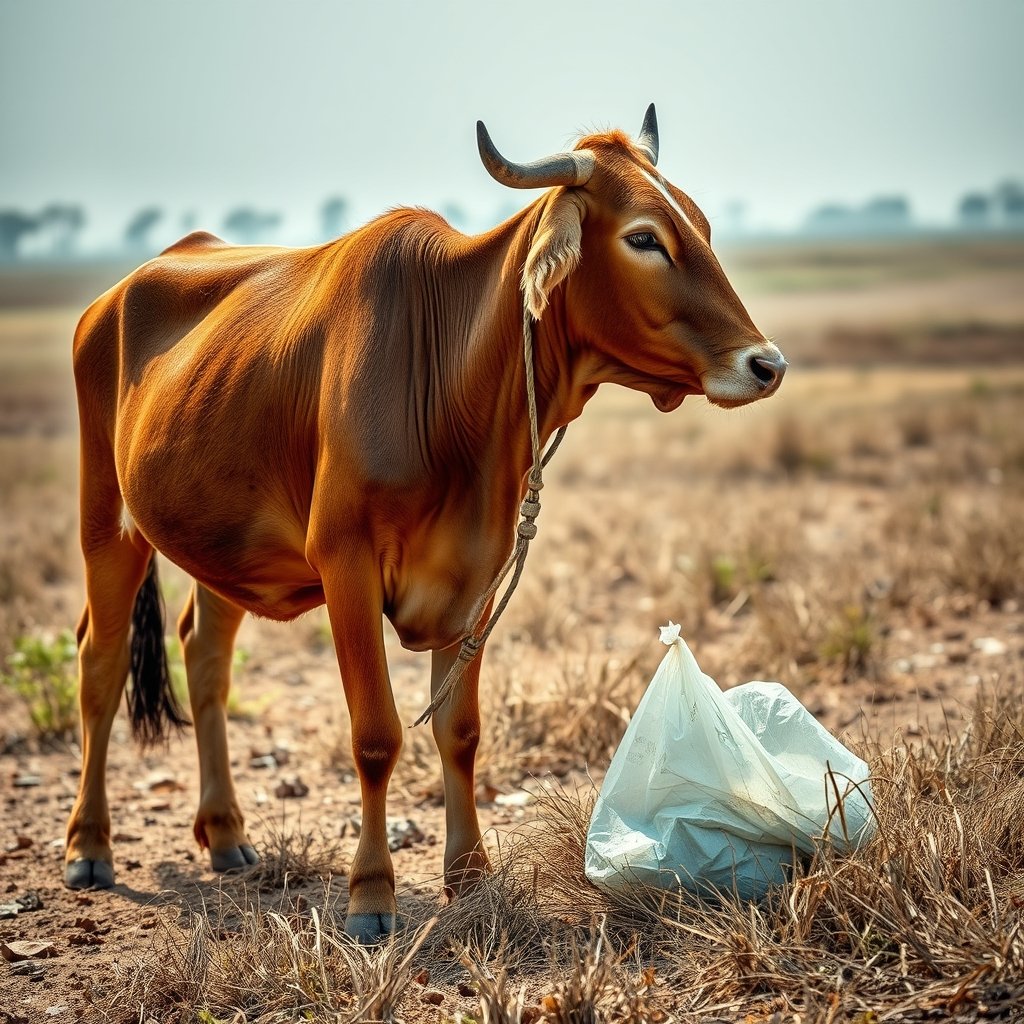
Why do cows eat plastic bags on Indian streets?
Cows eat plastic because they are attracted to the smell of organic food waste trapped inside discarded bags. In urban environments where green grazing is scarce, cows become opportunistic foragers, seeking out vegetable peels, leftover rotis, and fruit scraps from garbage heaps. Because a cow uses her muscular tongue to sweep food into her mouth, she cannot easily separate the thin plastic film from the food it contains. Once the plastic is in her mouth, her natural swallowing reflex takes over. Over time, these ingested bags do not pass through the digestive system; instead, they accumulate, forming a dense, indigestible mass in the stomach.
What happens to plastic inside a cow’s stomach?
When a cow swallows plastic, it settles in the rumen, which is the first and largest of the four compartments in her stomach. The rumen is designed to ferment fibrous plant matter like grass and hay using beneficial bacteria. Plastic, however, is inorganic and cannot be broken down by stomach acid or fermentation. It becomes entangled with other non-food items like wire or stones, creating a heavy, solid lump known as a plastic bezoar. This mass stays in the rumen indefinitely because it is too large to pass into the next chamber of the digestive tract. As the cow continues to eat from the street, the volume of plastic grows, eventually taking up most of the space intended for nutritious fodder.
How does eating plastic affect a cow’s health?
Ingesting plastic leads to a slow decline in health characterized by chronic malnutrition and physical discomfort. Because the rumen is physically full of plastic, the cow feels a false sense of satiety, which reduces her appetite for real food. This leads to progressive weight loss, a dull coat, and a significant drop in energy. The sharp edges of some plastics or associated debris can also cause internal punctures or inflammation of the stomach lining. In many cases, the weight of the plastic mass becomes so great that it puts pressure on the cow’s other internal organs, leading to respiratory distress or a complete shutdown of the digestive system.
Can a cow be cured after eating plastic?
Recovery for a street cow that has ingested a significant amount of plastic usually requires surgical intervention known as a rumenotomy. In this procedure, a veterinarian makes an incision into the flank and then into the rumen to manually pull out the accumulated waste. The amount of material removed is determined by how long the cow has been scavenging on the street. Post-surgical care is intensive, involving high-quality fodder and medical monitoring to ensure the stomach’s natural bacterial balance is restored. Without surgery, the condition is often fatal because the cow eventually starves even while her stomach is full.
How do foraging habits differ between farm and street?
The difference between a cow in a protected environment and one on the street is defined by the safety and nutritional value of what she consumes. The following table compares the two scenarios.
| Feature | Natural Foraging (Farm) | Street Scavenging (Urban) |
|---|---|---|
| Primary Source | Fresh grass, hay, and oilcakes | Garbage bins and roadside waste |
| Digestibility | Fully broken down by rumen bacteria | Indigestible solids accumulate |
| Health Impact | Supports energy and milk production | Causes blockage and malnutrition |
| Satiety | Natural hunger based on nutrition | False fullness from inorganic mass |
What is the Organic Farmz policy for retired cows?
At Organic Farmz, we believe that a cow’s value is not tied solely to her milk production, which is why we practice lifetime care. When a cow on our farm reaches an age where she stops giving milk, she is never sold to traders or abandoned to the streets. Instead, she remains a permanent resident of the farm. She continues to live in the same shed, receives the same high-quality green fodder and concentrates, and has access to the same medical care she had during her peak milking years. This ensures that none of our animals ever face the risk of having to scavenge for food or ingest plastic on the streets.
What is the long-term plan for street cow rescue?
Beyond caring for our own herd, our vision is to address the crisis of street cows across the country through an expanding network of shelters. We intend to establish a chain of Organic Farmz gaushalas in various locations, rather than limiting our reach to a single city. These shelters are planned to take in cows that have been injured in traffic accidents or those suffering from the effects of eating plastic. The goal is to provide a safe space where these animals can receive medical treatment, including surgeries to remove plastic, and live out their lives in dignity away from the hazards of urban waste.
How can you support these rescue efforts?
Our work with rescued cattle depends on the support of those who value the welfare of the Gir cow and the principles of Gau Seva. We invite you to learn more about our specific initiatives and see how we manage our retired animals by reading about our Gau Seva work on our homepage. If you wish to contribute to the feed, medical treatment, and shelter of these cows, donations can be made directly via UPI or bank transfer through the Gau Seva section. Every contribution goes toward the direct care of the animals, ensuring they have access to clean water and safe, plastic-free fodder every day.
Taste the difference
Small-batch A2 Gir cow ghee, hand-churned to order and delivered across India. Read how we make it if you want the detail first.
Order a jarKeep reading
-
 Gau Seva Meaning: Lifetime Care for Cows Beyond Milk
Gau Seva means serving and providing lifelong shelter, feed, and medical care to cows regardless of whether…
-
 How to Know If Milk Is Ethical: Check Animal Care
An ethical dairy allows calves their share of milk, keeps non-milking cows for life, avoids forced breeding…
-
 When a Cow Stops Milking: She Stays on the Farm
When a cow stops giving milk, standard dairies often sell her, but on our farm she remains housed, fed, and…


