
What FSSAI Rules Say About Ghee Labelling
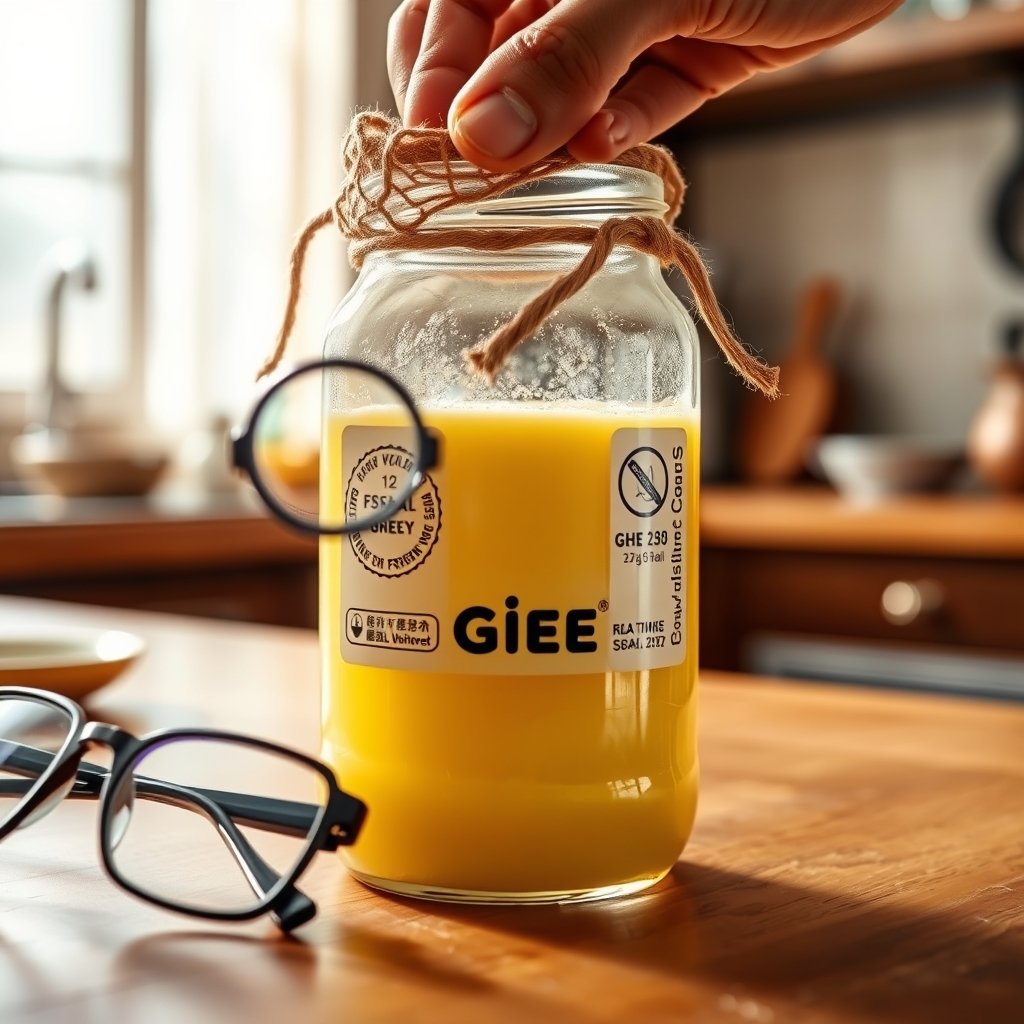
What do the FSSAI rules say about ghee labelling on food packages in India?
Under Food Safety and Standards Authority of India (FSSAI) regulations, every packaged ghee jar must clearly state the specific animal source of the milk, the exact net weight, the manufacturing or packing date, and complete contact details of the manufacturer or packer so consumers know precisely what they are purchasing.
When you stand in an aisle or browse online for cooking fats for your home kitchen, the label on the jar is your first point of information. In India, the FSSAI sets the regulatory baseline for how food products must be identified, tested, and presented to the public. For traditional fats like ghee, these rules are designed to prevent ambiguity and ensure that buyers are not misled by vague marketing terms.
At Organic Farmz, we believe that transparency is essential, especially when preparing daily meals for family members or simmering traditional recipes rooted in Ayurveda. Understanding what the regulator mandates helps you read past the front-of-pack descriptions and look directly at the statutory declarations required by law.
What mandatory details must appear on a ghee jar?
The FSSAI requires several non-negotiable declarations on every retail pack of ghee sold in India. These elements are split between the principal display panel—what you see first when looking at the jar—and the informational panel.
First, the common name of the product must be explicit. If a product is pure cow ghee, it cannot be sold under a generic title that hides its actual composition. Second, the list of ingredients must be complete. For traditional A2 Gir cow ghee made by the bilona method, the ingredient list typically reflects whole cow milk or curd churned into butter and slowly simmered.
Net quantity is another strict requirement. It must be declared in metric units, usually grams or kilograms for solids and semi-solids like ghee. Alongside this, the label must display the 'Best Before' or 'Use By' date, the manufacturing or packaging month and year, and a clear batch or code number. This batch number allows the maker to trace the production cycle back to its source if any quality review is required.
How does FSSAI regulate the source animal on the label?
Consumers today increasingly look for specific milk sources, such as milk from indigenous Indian cattle breeds like the Gir. FSSAI standards require that if a label specifies a particular animal source—such as cow ghee or buffalo ghee—the contents of the jar must match that description entirely without undeclared blending.
Furthermore, standard FSSAI norms define the chemical and physical parameters that pure ghee must meet. These include specific Reichert-Meissl (RM) values and Baudouin test standards, which laboratories use to check for vegetable oil adulteration. While these tests happen in testing facilities rather than the home kitchen, they form the legal backbone of what can legally be called ghee in the Indian market.
FSSAI Standards vs. Traditional Craftsmanship: A Quick Look
Navigating the difference between regulatory compliance and traditional culinary methods helps clarify what a label tells you.
| Aspect | FSSAI Regulations | Traditional Bilona Craft |
|---|---|---|
| Primary Focus | Food safety, legal compliance, and accurate declarations | Time-honoured methods like curd-churning and slow simmering |
| Required Disclosures | Net weight, ingredient list, batch number, and address | Details on milk source, desi cow heritage, and small-batch preparation |
| Verification Method | Laboratory chemical parameters and packaging checks | Sensory cues like aroma, grain structure, and texture |
Why statutory addresses and FSSAI license numbers matter
Every legal food package in India must display a 14-digit FSSAI registration or license number. This number is not just a formality; it links the product directly to a registered manufacturing unit or repackaging facility. When you look at a jar of ghee, verifying that this number is present gives you a clear point of accountability.
Similarly, the name and complete address of the manufacturer, marketer, or packer must be printed legibly. If a brand only provides a vague website name without a physical operational address or license details, it falls short of standard regulatory compliance. For households that value knowing where their food comes from—whether it is cold-pressed oils, spices, or traditional A2 Gir cow ghee—checking these baseline requirements ensures that the food on your table meets established safety standards.