
Ghee Jar Label Artwork Requirements: What to Send

A ghee filler requires print-ready vector artwork containing bleed allowances for jar curvature, clear space for batch coding, legible text that withstands hot-fill temperatures, and mandatory regulatory declarations. Preparing artwork correctly before printing ensures that labels wrap smoothly around round glass jars without clipping essential text or failing during warm filling.
What specific artwork files does a ghee packing facility require?
Packing facilities require vector artwork files in high-resolution formats such as vector PDF or Adobe Illustrator with outlined fonts and CMYK color profiles. Vector artwork ensures that text lines, logo contours, and regulatory graphics remain crisp and clear regardless of scaling for different glass jar volumes. Submitting flattened raster files or JPEG graphics often leads to blurry text, pixelated line work, and unreadable fine print on mandatory ingredient panels. Furthermore, artwork files must incorporate standard bleed margins beyond the crop line to prevent white gaps along the edge when labels are die-cut and applied by automated labelling machinery.
How does jar shape affect label artwork design?
Round glass jars present physical curves that distort straight horizontal graphic lines and edge-aligned text if the layout does not account for container radius. Graphic designers must maintain safe margins away from the label edges so that brand names, nutritional panels, and contact details remain visible from the front without wrapping awkwardly into the shadow of the jar side. Furthermore, traditional bilona ghee is filled in a warm, liquid state so that fat crystals form naturally as the ghee cools undisturbed inside the jar. Artwork design and material selection must account for this brief exposure to heat during filling, ensuring that inks do not soften, smudge, or lose adhesion to the glass surface.
Which mandatory regulatory elements must be included on the label artwork?
Label artwork must integrate all statutory food safety declarations alongside custom branding before production can begin. Mandatory elements include the vegetarian symbol with its distinct green circle inside a green square, the precise product title, pure ingredient listings, net volume or weight, manufacturer details, and consumer grievance contact information. Artwork must also feature the required FSSAI license numbers for both the brand owner and the packing facility. Designers must reserve an unvarnished, high-contrast blank space on the back panel specifically for online batch printing, allowing thermal or inkjet printers to stamp the batch number, date of packing, maximum retail price, and best-before date directly onto the label line.
Our cows are not use and throw

A cow that stops giving milk is still our cow. She stays on the farm, with the same feed, the same shed and the same medical care she had when she was milking. We do not sell her on and we do not let her go. That is the whole basis of the ghee we make — you cannot ask an animal for her milk and then abandon her for it.
Our mission goes further than our own herd. There are cows on the street who are injured every day, who eat plastic, who cry through the night with nobody coming. We want to take them in. The plan is a chain of Organic Farmz gaushalas in several places, so that help is not one shed in one city but something a hurt animal can actually reach.
This takes more than we can carry alone — land, fodder, vets, hands. Come and join our initiative. Anything you give goes to feed, treat and shelter these cows.

Scan with any UPI app
Bank transfer
- Account name Organic Farmz
- Bank Indian Bank
- Account number 8133177322
- IFSC code IDIB000K555
- UPI ID organicfarmz@ptaxis
On a phone, the button above opens your UPI app directly — a QR on the screen you are reading cannot be scanned by that same screen. On a laptop, scan the code with your phone instead.
How do paper labels compare with oil-resistant synthetic labels on ghee jars?
Selecting the appropriate label substrate directly impacts how well jar packaging maintains its appearance across transit, store shelves, and humid kitchen pantries.
| Label Property | Standard Uncoated Paper | Oil-Resistant Synthetic Film |
|---|---|---|
| Moisture & Fat Resistance | Absorbs fat drips, causing dark stains and structural tearing | Repels surface fat and moisture to remain visually clean |
| Hot-Fill Performance | Can ripple or wrinkle when exposed to warm glass surfaces | Maintains dimensional stability during warm jar filling |
| Text Legibility Over Time | Ink may blur or fade if grease contacts printed surfaces | Inks remain crisp and clear throughout daily pantry handling |
| Adhesive Durability | Adhesive degrades if oil creeps underneath label margins | Permanent acrylic adhesive maintains edge bond to smooth glass |
Although paper labels offer a textured aesthetic, oil-resistant synthetic films are far better suited for ghee jars because they resist grease staining from greasy spoon dips and kitchen heat.
Who verifies artwork proofs before final label printing?
Before any artwork file is sent to the printer, a thorough pre-press proofing check is conducted between the brand owner, the label printer, and the packing facility. The print technician creates a digital proof to verify print bleeds, color separation, line weights, and font conversion. Concurrently, the packing plant reviews the layout to confirm that barcode dimensions meet optical scanning standards, statutory symbol heights comply with labeling regulations, and the designated batch-stamp box aligns with coding machinery. Formal written sign-off from all responsible parties is required before high-volume printing proceeds, preventing costly artwork errors or non-compliant packaging.
How does white-label bilona ghee packaging work with Organic Farmz?
At Organic Farmz, we produce traditional A2 Gir cow ghee using the hand-churned bilona method at our facility near Delhi, packing it for brand partners under custom labels. Our white-label process starts with an enquiry sent via email or WhatsApp outlining your proposed brand name, preferred glass jar size, estimated monthly volume, and target launch timeframe. Once a sample batch is tasted and approved, both parties finalize a written contract covering unit rates, production volumes, jar specifications, artwork ownership, and clear batch review terms. You provide print-ready label artwork containing your company's FSSAI registration details and statutory notices, and we make the ghee fresh to order. The finished product is delivered directly to you as factory-sealed, labelled, and code-stamped glass jars that are immediately ready for shipping to your end customers. Specific minimum order quantities, production lead times, and unit rates are determined individually during the initial sample phase. To explore private labeling options for your business, visit our white-label partnership page to submit your request.
Taste the difference
Small-batch A2 Gir cow ghee, hand-churned to order and delivered across India. Read how we make it if you want the detail first.
Order a jarKeep reading
-
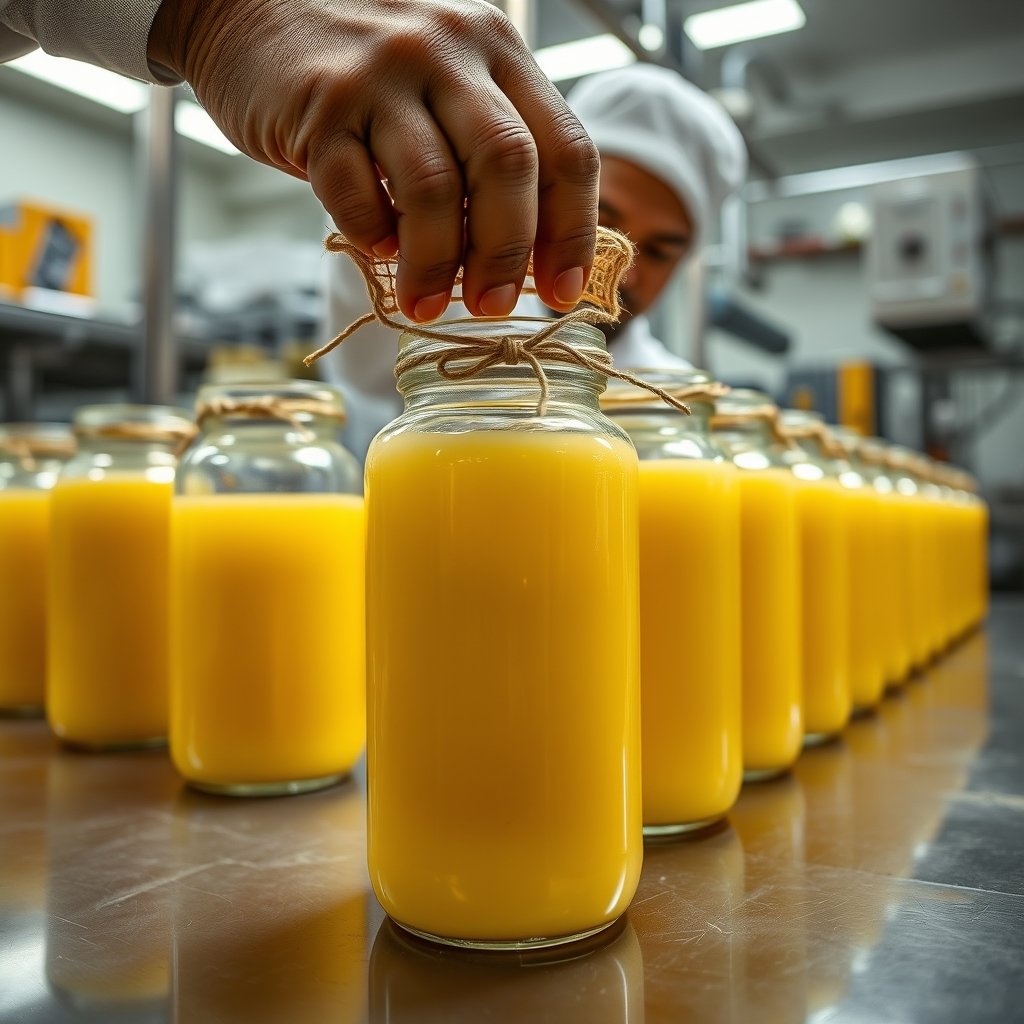 Private Label Ghee: Both FSSAI Numbers Required
A private label ghee jar must show both the brand owner's FSSAI license number and the manufacturer's FSSAI…
-
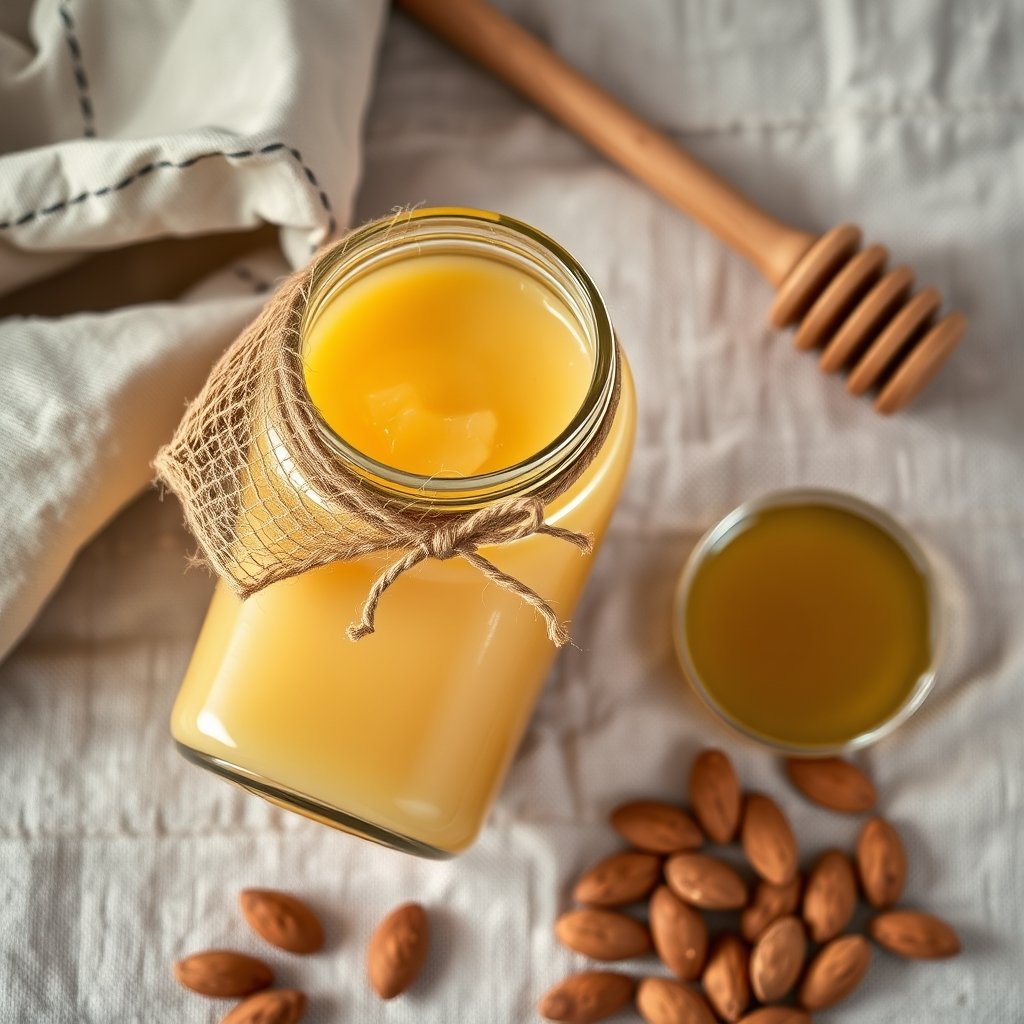 Best Ghee for Gifting: Heavy Glass Jars with Lug Lids
The best ghee for gifting comes in thick glass with an airtight lug seal, clear batch dates, and the nutty…
-
 Reading Nutrition Labels on Ghee Jars
Learn how to read the nutrition facts on a ghee jar, understand the fat breakdown per spoon, and spot the…
