
How to Store Ghee at Home: Seasons, Grain and Shelf Life

Store ghee in a closed jar, somewhere cool and out of direct sunlight, and only ever put a dry spoon into it. Moisture is what spoils ghee — not air, and not time. Kept dry, it lasts many months at room temperature without a fridge, though its texture will change with the season, and that is normal.
Walk into a traditional Indian kitchen, and you will often find a quiet glass jar sitting near the pantry shelf, filled with warm, golden ghee. When that ghee is made from the milk of indigenous Gir cows using the slow, traditional bilona process, opening the jar fills the room with a nutty, comforting aroma. One of the first things you might notice is its texture—a delicate, grainy consistency that cooks across India fondly refer to as danedar. Depending on the weather outside, that texture can shift from a firm golden solid in December to a liquid honey-like pour in June.
Understanding how traditional A2 Gir cow ghee responds to temperature and light is part of the joy of bringing authentic kitchen craft back into your home. Because traditional bilona ghee contains no added stabilizers, artificial thickeners, or chemical preservatives, it reacts naturally to the environment around it. Learning how to care for your jar ensures that every spoonful retains its rich aroma and familiar grain, from the day you unseal it until the very last scoop.
Why the texture changes, and what danedar means
The grain has a name — danedar — and it forms as the fat crystallises while the ghee cools. The full explanation is in our guide to the bilona method. What matters for storage is that the grain is not fixed: it comes and goes with the temperature of your kitchen.
To understand why bilona ghee develops its signature granular texture, it helps to look at how it is made. In the traditional bilona method, fresh milk from Gir cows is first cultured into curd. This curd is then churned using a two-way wooden paddle to separate fresh butter, known as makhan. Finally, this butter is gently simmered over a low flame until the water content evaporates and the milk solids sink to the bottom of the vessel.
As the clarified butterfat cools down slowly to room temperature, the naturally occurring fatty acids begin to crystallize at different rates. The higher-melting-point fats cool first, forming tiny solid grains, while the lower-melting-point fats remain softer around them. This slow, undisturbed cooling process creates the sought-after granular feel. Direct-cream or mass-processed ghee often lacks this distinct structure because rapid mechanical separation and high-heat extraction alter how fat crystals form. The grain in Organic Farmz A2 Gir cow ghee is a simple physical sign of unhurried handcrafting.
Our cows are not use and throw
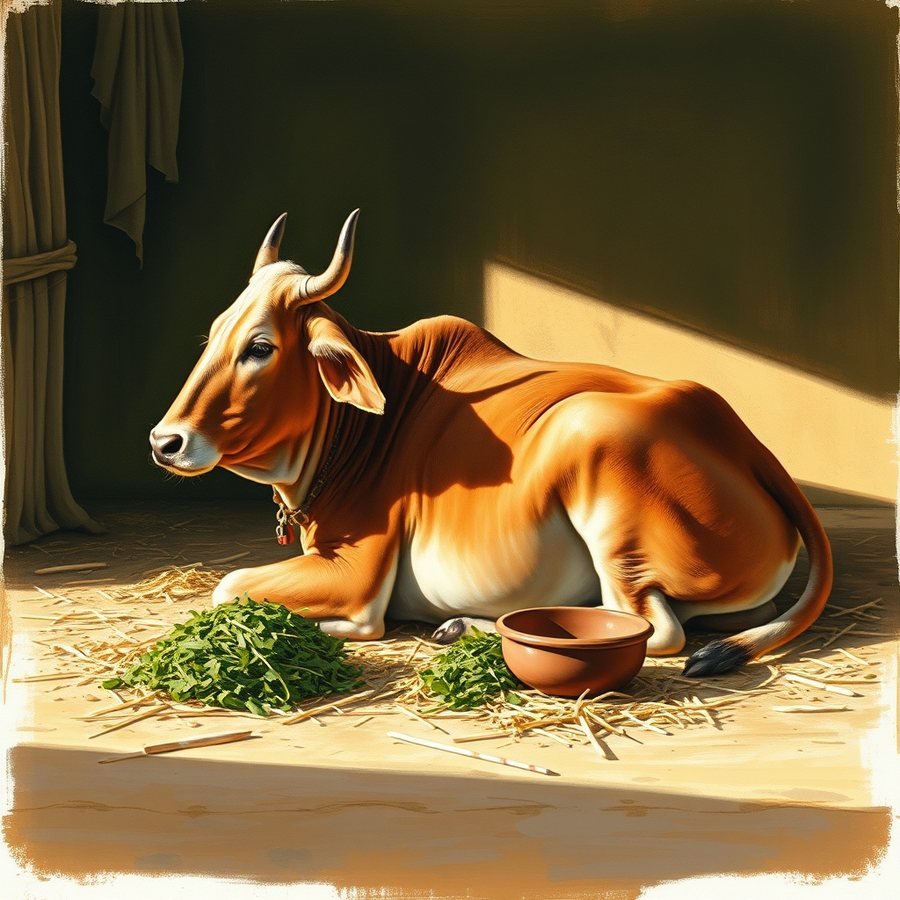
A cow that stops giving milk is still our cow. She stays on the farm, with the same feed, the same shed and the same medical care she had when she was milking. We do not sell her on and we do not let her go. That is the whole basis of the ghee we make — you cannot ask an animal for her milk and then abandon her for it.
Our mission goes further than our own herd. There are cows on the street who are injured every day, who eat plastic, who cry through the night with nobody coming. We want to take them in. The plan is a chain of Organic Farmz gaushalas in several places, so that help is not one shed in one city but something a hurt animal can actually reach.
This takes more than we can carry alone — land, fodder, vets, hands. Come and join our initiative. Anything you give goes to feed, treat and shelter these cows.

Scan with any UPI app
Bank transfer
- Account name Organic Farmz
- Bank Indian Bank
- Account number 8133177322
- IFSC code IDIB000K555
- UPI ID organicfarmz@ptaxis
On a phone, the button above opens your UPI app directly — a QR on the screen you are reading cannot be scanned by that same screen. On a laptop, scan the code with your phone instead.
How Seasonal Changes Affect Texture
If you notice your jar of ghee looking slightly different in winter than it does in summer, there is no need to worry. Ghee is naturally composed of delicate milk fats that change physical state at temperatures around thirty-two to thirty-five degrees Celsius. In cooler months, these fats solidify into a rich texture that scoops easily with a spoon. In peak summer heat, the fats warm up and melt into a smooth liquid oil.
Neither state indicates a loss of quality or freshness. If your ghee separates into a liquid top layer with a granular solid layer at the bottom during warm weather, this is simply natural fat separation. Giving the jar a gentle stir with a clean, dry wooden spoon and placing it in a cool spot will help it settle evenly again.
Essential Storage Tips for Everyday Freshness
Traditionally, ghee was known as one of the most stable kitchen staples in the Indian household, capable of staying fresh for months without refrigeration. You can easily preserve its natural aroma and flavor by following a few practical storage habits. First, always store your ghee in a jar made of glass, stainless steel, or traditional ceramic. Avoid soft plastic containers, as plastic can absorb kitchen odors and react with natural oils over time.
Second, keep your ghee jar in a cool, dark pantry away from direct sunlight and stove heat. While keeping the jar right next to the burner might feel convenient during quick morning cooking, constant exposure to stove warmth causes the fats to melt and solidify repeatedly, which gradually dulls the fresh aroma.
Simple Habits to Keep Moisture Away
Moisture is the primary reason ghee loses its fresh smell or develops off-flavors over time. Water droplets introduced into the jar provide an environment for spoilage to take hold. To prevent this, always make sure the spoon you use to scoop out ghee is completely dry and clean.
A practical tip long used in home kitchens is to keep two containers: a small, everyday jar near your cooking area and a larger main jar in your pantry. Fill the small jar once a week for daily use, whether you are brushing hot ghee over fresh phulkas, tempering cumin in a kadai, or drizzling a spoonful over a steaming bowl of khichdi. By opening the main jar less frequently, you protect the bulk of your ghee from unnecessary exposure to steam and kitchen moisture.
Connecting with Traditional Kitchen Wisdom
Preparing food with A2 Gir cow ghee made through the traditional bilona process connects us to a timeless way of living that honors natural ingredients and simple daily care. The changing texture, deep golden hue, and comforting scent of real ghee are gentle reminders of food made without industrial shortcuts.
At Organic Farmz, we prepare our A2 Gir cow ghee with patience and care, honoring every step of the traditional bilona method. When you care for that jar in your kitchen with clean spoons, glass storage, and a dry pantry shelf, you preserve the true spirit of traditional cooking for your family every single day.
Taste the difference
Small-batch A2 Gir cow ghee, hand-churned to order and delivered across India. Read how we make it if you want the detail first.
Order a jarKeep reading
-
 How Long Does Ghee Last Once Opened?
Once opened, pure A2 Gir cow bilona ghee lasts 6 to 9 months in a pantry and over a year in the fridge.…
How Long Does Ghee Last Once Opened?
Once opened, pure A2 Gir cow bilona ghee lasts 6 to 9 months in a pantry and over a year in the fridge.…
-
 Storing Ghee in a Delhi Summer
Learn how to maintain the quality and aroma of your A2 Gir cow ghee during the intense Indian summer without…
Storing Ghee in a Delhi Summer
Learn how to maintain the quality and aroma of your A2 Gir cow ghee during the intense Indian summer without…
-
 How to Store Ghee Properly
Authentic bilona ghee is naturally shelf-stable, but external moisture is its silent enemy. Learn how simple…
How to Store Ghee Properly
Authentic bilona ghee is naturally shelf-stable, but external moisture is its silent enemy. Learn how simple…
