
The Bilona Method: How A2 Gir Cow Ghee Is Actually Made

Bilona ghee is made by culturing whole milk into curd overnight, hand-churning that curd into butter, and simmering the butter slowly until the water cooks off and ghee remains. It is the older of the two ways to make ghee, and the slower one. Between 25 and 30 litres of milk go into a single litre.
Almost all ghee sold in shops is made a different way: cream is separated from milk by centrifuge and cooked directly into ghee, skipping the curd and the churn entirely. Both products are legally ghee. They are not the same thing, and this page explains exactly where they part company.
What is the bilona method?
Bilona takes its name from the wooden churner used to work the curd. The full process has four stages, and none of them can be hurried:
- The milk is set into curd. Whole milk is cooled to about body temperature, cultured, and left overnight to set. This fermentation step is the one the industrial method leaves out, and it is where much of the aroma comes from.
- The curd is churned. The set curd is churned — traditionally by hand with a wooden bilona — until butter separates and floats. What is left behind is buttermilk, not skimmed milk.
- The butter is washed and simmered. The butter is rinsed, then cooked over a low flame. Water steams off, milk solids settle and brown, and the fat clarifies.
- It is strained and jarred while warm. The browned solids are strained out and the ghee is poured warm, then left to set at its own pace.
How much milk does one litre of ghee take?
Between 25 and 30 litres. That single ratio explains most of the price difference between hand-churned and factory ghee. Cream separation extracts far more fat per litre of milk, faster, with less labour and no overnight wait. Bilona spends milk to buy character.
Our cows are not use and throw
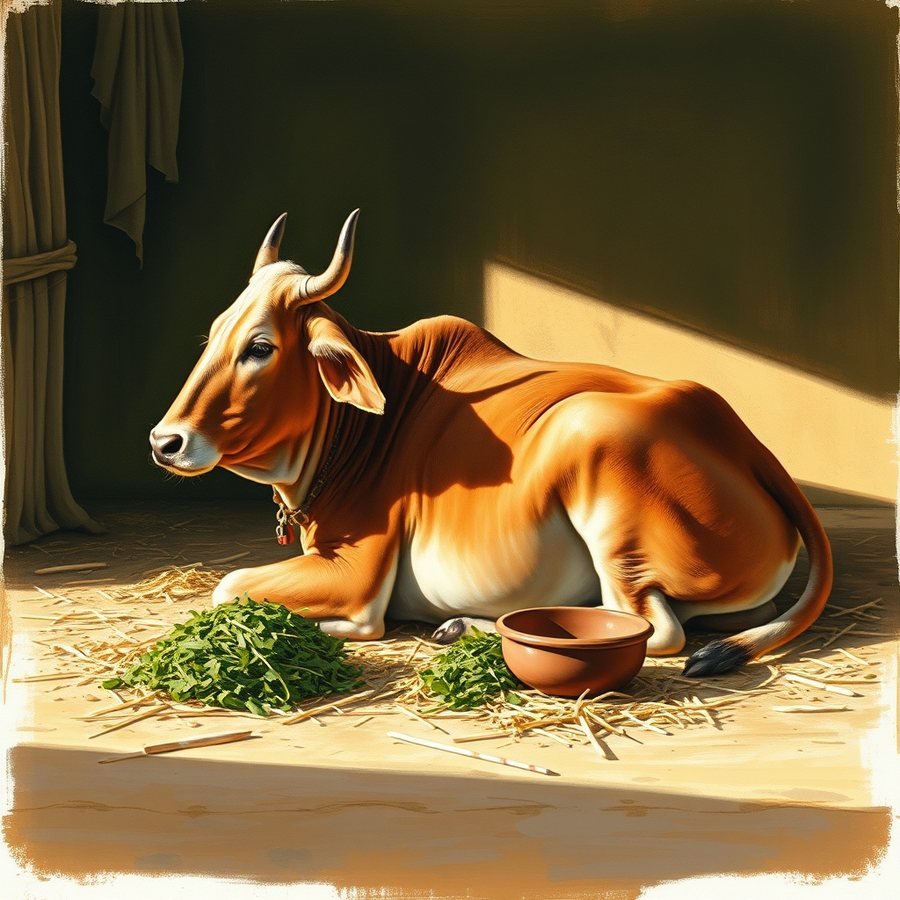
A cow that stops giving milk is still our cow. She stays on the farm, with the same feed, the same shed and the same medical care she had when she was milking. We do not sell her on and we do not let her go. That is the whole basis of the ghee we make — you cannot ask an animal for her milk and then abandon her for it.
Our mission goes further than our own herd. There are cows on the street who are injured every day, who eat plastic, who cry through the night with nobody coming. We want to take them in. The plan is a chain of Organic Farmz gaushalas in several places, so that help is not one shed in one city but something a hurt animal can actually reach.
This takes more than we can carry alone — land, fodder, vets, hands. Come and join our initiative. Anything you give goes to feed, treat and shelter these cows.

Scan with any UPI app
Bank transfer
- Account name Organic Farmz
- Bank Indian Bank
- Account number 8133177322
- IFSC code IDIB000K555
- UPI ID organicfarmz@ptaxis
On a phone, the button above opens your UPI app directly — a QR on the screen you are reading cannot be scanned by that same screen. On a laptop, scan the code with your phone instead.
Bilona versus machine-made ghee
| Bilona (hand-churned) | Industrial (cream-separated) | |
|---|---|---|
| Starts from | Curd, set overnight | Cream, separated by centrifuge |
| Fermentation step | Yes — this is the difference | No |
| Milk per litre of ghee | 25–30 litres | Considerably less |
| Texture when set | Often grainy (danedar) | Usually smooth and uniform |
| Batch size | Small, often made to order | Continuous, stored |
| Time per batch | Roughly a day, most of it waiting | Hours |
Why does real bilona ghee turn grainy?
That granular texture has a name — danedar — and it is normal. It happens when ghee cools slowly enough for the fat to crystallise rather than setting as one smooth block. A grainy jar is generally read as a sign of an unhurried cook. A perfectly uniform one is not evidence of anything wrong; it usually just means the ghee was cooled quickly.
What is the smoke point of ghee?
Ghee smokes at roughly 250°C, well above most cooking oils and far above the temperature of a domestic tadka. Because the milk solids and water have already been cooked out, there is very little left in it to burn — which is why it holds up to frying and to the high heat Indian cooking tends to use.
Why is it more expensive?
Three reasons, in order of weight: the milk-to-ghee ratio above; the labour, because churning and slow-cooking small batches does not scale the way a centrifuge does; and batch size, because ghee made to order is not made in bulk and stored. None of those premiums buy a different chemical product. They buy a different process.
How to store it
Keep the jar closed, cool, and out of direct sunlight, and always use a dry spoon. Moisture is what spoils ghee — not air, and not time. Refrigeration is unnecessary, though it does no harm in a humid summer. Ghee that has been kept dry lasts a long while at room temperature.
Where this ghee comes from
Organic Farmz makes A2 Gir cow ghee this way, in Delhi, in small batches. A2 refers to the beta-casein protein in the milk of indigenous Gir cows, as distinct from the A1 protein in most crossbred dairy milk — it describes the breed and its milk, not a health claim. Every jar is made after the order is placed, and a 1 litre jar is Rs 2,400.
Taste the difference
Small-batch A2 Gir cow ghee, hand-churned to order and delivered across India. Read how we make it if you want the detail first.
Order a jarKeep reading
-
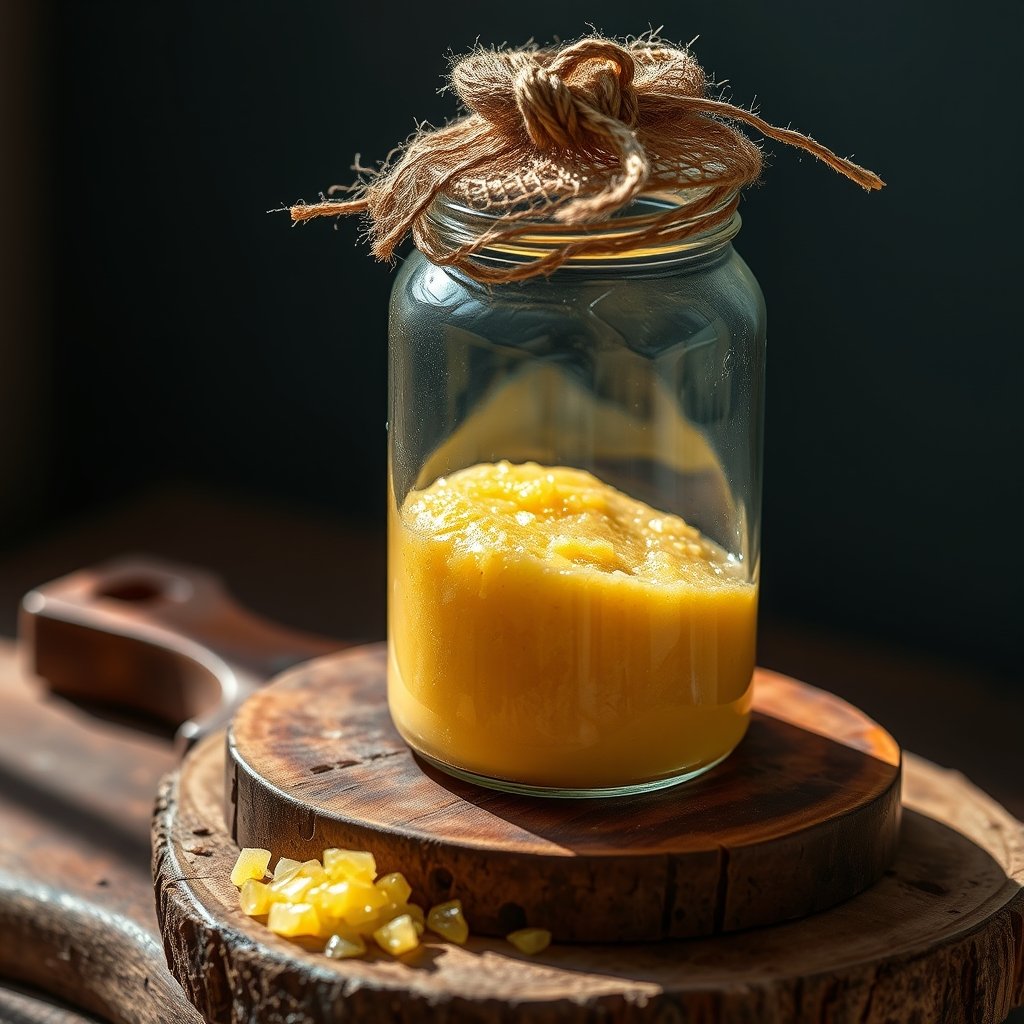 Machine vs Bilona Ghee: Spot Real Bilona by Grain Size
Real bilona ghee is identifiable by its distinct danedaar texture and nutty aroma, whereas machine-made ghee…
Machine vs Bilona Ghee: Spot Real Bilona by Grain Size
Real bilona ghee is identifiable by its distinct danedaar texture and nutty aroma, whereas machine-made ghee…
-
 Ghee vs Butter: What Actually Changes When You Swap Them
Swapping butter for ghee alters your pan's heat tolerance, moisture balance, and flavor profile. Learn what…
Ghee vs Butter: What Actually Changes When You Swap Them
Swapping butter for ghee alters your pan's heat tolerance, moisture balance, and flavor profile. Learn what…
-
 Why We Do Not Keep Ghee in Stock
A look into why fresh, made-to-order A2 Gir cow ghee is prepared in small batches after you order rather…
Why We Do Not Keep Ghee in Stock
A look into why fresh, made-to-order A2 Gir cow ghee is prepared in small batches after you order rather…
