
How to Make a Proper Tadka With Ghee
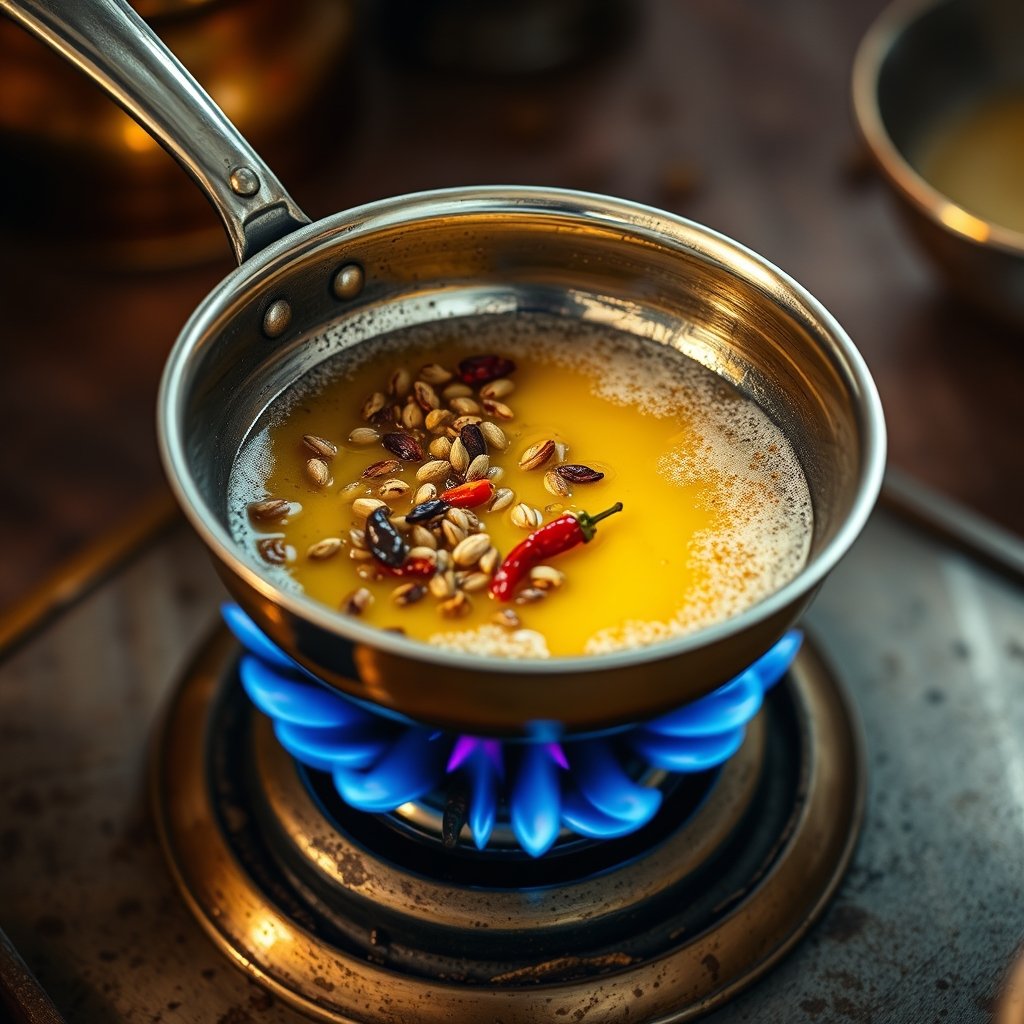
To make a proper tadka with ghee, you must heat the ghee gently in a small pan, add your whole spices in order of their individual cooking times so they bloom without burning, and pour the hot, bubbling mixture directly into your prepared dish at the very end of cooking.
This simple act—known variously as tadka, chaunk, baghar, or vaghar across different regions of India—is the culinary foundation of Indian home cooking. It is not merely a method of frying spices; it is an active extraction process. Ghee serves as a highly efficient carrier fat, dissolving and absorbing the fat-soluble essential oils of spices, which then disperses those intense flavors evenly throughout a pot of dal, kadhi, or subzi.
Why does the order of spices matter in a ghee tadka?
Spices have different densities, moisture levels, and thermal tolerances, meaning they cook at vastly different speeds. If you throw mustard seeds, cumin seeds, and ground turmeric into hot ghee at the same moment, the turmeric will turn black and bitter before the mustard seeds even begin to pop.
A precise, step-by-step sequence ensures that every ingredient is cooked perfectly:
- First - Heavy Seeds: Start with mustard seeds (rai). They require a relatively high heat to crackle and release their oils.
- Second - Lighter Seeds and Aromatics: Once the mustard seeds begin to pop, lower the heat and add cumin seeds (jeera), fennel, or coriander seeds. These brown in seconds.
- Third - Fresh Herbs and Wet Aromatics: Add slit green chilies, minced ginger, garlic, or fresh curry leaves. Be prepared for a lively splutter as the moisture from these ingredients hits the hot ghee.
- Fourth - Off-the-Heat Spices: Turn off the stove before adding delicate ingredients like asafoetida (hing), red chili powder, or turmeric. The residual heat of the ghee is more than enough to bloom these powders without burning them.
How do you control the temperature of ghee during tempering?
Controlling the flame is the secret to a successful tadka. Ghee has a high smoke point of approximately 250°C (482°F), which makes it incredibly stable under heat and far less likely to break down or produce harmful free radicals than butter or cold-pressed oils. However, because tadka is usually made in a small, heavy-bottomed tempering pan (often iron, brass, or clay), the temperature can rise rapidly.
Keep your flame on medium-low. If you notice the ghee beginning to wisps with smoke, lift the pan off the burner immediately. You can continue adding your spices while holding the pan a few inches above the flame, letting the retained heat of the metal do the work. The goal is to gently toast the spices until they swell and become fragrant, not to scorch them.
What is the difference between a ghee tadka and an oil tadka?
While both ghee and vegetable oils are used for tempering across India, they interact with spices and heat in fundamentally different ways. Choosing between them changes both the final texture and the aromatic profile of your meal.
| Feature | Ghee Tadka | Oil Tadka (e.g., Mustard or Refined Oil) |
|---|---|---|
| Smoke Point | Very high (~250°C), highly stable | Variable (Mustard oil has ~250°C; refined oils vary) |
| Flavor Profile | Rich, nutty, slightly sweet, and round | Neutral (refined) or pungent and sharp (mustard) |
| Aroma Retention | Binds and holds volatile spice aromas beautifully | Carries spice flavors but lacks inherent sweet depth |
| Traditional Use | Used for dals, festive dishes, and Ayurvedic preparations | Used for everyday regional curries and pickles |
In Ayurvedic cooking, ghee is considered a shreshtha (excellent) vehicle (or anupana) because it carries the therapeutic properties of spices deep into the body's tissues. The saturated fats in ghee are easily digested, making it a soothing choice for everyday meals.
How does bilona A2 Gir cow ghee elevate a simple tadka?
The quality of your ghee dictates the quality of your tadka. Standard, factory-made ghee is often produced by heating cream at high speeds, which can strip away the delicate flavor compounds. In contrast, traditional bilona ghee is made by boiling A2 Gir cow milk, setting it into curd, churning that curd with a wooden bi-directional churn (bilona) to separate the butter, and then slowly clarifying that butter over a wood or cow-dung flame.
This slow, traditional method allows trace caramelized milk solids to develop during clarification, giving bilona ghee a deeply complex, nutty aroma. When you use this ghee for a tadka, those caramelized elements meld with the blooming cumin and curry leaves, producing a fragrance that fills the entire home—a warm, nostalgic aroma that refined oils simply cannot replicate. A single spoonful of bilona A2 ghee tadka poured over simple boiled yellow dal transforms it from a basic meal into a deeply satisfying, traditional feast.