
How to Choose Bilona Ghee: A Buyer's Checklist
How to Choose Bilona Ghee: A Buyer's Checklist
You can choose authentic bilona ghee by verifying five specific markers: the source milk, the curd-churning method, the batch size, the storage jar material, and the seller's transparency when questioned. When you walk into a market or browse online stores for traditional Indian kitchen staples, labels often use words like 'traditional' or 'pure' loosely. Having a clear checklist protects your family table and ensures you get the real nourishment your grandmother relied upon for daily dal, roti, and seasonal sweets.
What should you look for in the milk source?
True bilona ghee begins with pure A2 milk, specifically from indigenous Indian cattle breeds like the Gir cow. Indigenous cows produce milk containing A2 beta-casein protein, which is distinct from the A1 protein found in milk from many exotic or crossbred cows. When checking a product, look for clear confirmation that the dairy uses milk exclusively from grass-fed native breeds rather than mixed or anonymous milk pools. At Organic Farmz, we work directly with farms that maintain heritage Gir herds, ensuring the raw milk honors centuries of Indian dairy tradition.
How do you verify the traditional bilona method?
The defining feature of bilona ghee is that it is never made by directly churning cream skimmed off raw milk. Instead, the whole milk is first boiled, cooled, and set into natural curd using a small culture of previous curd. This curd is then churned manually or with a slow wooden paddle—historically called a bilona—to separate the makkhan or butter. This slow churning process takes time and physical effort, which is why true bilona ghee tastes richer and smells distinctly nutty when warmed over a gentle flame in your kitchen.
Here is a quick comparison to help you spot the difference between standard commercial ghee and traditional artisanal ghee:
| Feature | Commercial Cream Ghee | Traditional Bilona Ghee |
|---|---|---|
| Raw Material | Cream separated mechanically | Whole milk set into curd first |
| Churning Process | High-speed industrial centrifuge | Slow churning of curd (bilona) |
| Texture & Aroma | Uniform, mild, sometimes neutral | Grainy (danedaar), rich aroma |
Our cows are not use and throw

A cow that stops giving milk is still our cow. She stays on the farm, with the same feed, the same shed and the same medical care she had when she was milking. We do not sell her on and we do not let her go. That is the whole basis of the ghee we make — you cannot ask an animal for her milk and then abandon her for it.
Our mission goes further than our own herd. There are cows on the street who are injured every day, who eat plastic, who cry through the night with nobody coming. We want to take them in. The plan is a chain of Organic Farmz gaushalas in several places, so that help is not one shed in one city but something a hurt animal can actually reach.
This takes more than we can carry alone — land, fodder, vets, hands. Come and join our initiative. Anything you give goes to feed, treat and shelter these cows.

Scan with any UPI app
Bank transfer
- Account name Organic Farmz
- Bank Indian Bank
- Account number 8133177322
- IFSC code IDIB000K555
- UPI ID organicfarmz@ptaxis
On a phone, the button above opens your UPI app directly — a QR on the screen you are reading cannot be scanned by that same screen. On a laptop, scan the code with your phone instead.
Why does batch size matter when buying?
Industrial dairies produce thousands of kilos daily in continuous mechanized lines, blending milk from multiple sources to maintain a standardized, homogenous product year-round. In contrast, traditional bilona ghee is made in small batches by artisans who watch the pot carefully as the butter simmers down. Small-batch production means the ghee retains natural seasonal variations in color and aroma, reflecting what the Gir cows grazed on during that particular month. When a seller makes ghee in limited quantities, you are far more likely to receive a fresh batch poured straight from the simmering vessel.
What kind of jar should your ghee come in?
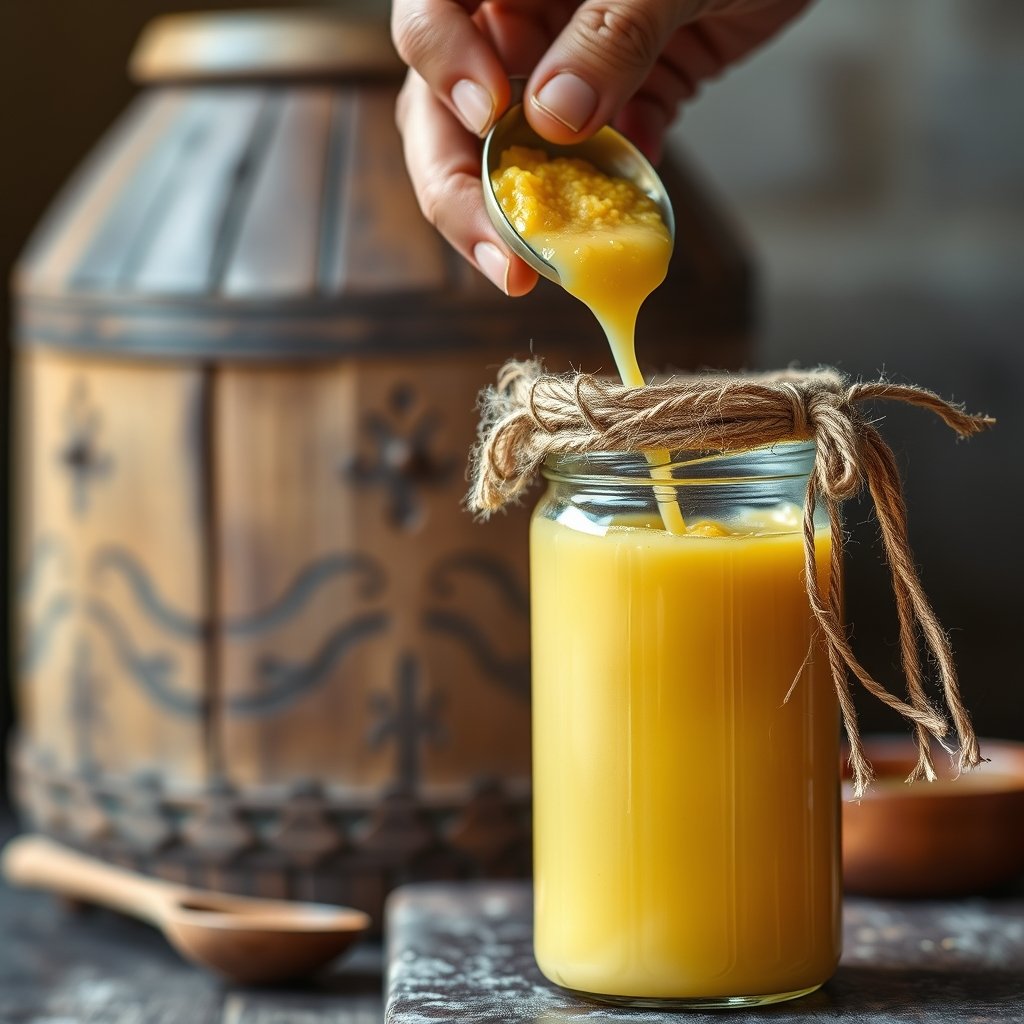
The vessel storing your ghee is just as important as the churning method. Traditional Indian wisdom warns against storing fats in reactive metal containers like brass or copper for extended periods. High-quality bilona ghee should always be packed in food-grade glass jars or heavy food-grade steel containers that protect the fat from chemical leaching and preserve its natural shelf life. Avoid flimsy plastic containers that can impart odors into the fat, especially when the ghee is warm and liquid during hot summer months.
What questions should you ask a vague seller?
If a product label or online listing uses evasive terms like 'pure cow ghee' without specifying the breed or method, you should ask direct questions before purchasing. Ask the seller: Which specific breed of cow produced this milk? Can you describe your curd-churning process? Is your ghee made from cultured curd or direct cream? Where is your dairy located, and who oversees the boiling and simmering? A transparent maker will answer these questions readily, happy to share the details of their kitchen practices and dairy shed management.
Taste the difference
Small-batch A2 Gir cow ghee, hand-churned to order and delivered across India. Read how we make it if you want the detail first.
Order a jarKeep reading
-
 Choosing Ghee for a Toddler: Pick Fresh Bilona
Choose cultured A2 bilona ghee packed in small glass jars for a toddler kitchen to ensure mild sweetness…
-
 A2 vs Regular Ghee: Buy A2 for Taste, Regular for Frying
Buy A2 bilona ghee if you spoon it over warm dal or roti; standard commercial ghee suits heavy deep-frying…
-
 Questions to Ask a Ghee Seller Before You Buy
Buying the right ghee involves more than just looking at a label; it requires asking specific questions…
