
Ghee vs Refined Oil for Everyday Indian Cooking
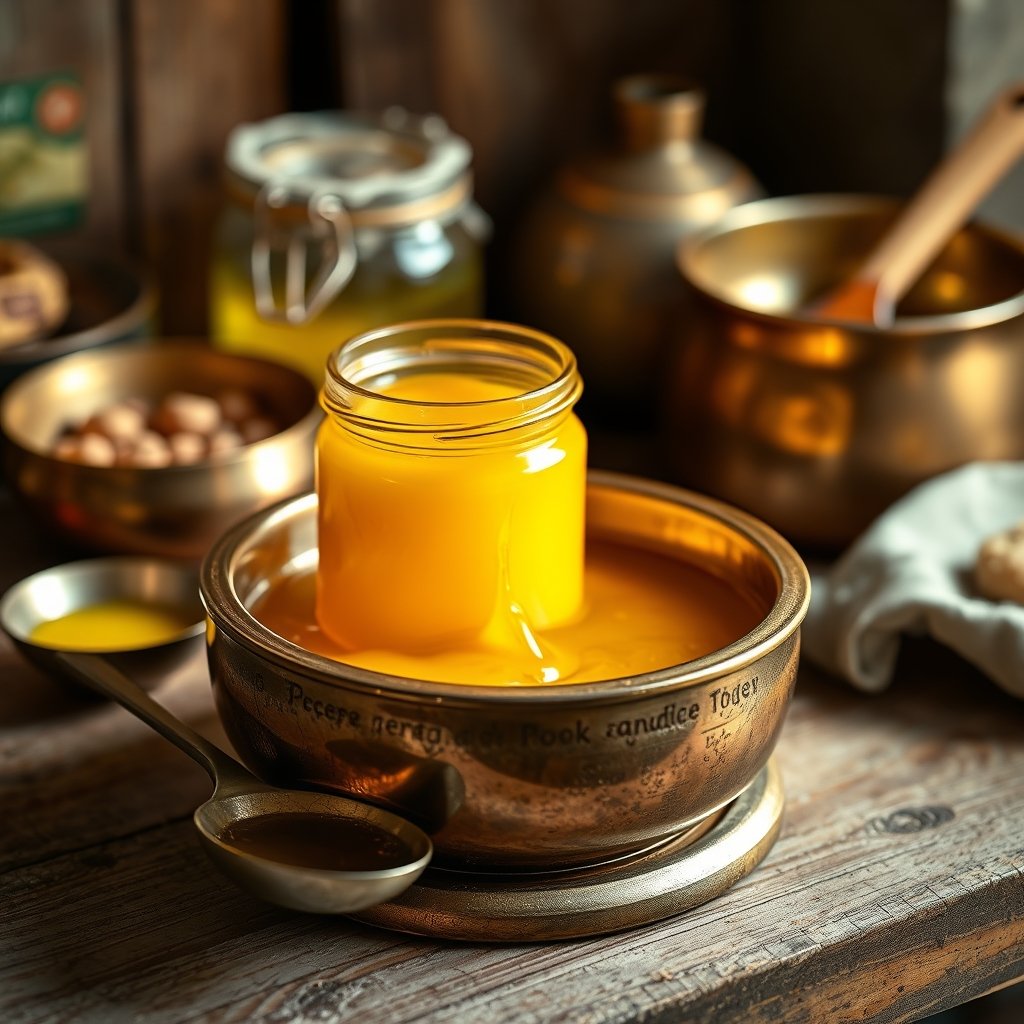
Ghee and refined oil differ fundamentally in their origin, heat stability, and flavor profiles: traditional bilona ghee is a cultured, heat-stable fat rich in aroma and milk fats, whereas refined oils are industrially extracted seed or vegetable fats processed to be neutral in taste and texture.
How Are Refined Oils and Traditional Bilona Ghee Produced?
The difference between ghee and refined oil begins at the very source. Most refined oils—such as sunflower, soybean, rice bran, or palm oil—are extracted using high-pressure mechanical pressing followed by chemical solvent extraction, usually with hexane. To make the oil shelf-stable and neutral, manufacturers heat it to high temperatures, neutralize it with chemicals, bleach out natural pigments, and deodorize it. This yields a pale, clear liquid without smell or distinct taste.
In contrast, traditional A2 Gir cow ghee made through the bilona method follows a slow, patience-driven micro-dairy process. Whole milk from Gir cows is first boiled and cooled, then cultured with natural curd starter overnight. The resulting curd is churned bi-directionally with a wooden churner (the bilona) to separate fresh butter (makkhan). This butter is then slowly cooked in open brass or iron pans. As the water evaporates and the milk solids brown gently at the bottom, the clear, golden fat is strained off. Nothing is chemically stripped, bleached, or artificial.
What Happens When Ghee or Refined Oil Hits the Kadai?
Everyday Indian cooking relies heavily on heat—whether you are frying puris, searing vegetables for a dry sabzi, or blooming spices for a dal tempering. Heat stability depends on the smoke point and the molecular structure of the fat.
Ghee has a naturally high smoke point of roughly 250°C (482°F). Because the milk solids (lactose and casein) are separated out during the clarification process, ghee does not burn easily when heated in a heavy-bottomed kadai. Its saturated and monounsaturated fatty acid structure remains stable under high heat, resisting rapid breakdown.
Refined oils also feature high smoke points due to industrial processing. However, many refined seed oils are high in polyunsaturated fatty acids (PUFAs). Under repeated or high-heat cooking, polyunsaturated fats tend to oxidize more quickly than saturated fats, forming breakdown compounds and free radicals in the pan. Ghee offers natural structural stability without requiring industrial refining to withstand daily pan heat.
How Do Ghee and Refined Oil Compare at a Glance?
To help you see how these two cooking fats behave side by side in the kitchen, here is a quick comparison:
| Feature | Traditional A2 Bilona Ghee | Refined Cooking Oil |
|---|---|---|
| Processing Method | Slow simmered from churned curd butter | Solvent extraction, bleaching, & deodorization |
| Smoke Point | High (~250°C / 482°F) | High (varies from 200°C to 230°C) |
| Fat Structure | Predominantly stable saturated & monounsaturated fats | High in polyunsaturated fats (varies by seed) |
| Flavor Impact | Rich, nutty aroma that enhances spices | Neutral, odorless, and flavorless |
| Ayurvedic View | Sattvic, balances Agni (digestive fire) and Pitta/Vata | Tamasic or heavy due to industrial refining |
| Shelf Life | Long room-temperature shelf life without additives | Requires synthetic preservatives or tight sealing |
How Do Flavor and Aroma Change Daily Indian Dishes?
In Indian cuisine, fat is not just a cooking medium; it is a primary flavor carrier. Spices contain fat-soluble aromatic compounds that release fully only when cooked in fat. Refined oil acts as an invisible medium. Because it lacks taste, it allows ingredients to stand alone, but it adds no warmth or aromatic depth to the dish.
Bilona ghee, on the other hand, actively transforms flavor. When whole cumin seeds, mustard seeds, dry red chillies, and curry leaves hit hot ghee in a small tadka pan, the fat absorbs the essential oils of the spices and creates a complex, nutty aroma. Drizzled over hot khichdi, brushed over fresh phulkas, or mixed into steamed rice, A2 Gir cow ghee brings a richness that refined oil simply cannot replicate.
What Is the Ayurvedic Perspective on Daily Cooking Fats?
Ayurveda has long classified fats based on their impact on body energy and digestion. In traditional texts, cultured cow ghee (Ghrita) is considered one of the finest *sattvic* foods—foods that promote balance, clarity, and gentle nourishment. Ayurveda notes that ghee kindles *Agni* (the digestive fire) without aggravating *Pitta* dosha, allowing nutrients from spices and vegetables to be absorbed efficiently by the body tissues.
Refined oils do not hold a place in classical Ayurvedic treatises because industrial refining did not exist. However, contemporary Ayurvedic practitioners often classify highly processed, solvent-extracted oils as *tamasic* or heavy to digest, as the natural intelligence and vitality of the seed oil are lost during chemical bleaching and high-heat deodorization.
Which Fat Belongs in Your Kitchen?
Choosing what to cook with depends on your daily goals, but for classic Indian meals, traditional fats align seamlessly with traditional recipes. Refined oils offer convenience and a neutral backdrop, but they come at the cost of heavy industrial processing and lower heat stability over long cooking sessions.
Bringing A2 Gir cow bilona ghee back to your stove restores a centuries-old harmony between heat, flavor, and natural ingredients. Whether you are tempering a simple dal or roasting flour for seasonal sweets, a spoonful of genuine bilona ghee offers clear aroma, stable cooking performance, and authentic kitchen tradition.