
Ghee Melted in Transit: No, Your Jar Is Not Ruined
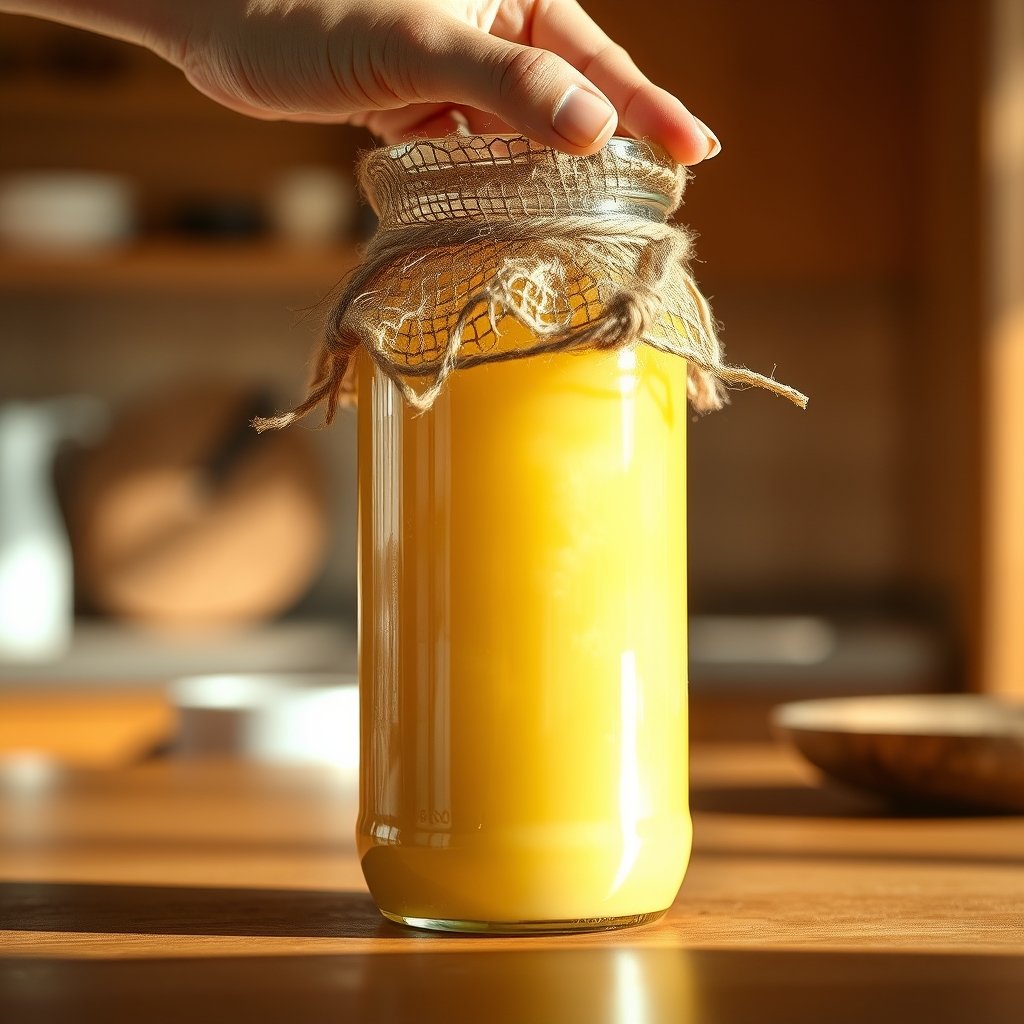
Is melted ghee still safe to eat?
No, ghee that arrives in a liquid state is not ruined; it has simply reached its melting point during transit and will regain its quality once cooled. Ghee is a pure butterfat with a melting point typically between 32°C and 35°C. Given the climate in many parts of India, courier vans and sorting facilities often reach temperatures well above this range. When the fat molecules absorb this heat, they lose their solid structure and turn into a golden liquid. This is a physical change, not a chemical one, meaning the molecular integrity of the A2 Gir cow ghee remains intact. You can safely use it in its liquid form or allow it to reset into a solid.
Why does ghee melt during shipping?
Ghee melts during shipping because it is a shelf-stable fat that does not contain the water or milk solids that help maintain the structure of cold butter. In the traditional bilona method, we churn curd to obtain butter and then slow-cook that butter to remove all moisture. What remains is 99.9% milk fat. Because there is no water to provide a structural matrix, the fat is highly sensitive to ambient temperature. During the journey from our farm to your doorstep, the jar may sit in delivery hubs or transit vehicles where temperatures naturally exceed 35°C. This transition to a liquid state is actually a sign that the ghee is pure and free from wax or hardening agents that some commercial brands might add to maintain a consistent look.
Does melting change the nutritional profile of A2 ghee?
Melting does not change the nutritional profile or the fatty acid composition of A2 Gir cow ghee. The fat-soluble vitamins—A, D, E, and K—along with the butyric acid and Omega-3 fatty acids, are heat-stable at the temperatures usually encountered during transit. Since ghee is already produced by heating butter to high temperatures (around 105°C to 110°C) to separate the solids, the lower heat of a delivery truck (40-50°C) does not degrade the fat. In Ayurveda, ghee is prized for its stability and its ability to act as a carrier for nutrients, and this stability ensures that a simple state change from solid to liquid does not diminish its value in your kitchen.
How can you restore the grainy texture of bilona ghee?
To restore the grainy or 'danedaar' texture of bilona ghee, you should allow the jar to cool down slowly at room temperature rather than putting it immediately in the refrigerator. The distinct grains in traditional ghee are formed by different types of fat molecules solidifying at different rates. When ghee cools slowly, the stearic and palmitic acids have time to crystallize into the familiar granules that Indian home cooks look for. If you shock the ghee by placing it in a cold fridge while it is hot, it will often set into a very hard, smooth, and waxy block without any grains. If your ghee has arrived completely liquid, simply place it in a cool, dark corner of your pantry and leave it undisturbed for 24 hours.
Our cows are not use and throw

A cow that stops giving milk is still our cow. She stays on the farm, with the same feed, the same shed and the same medical care she had when she was milking. We do not sell her on and we do not let her go. That is the whole basis of the ghee we make — you cannot ask an animal for her milk and then abandon her for it.
Our mission goes further than our own herd. There are cows on the street who are injured every day, who eat plastic, who cry through the night with nobody coming. We want to take them in. The plan is a chain of Organic Farmz gaushalas in several places, so that help is not one shed in one city but something a hurt animal can actually reach.
This takes more than we can carry alone — land, fodder, vets, hands. Come and join our initiative. Anything you give goes to feed, treat and shelter these cows.

Scan with any UPI app
Bank transfer
- Account name Organic Farmz
- Bank Indian Bank
- Account number 8133177322
- IFSC code IDIB000K555
- UPI ID organicfarmz@ptaxis
On a phone, the button above opens your UPI app directly — a QR on the screen you are reading cannot be scanned by that same screen. On a laptop, scan the code with your phone instead.
How do you distinguish between melted ghee and spoiled ghee?
It is important to distinguish between a natural state change and actual spoilage, although the latter is rare for pure bilona ghee due to its low moisture content. Melted ghee will be clear and golden with a clean, nutty aroma. Spoiled ghee usually indicates that moisture has entered the jar, leading to oxidation or microbial growth. Use the table below to check the condition of your jar upon arrival.
| Feature | Melted (Liquid) Ghee | Spoiled (Rancid) Ghee |
|---|---|---|
| Aroma | Nutty, rich, and sweet | Sour, metallic, or soapy | Appearance | Transparent golden yellow | Dull, greyish, or dark spots | Consistency | Uniform liquid or semi-solid | Presence of liquid water or mould | Safety | Completely safe for consumption | Must be discarded immediately |
Is liquid ghee a sign of adulteration?
No, liquid ghee is not a sign of adulteration; in fact, ghee that remains rock-solid in high heat is often a greater cause for concern. Some hydrogenated vegetable oils (vanaspati) or fats with added paraffin wax are engineered to stay solid at higher temperatures to look 'better' on retail shelves. Pure A2 Gir cow ghee, made via the bilona process, is an honest reflection of the ambient temperature. In the peak of an Indian summer, it is perfectly normal for ghee to remain liquid in your kitchen cabinet. In the winter, that same jar will naturally turn hard and pale. These seasonal shifts are the hallmark of a natural product that hasn't been chemically altered for cosmetic consistency.
How should you handle the jar immediately after delivery?
When your ghee arrives, handle the jar carefully as the contents may be under slight pressure if the weather is very hot. Do not shake the jar, as this can incorporate air bubbles that might affect the texture as it resets. Wipe the outside of the glass jar if any slight seepage occurred during the pressure changes of transit—this is common and does not mean the seal is broken. Place the jar on a flat surface in a cool part of your home. If you prefer a very grainy texture and the ghee is currently liquid, you can slightly warm it further in a double boiler until it is completely clear, then wrap the jar in a thick towel to ensure it cools down as slowly as possible over the next several hours.
Can you use the ghee while it is still liquid?
Yes, you can use the ghee immediately while it is liquid for any cooking, tadka, or drizzling over rotis and dal. In many parts of Southern and Western India, ghee is traditionally stored and used in its liquid form year-round. The liquid state makes it easier to measure for recipes and ensures it blends quickly into hot grains. Whether you prefer the granular 'danedaar' feel of semi-solid ghee or the golden pour of liquid ghee is entirely a matter of personal preference and regional habit; the internal quality and the traditional benefits remain exactly the same.
Taste the difference
Small-batch A2 Gir cow ghee, hand-churned to order and delivered across India. Read how we make it if you want the detail first.
Order a jarKeep reading
-
 Melting Ghee in Summer: It Is Perfectly Safe to Use
Liquid ghee in summer is completely safe to use because physical melting does not alter its nutritional…
-
 Sending Ghee From Delhi: Pack Tight in Double Boxes
You can courier ghee from Delhi safely by sealing the jar lid, wrapping it in air cushions, and packing it…
-
 Storing Ghee in Delhi Heat: Keep Jars Dry in Shade
Ghee turns completely liquid in Delhi heat above 35°C, which is normal. Keep the glass jar in a dark, dry…
