
Melting Ghee in Summer: It Is Perfectly Safe to Use
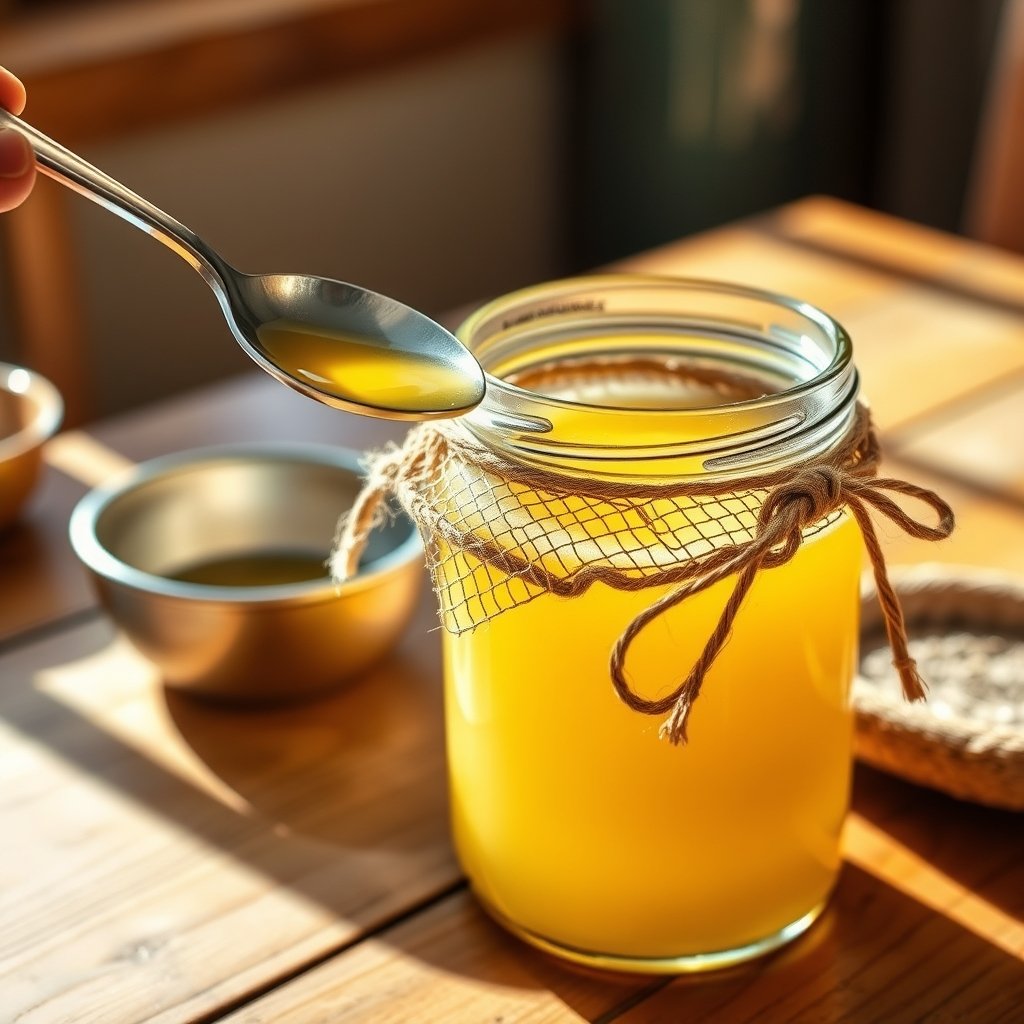
In Indian households, the changing of the seasons brings noticeable shifts to the kitchen pantry. As the dry winter breeze transitions into warm summer afternoons, you might observe a visual change in your kitchen jar. Your hand-churned A2 Gir cow bilona ghee, which maintained a firm, beautiful, grainy texture during the cooler months, may have transformed into a clear, golden liquid. This change often causes concern for home cooks who are accustomed to highly processed fats. However, this physical transition is entirely normal and safe.
Why does A2 Gir cow ghee melt so easily in summer?
A2 Gir cow ghee has a natural melting point that typically ranges between 32°C and 35°C (89.6°F to 95°F). In many regions of India, indoor temperatures during the summer months easily rise above this threshold. Because genuine bilona ghee is made without any chemical stabilizers, hydrogenated oils, or artificial emulsifiers, it responds directly to the ambient climate. The melting of your ghee is actually a clear sign of its purity; it contains only natural lipids from cow's milk. The fat molecules simply separate and liquefy as the room warms up, reflecting the true, unadulterated nature of traditional dairy products.
Does liquid ghee lose its nutritional value or ayurvedic properties?
No, liquid ghee does not lose its nutritional value, taste, or traditional ayurvedic benefits when it melts. The transition from a solid or grainy state to a liquid state is a purely physical change, not a chemical one. According to classical ayurvedic principles, ghee is highly valued for its stability and resistance to degradation. From a modern culinary standpoint, ghee has an exceptionally high smoke point of about 250°C (482°F). Because room-temperature summer heat is far below this point, the delicate fat-soluble vitamins A, D, E, and K, as well as the beneficial short-chain fatty acids, remain perfectly intact and active within the golden liquid.
Our cows are not use and throw

A cow that stops giving milk is still our cow. She stays on the farm, with the same feed, the same shed and the same medical care she had when she was milking. We do not sell her on and we do not let her go. That is the whole basis of the ghee we make — you cannot ask an animal for her milk and then abandon her for it.
Our mission goes further than our own herd. There are cows on the street who are injured every day, who eat plastic, who cry through the night with nobody coming. We want to take them in. The plan is a chain of Organic Farmz gaushalas in several places, so that help is not one shed in one city but something a hurt animal can actually reach.
This takes more than we can carry alone — land, fodder, vets, hands. Come and join our initiative. Anything you give goes to feed, treat and shelter these cows.

Scan with any UPI app
Bank transfer
- Account name Organic Farmz
- Bank Indian Bank
- Account number 8133177322
- IFSC code IDIB000K555
- UPI ID organicfarmz@ptaxis
On a phone, the button above opens your UPI app directly — a QR on the screen you are reading cannot be scanned by that same screen. On a laptop, scan the code with your phone instead.
Should you refrigerate melted ghee to make it solid again?
Refrigerating your ghee is not necessary, but you can do it briefly if you prefer a solid consistency. Keep in mind that rapid cooling in a refrigerator changes the natural crystallization process of the milk fat. When ghee cools slowly at room temperature, it naturally forms those classic, coarse grains known as the danedaar texture. If you put it in the fridge, the fats solidify too quickly, resulting in a smooth, dense, and slightly waxy texture instead. For daily use, it is best to store the jar in a cool, shaded corner of your pantry and allow it to adjust to the natural room temperature cycles.
Why does melted ghee sometimes look cloudy or separated?
Melted ghee often appears cloudy or displays distinct layers, which can sometimes look alarming. This separation is a normal characteristic of multi-layered milk fats and is not a sign of spoilage. Ghee contains several types of fatty acids, each with its own unique melting and solidifying point. When the temperature hovers right around the melting threshold, the heavier, saturated fats begin to settle at the bottom as semi-solid, cloud-like grains, while the lighter, unsaturated liquid fats float on top. If you see this stratification, you can simply stir the jar with a clean, dry spoon to blend the layers back together.
How do you prevent spoilage when ghee is liquid?
You prevent spoilage in liquid ghee by keeping moisture completely out of the jar and storing it in a dark, cool space. While solid ghee offers some resistance to foreign particles, liquid ghee is highly susceptible to contamination. A single drop of water from a wet spoon or steam from a nearby stove can introduce moisture, creating an environment where mold can grow. To protect your liquid ghee, always use a completely dry stainless steel or wooden spoon, ensure the lid is tightly sealed immediately after use, and store the jar away from direct sunlight and kitchen heat sources.
Taste the difference
Small-batch A2 Gir cow ghee, hand-churned to order and delivered across India. Read how we make it if you want the detail first.
Order a jarKeep reading
-
 Why Your Ghee Turned Liquid: Normal Above 32°C
Ghee melts at about 32 to 35°C, so a jar that has gone liquid in an Indian summer is normal, not spoiled.…
-
 Storing Ghee in a Delhi Summer
Learn how to maintain the quality and aroma of your A2 Gir cow ghee during the intense Indian summer without…
-
 Ghee Price Seasonal Variation: Why Summer Costs More
Ghee prices rise in summer because heat reduces milk yields and increases fodder costs, making high-quality…
