
Ghee in South Indian Cooking: Podi, Pongal and Dosa
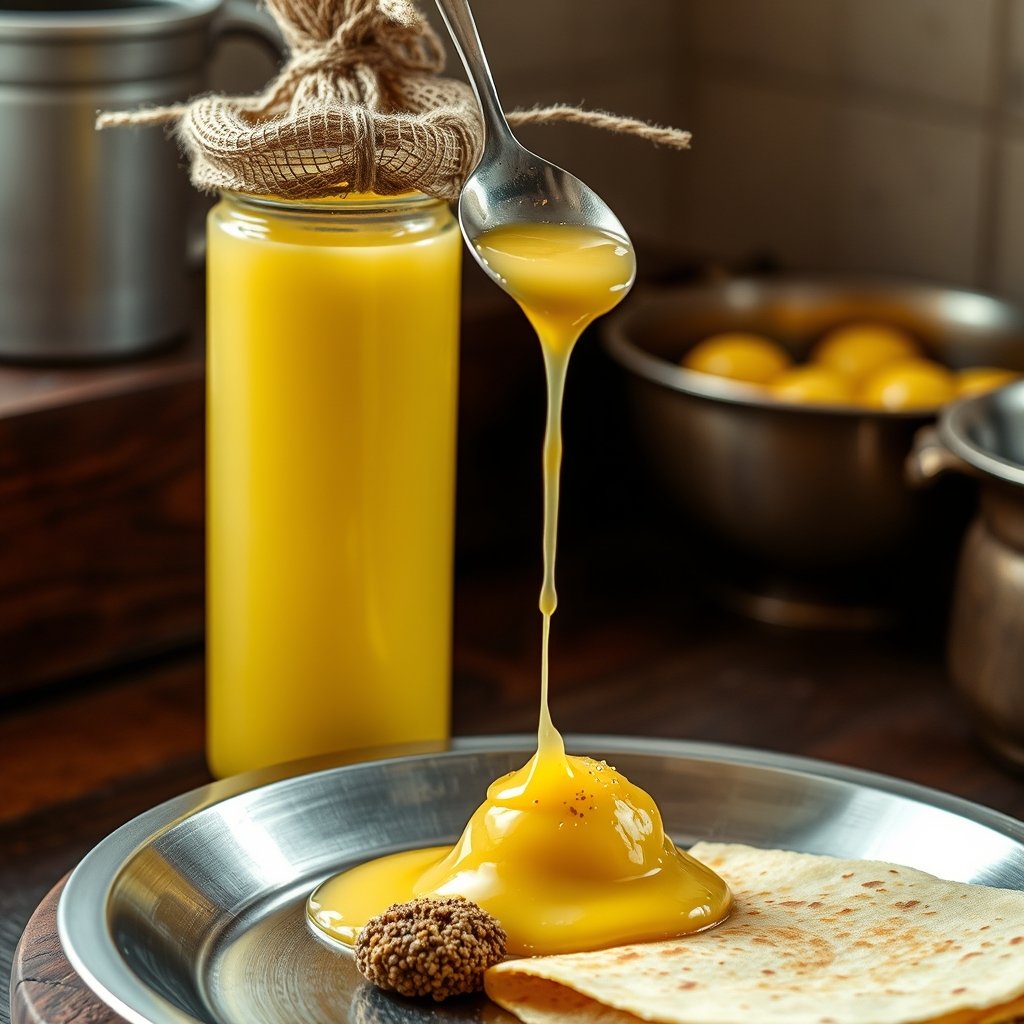
In South Indian cooking, ghee acts as a rich finishing fat and flavor carrier that mellows fierce dry spices in podi, binds soft lentil dishes like pongal, and creates a crisp, golden crust on dosas.
Why Is Ghee Essential for South Indian Comfort Dishes Like Pongal?
Ven pongal relies on a gentle balance between soft, overcooked short-grain rice and yellow moong dal. Without the right fat, this mix can quickly become dense and sticky as it cools on the plate. Adding a generous ladle of warm ghee during the final tempering stage coats the starch granules, keeping the dish soft, velvety, and easy to spoon.
When black pepper, freshly crushed cumin seeds, bruised ginger, and curry leaves sizzle in warm ghee, the fat-soluble flavor compounds from these spices dissolve directly into the fat. Using traditional A2 Gir cow bilona ghee introduces a light, nutty aroma from the curd-churning process, which complements the clean, earthy notes of toasted moong dal and fried cashews.
How Does Ghee Transform Dry Spice Blends Like Gunpowder Podi?
Podi—a coarse blend of roasted dals, dry red chillies, sesame seeds, and asafoetida—requires a binding medium to coat hot idlis, dosas, or warm rice. While sesame (gingelly) oil is traditionally popular for its sharp bite, ghee offers a completely different kitchen dynamic by rounding off harsh capsaicin heat.
When you spoon warm melted ghee over a heap of dry podi, it dissolves the powdered spices into a smooth paste. The fat suspended in bilona ghee coats the tongue slightly before the spices land, allowing you to taste the roasted lentils and aromatic curry leaves before the fiery heat of the red chillies takes over. It converts a dry condiment into a rich, spoonable relish.
Should You Drizzle Ghee on the Tawa or Over the Dosa?
Timing your ghee application on the dosa tawa changes both texture and flavor. If you pour ghee onto a bare, hot iron tawa before spreading thin fermented batter, the fat breaks the batter's grip, making it difficult to swirl a thin, even circle. The proper method is to spread the batter first on a lightly seasoned surface, allow the moisture to evaporate, and then drizzle ghee along the outer edges and over the center.
As the dosa cooks, the ghee trickles underneath into the steam pockets created by the rising batter. Because bilona ghee has had its moisture gently removed during slow pan-clarification, it fried the batter crisp without making it soggy. Drizzling a tiny spoonful over the top just before folding wraps the steam inside, creating a contrast between a shattering, golden exterior and a tender interior.
How Does Bilona A2 Ghee Compare to Sesame Oil in South Indian Cooking?
Both fats hold deep roots in southern kitchens, yet they serve distinct culinary roles depending on heat tolerance, flavor profile, and dish structure.
| Aspect | A2 Gir Cow Bilona Ghee | Cold-Pressed Sesame (Gingelly) Oil |
|---|---|---|
| Flavor Profile | Rich, creamy, subtle nuttiness with toasted milk solid aroma | Pungent, nutty, earthy, with a mild pleasant bitterness |
| Primary Role | Finishing fat, crisping dosa, mellowing spice heat in podi | Base cooking oil, tempering sambar/rasam, mixing raw with podi |
| Texture Effect | Sustains soft moisture in starches (pongal, upma) | Light, clean coat without setting heavy as it cools |
| Heat Behavior | High smoke point, browns evenly without burning quickly | Medium-high smoke point, best added mid-cooking or at finish |
What Is the Right Way to Temper South Indian Staples With Ghee?
South Indian tempering, known locally as thalippu or tadka, is quick and temperature-sensitive. Ghee provides a forgiving medium for frying hard spices like mustard seeds and urad dal without scorching them.
Heat one to two teaspoons of A2 bilona ghee in a small heavy-bottomed pan over medium heat. Add mustard seeds first; as soon as they begin to pop, drop in split urad dal and chana dal. The fat slowly turns the dals golden and crunchy. Finish with fresh curry leaves and a pinch of asafoetida right before pouring the sputtering ghee over hot sambar, lemon rice, or freshly churned chutney. The hot fat seals in the volatile aromas, spreading them evenly throughout the entire dish.