
Family Does Not Like Ghee Taste? How to Use It Up

If your family dislikes the taste of a new ghee jar, you can work it into cooked dishes like high-spice tadkas, paratha doughs, and dark gravies where bold spices naturally mute its prominent aroma. When you open a fresh jar of traditional A2 Gir cow bilona ghee, the deep nutty scent and caramel notes can take a household by surprise if everyone is accustomed to mild, industrially processed ghee. Cream-extracted fat heated quickly in large stainless steel vats has a subtle, almost neutral profile. Bilona ghee, crafted by curdling whole milk, churning it with a wooden bilona to collect butter, and slowly simmering it over open flame, retains natural culturing aromas, toasted milk solids, and rich complex fats. If family members find this unheated spooned fat overwhelming over warm rotis or plain dal, you do not need to throw the jar away.
Why does a new jar of ghee taste different to your family?
A sudden shift in ghee taste usually happens because different production methods leave different aromatic compounds in the finished fat. Commercial ghee made directly from fresh dairy cream undergoes rapid pasteurisation and high-heat boiling, which removes curd aromatics and yields a mild, uniform taste. Traditional bilona ghee begins with cultured dahi made from fresh A2 Gir cow milk. Churning cultured curd yields butter that carries subtle lactic undertones, and slow hand-simmering develops browned milk solid particles that impart a pronounced toasted aroma. Seasonal factors also change the fat; winter milk from grass-fed cows often carries deeper aromatic notes than summer milk. When a household transitions from neutral oil or light butter ghee to hand-churned bilona ghee, their palates notice the stronger lactic notes and roasted scent immediately.
Which dishes help soften or hide a strong ghee flavour?
If your household resists the aroma of raw ghee, hide the fat inside recipes with high heat, acid, or robust spice profiles. Kneading two tablespoons of soft ghee directly into whole wheat flour for parathas coats the starch threads without leaving a heavy surface scent on the warm flatbread. Heavy vegetable curries like chana masala, rajma, or kathal subzi contain tomatoes, onion-garlic pastes, and powdered spices like roasted cumin, coriander, and garam masala that easily absorb and balance intense fat profiles. You can also use the ghee to fry whole spices—mustard seeds, curry leaves, slit green chillies, and dried red chillies—for a South Indian sambar or dal tadka; the heat toasts the fat and merges its notes smoothly into the fragrant spices.
Our cows are not use and throw
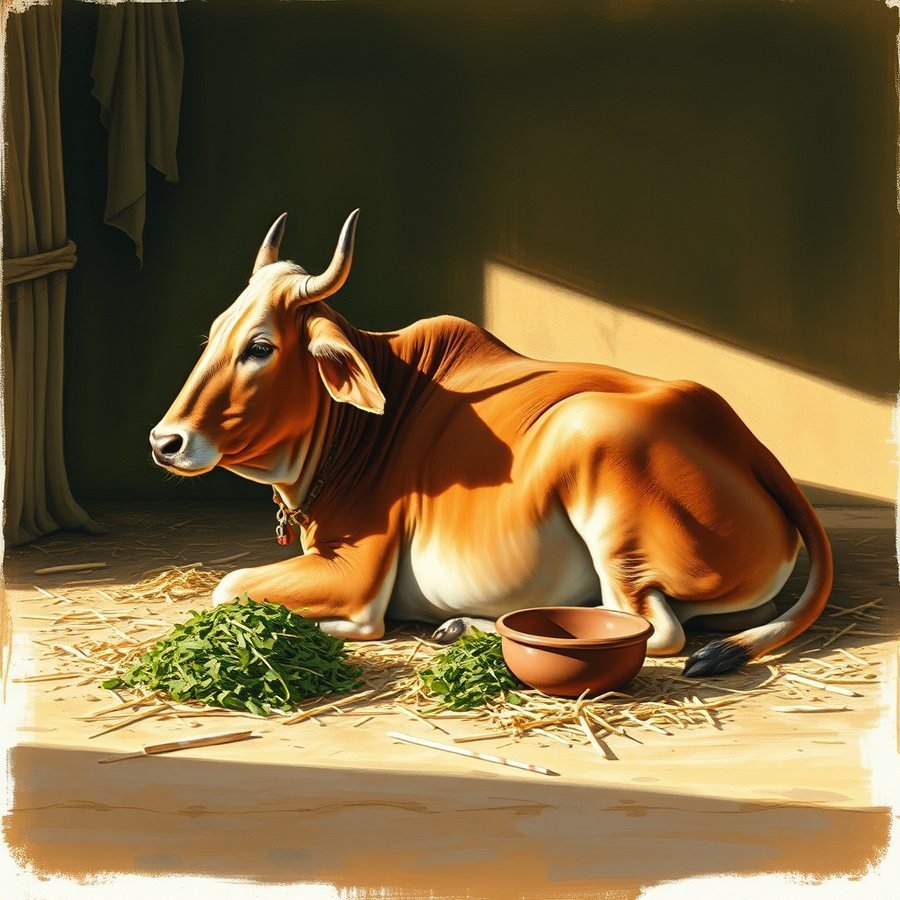
A cow that stops giving milk is still our cow. She stays on the farm, with the same feed, the same shed and the same medical care she had when she was milking. We do not sell her on and we do not let her go. That is the whole basis of the ghee we make — you cannot ask an animal for her milk and then abandon her for it.
Our mission goes further than our own herd. There are cows on the street who are injured every day, who eat plastic, who cry through the night with nobody coming. We want to take them in. The plan is a chain of Organic Farmz gaushalas in several places, so that help is not one shed in one city but something a hurt animal can actually reach.
This takes more than we can carry alone — land, fodder, vets, hands. Come and join our initiative. Anything you give goes to feed, treat and shelter these cows.

Scan with any UPI app
Bank transfer
- Account name Organic Farmz
- Bank Indian Bank
- Account number 8133177322
- IFSC code IDIB000K555
- UPI ID organicfarmz@ptaxis
On a phone, the button above opens your UPI app directly — a QR on the screen you are reading cannot be scanned by that same screen. On a laptop, scan the code with your phone instead.
Which recipes actually benefit from a rich, nutty fat?
Certain traditional Indian dishes rely on a deep, caramelised ghee profile to achieve their authentic flavour. Slow-cooked sweets like besan ladoo, moong dal halwa, and wheat flour pinni require fat that can handle extended roasting alongside toasted grains and nuts. The rich lactic aromatics of bilona ghee blend seamlessly into caramelised gram flour or roasted wheat, creating a balanced sweetness rather than an overpowering scent. Rice preparations like festive vegetable biryani, pulao, and khichdi cooked in a heavy pot also carry rich ghee exceptionally well, as the starch grains absorb the fat during boiling and steam distribution.
How does raw ghee topping compare to ghee used in heat cooking?
Using ghee as a raw finish changes how its aroma hits your palate compared to using it during high-heat frying or simmering.
| Usage Method | Aroma Prominence | Best Food Applications |
|---|---|---|
| Raw Finishing Touch | High; volatility of warm fat releases full lactic and nutty aroma instantly. | Steamed rice, simple khichdi, plain phulkas, warm halwa. |
| Heat-Cooked Base | Muted; spices, onions, tomatoes, and high heat bind and balance the fat. | Tadkas, paratha doughs, spice pastes, deep-roasted halwas. |
When should you accept that a particular ghee is not for your household?
Food preferences are personal, and a jar of ghee should bring comfort to your daily meals rather than kitchen conflict. If you have tried cooking it into spiced gravies, kneading it into doughs, and using it in slow-roasted sweets, yet family members still turn away from their plates, it is completely reasonable to switch fat sources. Check the jar first to ensure the scent is simply robust rather than sour or rancid from moisture contamination. If the jar is fresh and well-made but the flavour profile remains too intense for your home, set that jar aside for festive sweet-making or baking, and choose a lighter, milder ghee for daily dining tables.
Taste the difference
Small-batch A2 Gir cow ghee, hand-churned to order and delivered across India. Read how we make it if you want the detail first.
Order a jarKeep reading
-
Ghee Tastes Too Strong: Why It Happens and How to Fix It
Ghee tastes too strong when it is cultured, deeply simmered, or from Gir cows. Temper it with cumin or…
-
 Ghee for Diabetic Cooking: Check Purity and Packaging
When buying ghee for a diabetic household, read the jar label for pure milk fat without adulterants…
-
 Who Should Not Buy Bilona Ghee: Three Main Reasons
You should not buy bilona ghee if you prefer neutral flavors, need a cheap cooking oil for deep-frying, or…