
Biryani: Why the Fat You Choose Shows
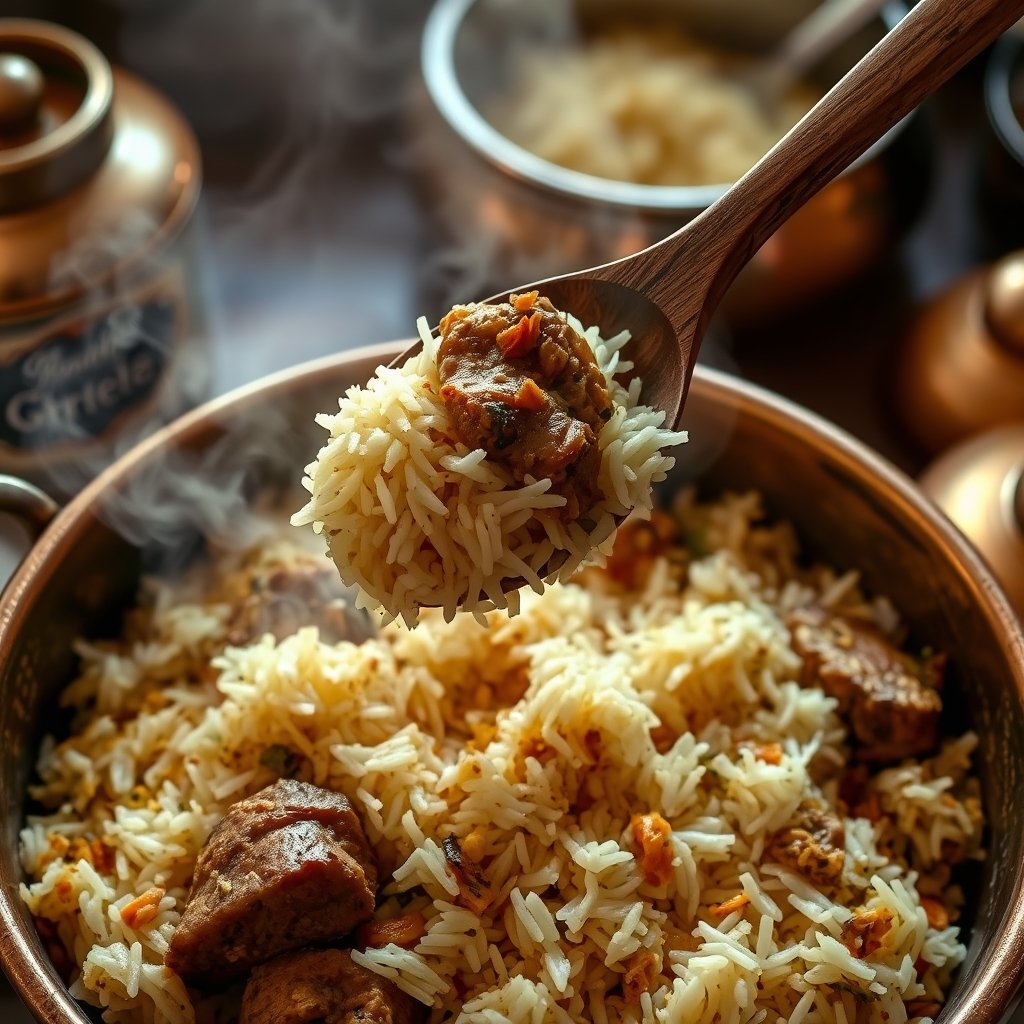
The cooking fat you choose for biryani shows immediately in the texture of the rice, the way whole spices bloom during dum, and whether the finished pot feels aromatic or unpleasantly heavy. Because biryani relies on trapped steam and gentle heat rather than rapid boiling, fat is not just an ingredient in the pan; it is the structural medium that carries flavour from the bottom masala up through every grain of rice.
Why does the choice of fat matter so much in dum cooking?
During the dum stage of biryani, the cooking vessel is sealed completely, creating a closed microclimate where moisture circulates between meat, aromatics, and par-cooked basmati rice. In this environment, water turns to steam, but the fat remains liquid, coating the outer starch layer of the rice. If you use a neutral refined oil, it provides lubrication but contributes zero volatile aroma of its own. Worse, highly processed oils tend to form a slick, heavy coating on the tongue once the biryani cools slightly on the plate. Traditional bilona ghee acts differently. Because it is clarified butterfat churned from cultured whole milk curd, it carries natural lactic esters and delicate nutty undertones that bind directly with the steam, diffusing a rich, rounded warmth throughout the entire pot.
How does bilona ghee interact with whole spices and saffron?
Most of the foundational spices in biryani—green cardamom, black cardamom, cloves, cinnamon, mace, and shahi jeera—contain essential oils that are lipophilic, meaning they dissolve in fat rather than water. When these spices meet warm A2 Gir cow ghee at the base of the deg, the fat gently extracts their aromatic compounds without burning them. Refined oils often heat unpredictably and lack the gentle buffering capacity that ghee provides. Furthermore, when saffron strands are steeped in warm milk and drizzled across the top layer alongside melted bilona ghee, the milk fat locks in the volatile saffron aroma. As the ghee slowly melts down through the layers during dum, it carries those floral saffron and whole-spice notes down into the rice without leaving greasy puddles.
What happens to rice grain separation when using ghee versus refined oil?
The hallmark of a well-executed biryani is grain integrity: every single grain of long-grain basmati must remain distinct, tender, and unbroken. Fat is responsible for keeping the par-boiled grains from fusing together as their surface starches gelatinise during steam cooking. When you drizzle melted ghee between the layers, its fat solids coat the exterior of each grain in a microscopic barrier. Refined oil also coats the rice, but it lacks body; it tends to slide down to the bottom of the handi, leaving the top layers dry and the bottom layer swimming in excess grease. Ghee has the ideal viscosity at gentle cooking temperatures to cling evenly along the length of each grain, delivering that soft, glistening finish typical of traditional awadhi and dum pukht cooking.
How do bilona ghee and neutral cooking oil compare in biryani?
| Cooking Quality | A2 Gir Cow Bilona Ghee | Refined Vegetable Oil |
|---|---|---|
| Aroma Diffusion | Enhances spices with warm, nutty, and sweet lactic notes during steam | Completely flat; adds no complementary aroma of its own |
| Spice Extraction | Dissolves lipophilic flavour compounds gently at high heat tolerance | Extracts spices harshly, often risking scorching delicate mace or saffron |
| Grain Separation | Coats grains evenly without pooling heavily at the vessel base | Tends to slip off upper rice layers and collect at the bottom |
| Palate Feel | Meltaway texture that feels light, clean, and warm in the mouth | Leaves a lingering, greasy film across the palate as the rice cools |
| Digestive Balance | Ayurvedically regarded as deepana (kindling agni to digest heavy grains) | Taxing on digestion when combined with dense proteins and starches |
When should ghee be added during the biryani layering process?
Adding all the fat at the beginning while searing onions or meat is a common misstep that dulls the character of good ghee. To get the maximum expression of A2 bilona ghee in biryani, it is best applied in three distinct stages. First, use a small portion to fry your sliced onions (birista) and bloom the whole spices; the ghee absorbs the sweet caramel notes of the onions and the woodiness of the spices. Second, lightly grease the base and inner walls of your heavy handi with ghee before layering to create a protective barrier against burning. Finally, the most critical application is at the top: immediately before sealing the lid for dum, ladle warm, liquid ghee generously over the top rice layer alongside mint, coriander, and kewra or saffron water. As steam rises, this top layer of ghee melts gradually, washing downward through the grain columns and basting the dish from within.
Does traditional A2 Gir cow ghee make biryani feel heavy?
Many home cooks mistakenly substitute refined vegetable oils for ghee because they assume ghee will make a celebratory dish like biryani too dense to digest comfortably. In reality, the opposite is true. In classical ayurvedic cooking, pure cow ghee is recognised as anupana—a vehicle that balances rich spices and enhances agni (digestive fire). High-quality bilona ghee, prepared from the curd of pasture-grazed Gir cows, contains short- and medium-chain fatty acids that break down far more cleanly in the gut than industrial seed oils. When a plate of biryani is cooked with genuine bilona ghee, you finish the meal feeling nourished and satisfied, rather than sluggish with the oily aftertaste that so often accompanies restaurant biryanis made with commercial fats.