
A2 vs A1 Milk: What the Letters Actually Refer To

The letters A1 and A2 refer to two distinct structural variants of beta-casein protein found in cow's milk, determined by the genetic makeup of the cow breed.
What Is the Difference Between A1 and A2 Beta-Casein Proteins?
Beta-casein makes up about thirty percent of the total protein content in cow milk. Historically, all domestic cows produced milk containing only the A2 protein variant. Thousands of years ago, a natural genetic mutation occurred in European cattle breeds, altering a single amino acid in the protein chain and producing the A1 beta-casein variant. Indigenous Indian cow breeds, such as the Gir, Sahiwal, and Tharparkar, were unaffected by this mutation and continue to yield milk containing purely the A2 protein variant.
Which Cow Breeds Naturally Produce A2 Milk?
Native Indian humped cows (Bos indicus), including the famous Gir cows from Gujarat, naturally produce milk with A2 beta-casein. In contrast, modern European and North American breeds (Bos taurus) like Holstein-Friesian and Jersey cows produce milk that contains significant levels of A1 beta-casein or a mixture of both A1 and A2 proteins due to selective breeding for high liquid yield.
Our cows are not use and throw
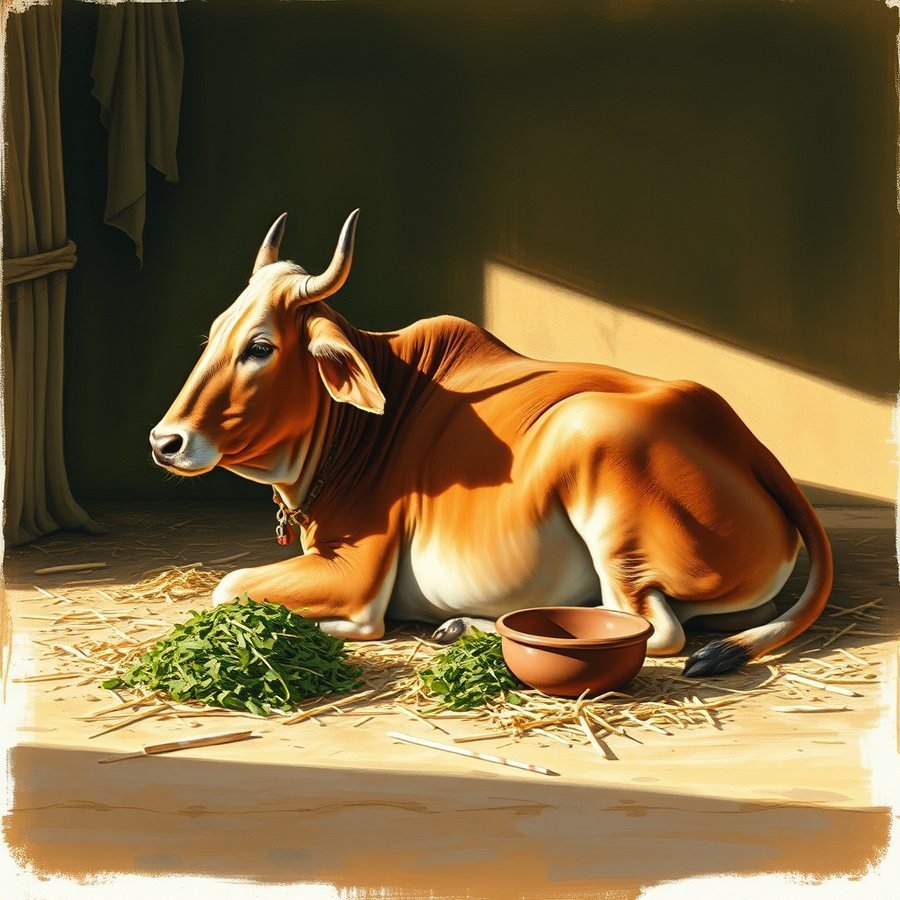
A cow that stops giving milk is still our cow. She stays on the farm, with the same feed, the same shed and the same medical care she had when she was milking. We do not sell her on and we do not let her go. That is the whole basis of the ghee we make — you cannot ask an animal for her milk and then abandon her for it.
Our mission goes further than our own herd. There are cows on the street who are injured every day, who eat plastic, who cry through the night with nobody coming. We want to take them in. The plan is a chain of Organic Farmz gaushalas in several places, so that help is not one shed in one city but something a hurt animal can actually reach.
This takes more than we can carry alone — land, fodder, vets, hands. Come and join our initiative. Anything you give goes to feed, treat and shelter these cows.

Scan with any UPI app
Bank transfer
- Account name Organic Farmz
- Bank Indian Bank
- Account number 8133177322
- IFSC code IDIB000K555
- UPI ID organicfarmz@ptaxis
On a phone, the button above opens your UPI app directly — a QR on the screen you are reading cannot be scanned by that same screen. On a laptop, scan the code with your phone instead.
How Do A1 and A2 Milk Compare in Traditional Use?
The distinction between A1 and A2 milk is central to how milk is treated in traditional Indian dairy practices and culinary heritage.
| Feature | A2 Milk (Gir / Indigenous Cows) | A1 Milk (Commercial / Western Breeds) |
|---|---|---|
| Cattle Type | Bos indicus (Humped Indian breeds) | Bos taurus (Western crossbred breeds) |
| Beta-Casein Structure | Original proline amino acid position | Mutated histidine amino acid position |
| Traditional Culinary Standing | Standard choice in historical cooking | Modern industrial dairy standard |
| Yield per Cow | Lower volume, higher fat content | Higher daily liquid volume |
| Ghee Character | Rich golden fat with distinct aroma | Lighter fat color with mild scent |
How Does A2 Milk Translate into Traditional Bilona Ghee?
When whole A2 Gir cow milk is cultured into curd and churned using the bilona method, the milk proteins and fat globules break down cleanly. During the final low-heat simmering step, the milk solids precipitate out completely, leaving behind translucent golden fat that is free of liquid whey and moisture. This renders A2 Gir cow ghee a pure, aromatic cooking fat that stores well at room temperature and enhances every dish it touches.
Taste the difference
Small-batch A2 Gir cow ghee, hand-churned to order and delivered across India. Read how we make it if you want the detail first.
Order a jarKeep reading
-
 Is All Ghee Lactose Free? What Actually Remains
Discover how much lactose actually remains in ghee, how the traditional bilona method separates milk solids…
-
 Which Indian Cow Breeds Give A2 Milk?
Learn about the prominent indigenous Indian cow breeds known for naturally producing A2 beta-casein milk and…
-
 Warm Milk with Bilona Ghee at Night
Discover the time-tested Ayurvedic ritual of drinking warm milk with hand-churned Bilona ghee before bed…
