
Who White-Label Ghee Suits, and Who It Does Not

Private-label ghee is worth the investment for established food brands, D2C platforms, and curated subscription services with an existing customer base, while it remains unsuited for discount-driven sellers or founders who want to manage their own dairy production directly. Contracting production allows a brand to launch an authentic product without investing capital in live cattle, bilona churns, or milk processing infrastructure.
Is private label ghee worth it for new food businesses?
Private label ghee is worth it if your business already possesses active marketing channels, retail distribution, or a loyal buyer list, as it converts existing traffic into high-margin sales without dairy management risks. Building a consumer brand requires dedicated focus on marketing, customer service, and distribution. Attempting to build a dairy facility simultaneously splits management focus and increases operating risks. Sourcing through a private-label partner delivers finished inventory in retail-ready glass jars. However, if your business model relies on offering the lowest price on the market, traditional hand-churned A2 Gir cow bilona ghee will not fit your margin goals because authentic bilona preparation requires significant milk volume and careful manual labour.
Who is private-label A2 bilona ghee best suited for?
Private-label A2 bilona ghee suits wellness brands, boutique grocery platforms, regional food distributors, and corporate gifting services that prioritize sourcing integrity over bulk commodity pricing. It works best for businesses whose customers value authentic Indian home cooking, traditional ayurvedic preparation methods, and total batch traceability. When buyers already trust your curated catalog, adding an A2 Gir cow bilona ghee gives them a traditional kitchen fat made from cultured curd rather than industrial cream. It also suits established food brands expanding their line into traditional fats without taking on farm supervision, seasonal milk yield fluctuations, or rural labor management.
Who should avoid private-label ghee manufacturing?
Private-label ghee manufacturing is not suitable for founders who insist on managing daily kitchen churns themselves, nor is it suitable for businesses competing purely on retail price discounts. If your primary goal is to experiment with custom heating temperatures or daily micro-batch variations yourself, running an in-house kitchen is necessary. Similarly, if your customer base expects budget commercial ghee made from separator cream, white-label bilona ghee made by traditional hand-churning will exceed your target unit cost. Businesses without an established sales channel should also pause, as ordering finished inventory without existing traffic creates unnecessary storage stress.
Our cows are not use and throw

A cow that stops giving milk is still our cow. She stays on the farm, with the same feed, the same shed and the same medical care she had when she was milking. We do not sell her on and we do not let her go. That is the whole basis of the ghee we make — you cannot ask an animal for her milk and then abandon her for it.
Our mission goes further than our own herd. There are cows on the street who are injured every day, who eat plastic, who cry through the night with nobody coming. We want to take them in. The plan is a chain of Organic Farmz gaushalas in several places, so that help is not one shed in one city but something a hurt animal can actually reach.
This takes more than we can carry alone — land, fodder, vets, hands. Come and join our initiative. Anything you give goes to feed, treat and shelter these cows.

Scan with any UPI app
Bank transfer
- Account name Organic Farmz
- Bank Indian Bank
- Account number 8133177322
- IFSC code IDIB000K555
- UPI ID organicfarmz@ptaxis
On a phone, the button above opens your UPI app directly — a QR on the screen you are reading cannot be scanned by that same screen. On a laptop, scan the code with your phone instead.
How does white-label ghee compare to self-manufacturing?
Deciding between partnering with an established manufacturer and building your own production unit comes down to capital allocation, core capabilities, and operational priorities.
| Operational Factor | White-Label Partnership | In-House Self-Manufacturing |
|---|---|---|
| Capital Investment | Settled by sample testing and agreed initial batch volume | Requires significant investment in land, cows, churns, and storage |
| Daily Focus | Brand building, marketing, and customer relationship management | Herd management, milk collection, curd culturing, and heating |
| Production Scaling | Scales by adjusting batch requests with the manufacturer | Requires acquiring additional cattle, shed space, and labor |
| Packaging Readiness | Arrives in sealed, labelled, code-stamped glass jars ready to ship | Requires manual bottling, labelling machinery, and batch stamping |
How does the white-label ghee process work from inquiry to delivery?
The white-label arrangement follows a clear step-by-step process designed to establish complete product consistency before main production begins. First, an enquiry arrives by WhatsApp or email detailing the brand name, jar size, estimated monthly volume, and targeted launch timing. Next, a sample batch is agreed upon and tasted so the brand can evaluate aroma, texture, and grain before signing any agreement. Once approved, a written agreement settles the unit rate, volume, jar type, artwork ownership, and clear resolution terms for any batch issues. The brand then supplies print-ready label artwork containing their registered FSSAI number and required regulatory declarations. Organic Farmz makes the ghee to order near Delhi using traditional bilona hand-churning of A2 Gir cow curd, delivering sealed, labelled, and code-stamped glass jars directly to the buyer ready for shipping. To begin evaluating samples for your brand, visit our white-label partnership page to share your project details.
Taste the difference
Small-batch A2 Gir cow ghee, hand-churned to order and delivered across India. Read how we make it if you want the detail first.
Order a jarKeep reading
-
 Is Private Label Ghee Worth It: Suits Established Brands
Private label ghee is worth it for brands with existing audiences, but not for founders wanting direct…
-
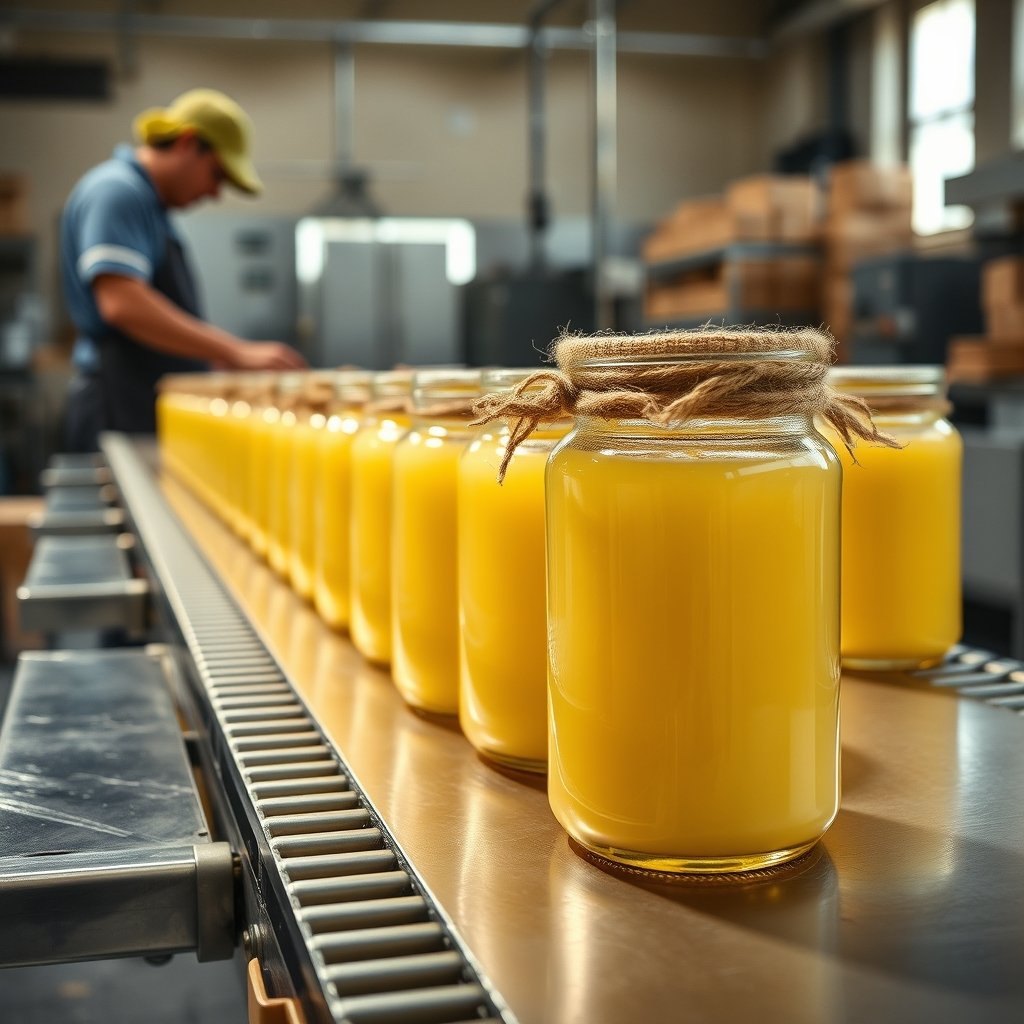 Ghee Manufacturer MOQ: Why We Will Not Publish One
A traditional ghee manufacturer will not publish a minimum order quantity because batch volumes depend on…
-
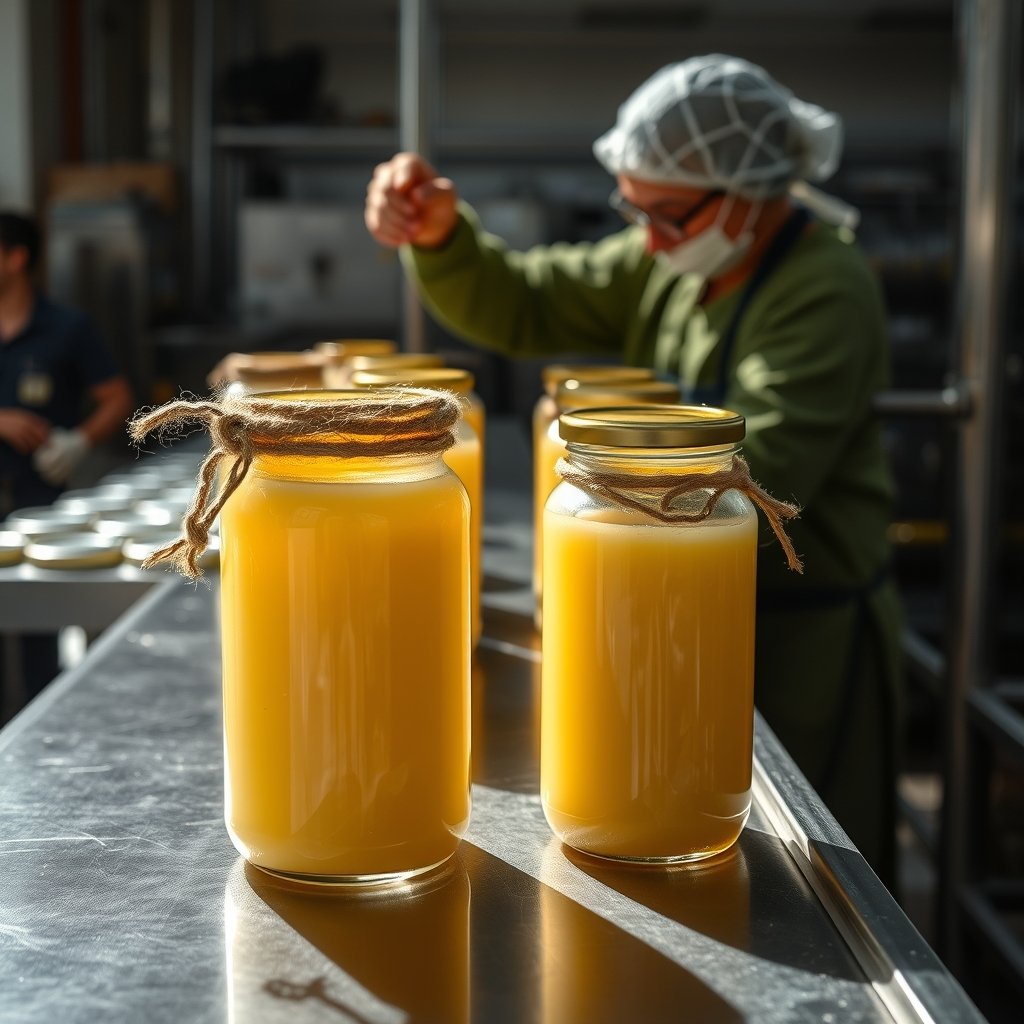 Ghee Contract Manufacturing: Who Does What in Production
Ghee contract manufacturing divides duties between cooking and branding: the maker handles milk, churning…